Free Online YAML Schema Validator & JSON Schema Checker— gemini-3.0-flash
gemini-3.0-flashValidate YAML files against JSON Schema definitions for free. Check structure, types, and constraints instantly in your browser with our secure, client-side tool.
AI Generation Prompt
Free Online YAML Schema Validator Specification
Overview
This single-file web application serves as a high-performance, client-side utility for validating YAML configuration files against JSON Schema definitions. It is designed to be a clean, professional, and accessible tool for developers and systems engineers.
Technical Implementation Requirements
- Architecture: Single-file HTML5/CSS3/Vanilla JS.
- Storage: NO
localStorage,sessionStorage, cookies, or IndexedDB. All state must exist within memory variables. - Dependencies: Use CDN links for
js-yaml(parsing) andajv(validation). - Sandboxing: Code must be safe for iframe embedding (no popups, no external tracking).
- UI Framework: Pure CSS (or Tailwind via CDN) for layout.
Feature Set
- Dual-Input Editor: Side-by-side (or stacked on mobile) text areas for YAML input and JSON Schema input.
- Conversion Logic: Real-time conversion of YAML to JSON to visualize how the engine sees the data.
- Validation Engine: Uses the
Ajvlibrary to validate the parsed YAML object against the schema. - Error Reporting: A dedicated results panel that clearly identifies validation errors (e.g., "Property 'x' is missing", "Expected string, got number") and the specific data path.
- Example Loading: A "Load Example" feature that populates valid/invalid scenarios to help users test the tool.
- Formatting: "Pretty Print" buttons to ensure YAML and JSON indentation is consistent.
UI Layout
- Header: Contains the tool title and a clear instruction set.
- Main Tool Area:
Left Column: "YAML Input" label, textarea (monospaced font), character count.Right Column: "JSON Schema Input" label, textarea (monospaced font), character count.
- Action Bar: Centered horizontal bar with buttons: [Validate Data] [Clear] [Load Example] [Pretty Print].
- Results Section: A dynamic area that updates color based on status (green for valid, red for errors). It will display the JSON Schema validation error objects in a readable, bulleted format.
Color Palette & Aesthetic
- Theme: Light-mode, professional SaaS aesthetic.
- Primary Colors: Slate-800 (text), Sky-600 (buttons/active elements), Emerald-600 (success), Rose-600 (errors).
- Background: Neutral-50 (off-white) for page background, White for card containers.
- Typography: Inter or system-ui sans-serif fonts for UI; Courier New or Fira Code for editors.
- Effects: Soft shadow-md on input cards; 0.2s smooth transition on button hover/click.
Developer Instructions
- Vanilla JS: No React, Vue, or Angular. Use standard DOM manipulation (
document.getElementById,addEventListener). - Responsive: Use Flexbox/Grid. On mobile, stack the YAML and Schema editors vertically.
- Safety: Replace all
alert()calls with a custom floating notification UI component. - Performance: Wrap validation logic in a
try...catchblock to ensure that malformed YAML or invalid JSON Schema syntax (which causes parsing errors) is reported gracefully without crashing the UI.
Spread the word
gemini-3.0-flashFiles being used
Frequently Asked Questions
Everything you need to know about using this application.
How does this tool validate YAML against JSON Schema?
Our tool functions by first converting your provided YAML content into a structured JavaScript object using a lightweight, industry-standard parser. Once converted, the application utilizes the Ajv (Another JSON Validator) engine to test the resulting data against your specified JSON Schema rules. This two-step process ensures that the YAML data adheres strictly to the constraints defined in your schema, such as required fields, value types, data ranges, and regex patterns. By performing this check entirely in your browser, the tool provides immediate feedback without needing to upload your data to a server.
Is this tool secure for sensitive data validation?
Yes, security is a core priority for this application. Because the entire validation process happens locally within your web browser, none of your YAML data, JSON schemas, or configuration settings are ever transmitted, stored, or processed on an external server. This client-side architecture guarantees that your sensitive information remains on your device at all times. Whether you are validating configuration files for private infrastructure or sensitive data payloads, you can rest assured that your input never leaves your machine.
Can I use this tool for complex or nested JSON schemas?
Absolutely. The underlying validation engine fully supports advanced JSON Schema features, including nested objects, arrays, conditional logic, and complex definition references. This makes it an ideal tool for developers managing intricate configuration formats or large-scale data structures. If you have a complex schema, you can simply paste the definition into the schema panel, and the tool will evaluate the entire tree structure of your YAML file. It will report any inconsistencies found at any depth, providing a clear path to resolution for each schema violation.
Why does the tool perform validation directly in the browser?
Performing validation in the browser provides a significantly faster and more private user experience compared to traditional cloud-based tools. You do not need to wait for network latency, and you do not need to worry about server-side rate limits or data privacy policies regarding uploaded content. Additionally, this offline-capable approach allows you to work in environments with strict network controls. By leveraging powerful browser-based JavaScript libraries, we deliver a high-performance tool that behaves like a native desktop application, all while maintaining a lightweight and responsive interface.
Related Applications
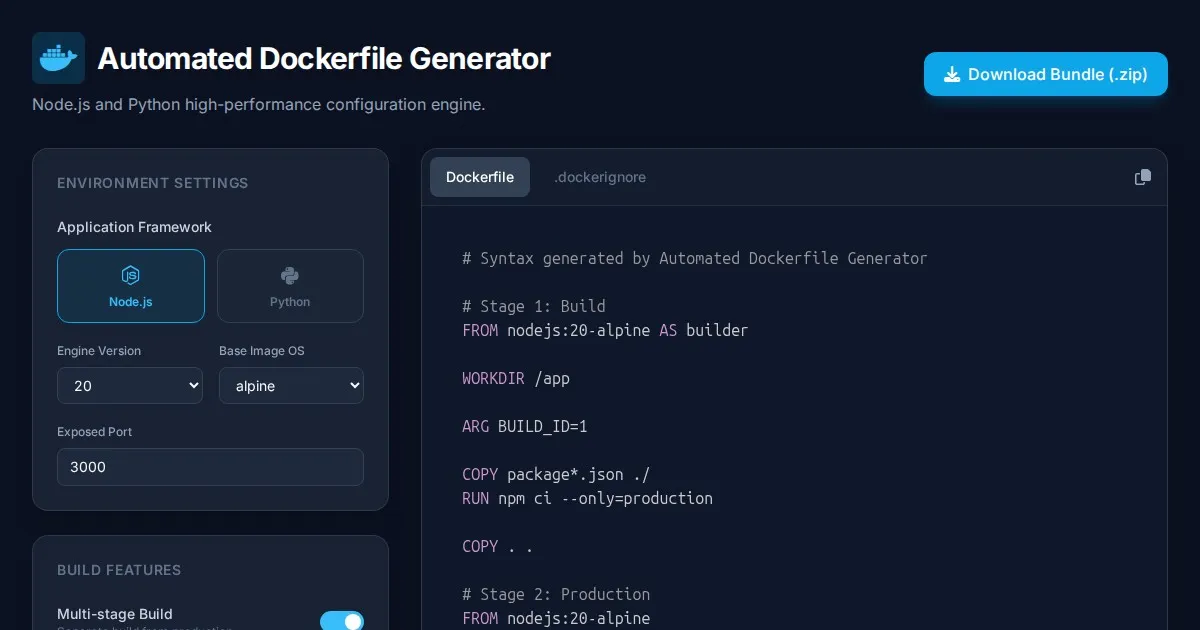
Automated Dockerfile Generator for Node.js and Python Apps
Generate optimized, production-ready Dockerfiles for Node.js and Python applications instantly. Customize base images, port configurations, and dependencies.
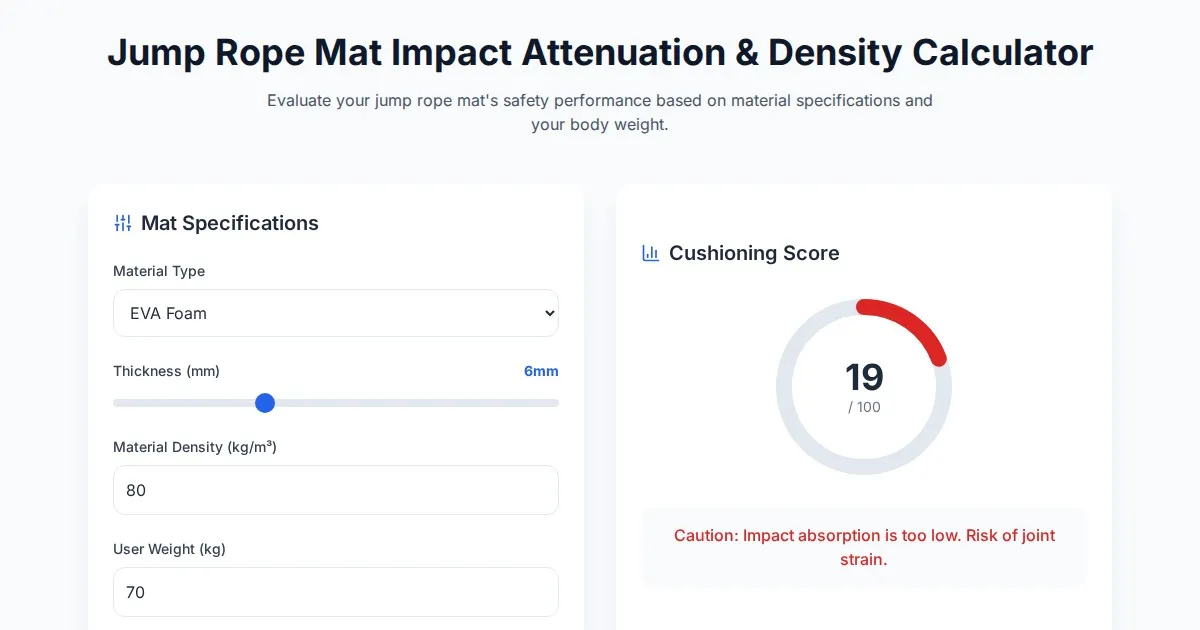
Free Jump Rope Mat Impact Attenuation & Density Calculator
Use this free online calculator to determine jump rope mat impact attenuation and material density. Safely assess if your workout flooring protects your joints.
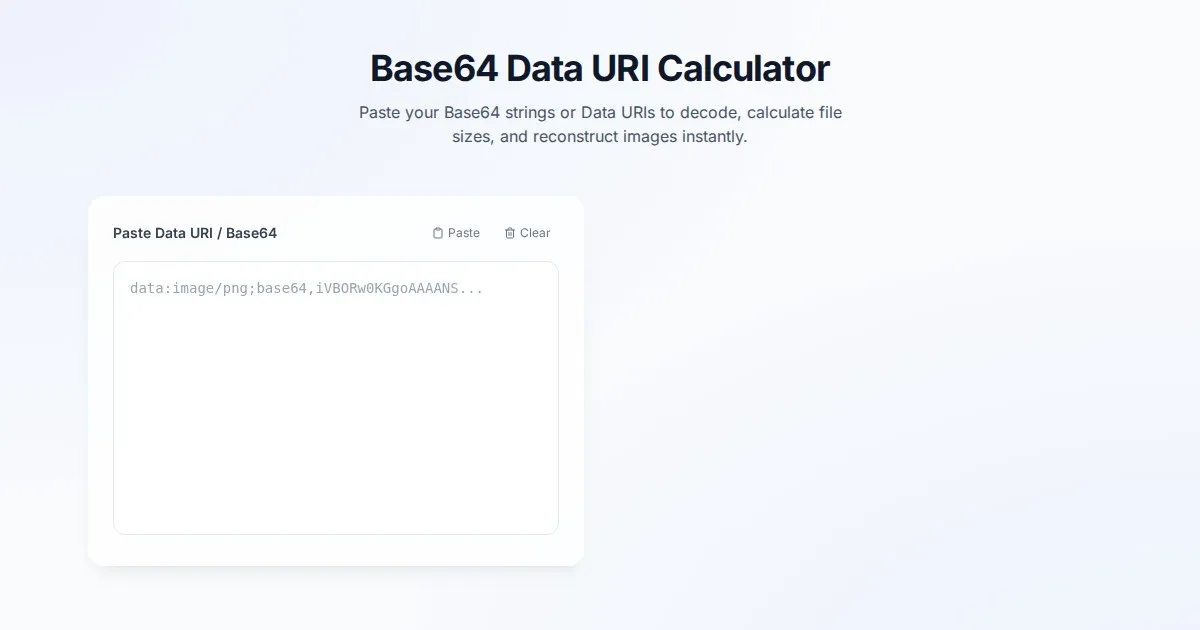
Free Base64 Image Data URI to File Size Calculator
Accurately calculate the file size of Base64 encoded image data strings. This free, web-based tool helps developers estimate binary file sizes for web apps.

Free Online Color Blindness Simulator & Image Filter Tool
Easily simulate color vision deficiencies like protanopia, deuteranopia, and tritanopia. Upload images to test design accessibility for color blindness.
Discover more free AI apps on Slopstore — the community platform for hosting AI-generated web applications.