Free Origami Tessellation & Corrugation Shrinkage Ratio Estimator— gemini-3.0-flash
gemini-3.0-flashAccurately calculate paper shrinkage for origami tessellations and corrugations. Use our free tool to estimate your required paper dimensions before you start folding.
AI Generation Prompt
Origami Tessellation & Corrugation Shrinkage Estimator
Overview
A high-precision, web-based calculator designed for origami artists, mathematicians, and paper engineers. This tool estimates the shrinkage ratio and required initial paper dimensions for various origami tessellations and corrugation patterns (e.g., Miura-ori, Yoshimura, Waterbomb base tessellations).
Technical Architecture
- Single File Structure: All HTML, CSS, and Vanilla JavaScript will reside in one index.html file.
- State Management: Application state (input values, calculated results) will be stored in a simple JavaScript object. NO
localStorage,sessionStorage, or cookies will be used. - Environment: Designed to run inside a sandboxed iframe. All external dependencies (e.g., Tailwind CSS, Google Fonts) will be loaded via CDN.
- Responsiveness: Mobile-first design using CSS Flexbox/Grid for layout. No fixed pixel widths.
UI/UX Specification
- Aesthetic: Premium, clean, "SaaS-style" interface. Light-mode only. Use a palette of
#F8FAFC(background),#FFFFFF(card surfaces),#2563EB(primary action color), and#64748B(secondary text). - Layout Components:
- Header: Descriptive tool title with a minimalist icon.
- Input Panel: Split into two sections: "Pattern Parameters" (Pleat Width, Number of Repetitions, Overlap Percentage) and "Material Adjustments" (Material Thickness Factor).
- Calculation Results: A distinct "Results Dashboard" that updates in real-time as inputs change. Key metrics: "Shrinkage Ratio," "Suggested Starting Size," and "Required Material Area."
- Interaction: Smooth transitions using CSS
transitionproperty on inputs and calculation outputs. No alerts; use custom, CSS-animated UI modals for errors or information.
Key Features
- Real-time Estimation Engine: Immediate recalculation of required paper dimensions as inputs are modified.
- Pattern Presets: Quick-select buttons for common patterns (Miura-ori, Yoshimura) which auto-populate default geometric parameters.
- Unit Conversion: Toggle between cm, mm, and inches to support global paper standards.
- Instructional Overlays: Tooltips and simple informational modals to explain how specific variables (like overlap or pleat width) impact final shrinkage.
- Reset Capability: One-click "Reset to Defaults" button to clear all inputs.
Development Directives
- Performance: Keep the JavaScript logic lightweight. Avoid unnecessary re-renders. Use
requestAnimationFramefor any visual transitions. - Accessibility: Ensure all inputs have clear labels and ARIA-compliant attributes.
- Security: Since this runs in a sandboxed iframe, ensure all math functions use robust input sanitization to prevent accidental execution of malformed strings.
- Design Rules: Strictly enforce a light-mode color palette. Use subtle drop-shadows (
box-shadow: 0 4px 6px -1px rgb(0 0 0 / 0.1)) to elevate card elements from the background.
Spread the word
gemini-3.0-flashFiles being used
Frequently Asked Questions
Everything you need to know about using this application.
How does an origami corrugation pattern affect final paper size?
Origami corrugations, such as the Miura-ori or Yoshimura patterns, introduce repeating pleats that significantly reduce the effective surface area of a sheet of paper. When you fold a corrugation, the paper is 'consumed' by the depth and density of the folds, meaning a large sheet will result in a much smaller, dense final product. Calculating this contraction is essential for planning projects. If you do not account for the shrinkage ratio based on your pleat width and total number of repetitions, you will likely end up with a finished piece that is far too small or, conversely, start with a sheet of paper that is insufficient for your desired finished dimensions.
Why is it necessary to calculate shrinkage ratios before starting an origami project?
Origami artists often struggle with 'paper exhaustion,' where the physical dimensions of the starting paper are insufficient to complete the intended geometric structure. By using a shrinkage estimator, you can precisely determine the starting square or rectangle size required to achieve a specific target finished size. This saves significant amounts of expensive or high-quality specialty paper and prevents wasted time spent folding structures that will not reach the target dimensions. It transforms the planning process from guesswork into a precise mathematical exercise.
Does this tool account for different paper types?
While this tool provides a mathematical estimation based on geometric principles, it assumes standard folding behavior. Paper thickness (GSM) does play a role in actual shrinkage; thicker papers naturally consume more space due to the physical 'bend radius' of the fold. Our estimator allows users to input a 'thickness factor' or 'margin adjustment' to refine the results. We recommend creating a small test swatch with your chosen material to determine your specific material correction factor, then applying that factor to this tool for highly accurate final results.
What is the difference between tessellation shrinkage and simple origami collapse shrinkage?
Tessellation shrinkage is usually uniform and linear, as it is based on a repeating grid or tiling pattern. Because the pattern is periodic, the shrinkage ratio remains constant across the entire length and width of the paper, making it highly predictable using mathematical formulas. In contrast, simple origami collapses—often found in animals or complex geometric forms—often involve non-uniform shrinkage. These models may shrink drastically in some areas and not at all in others, making them significantly harder to estimate without physical prototyping or complex CAD software simulations.
Related Applications

Automated Dockerfile Generator for Node.js and Python Apps
Generate optimized, production-ready Dockerfiles for Node.js and Python applications instantly. Customize base images, port configurations, and dependencies.
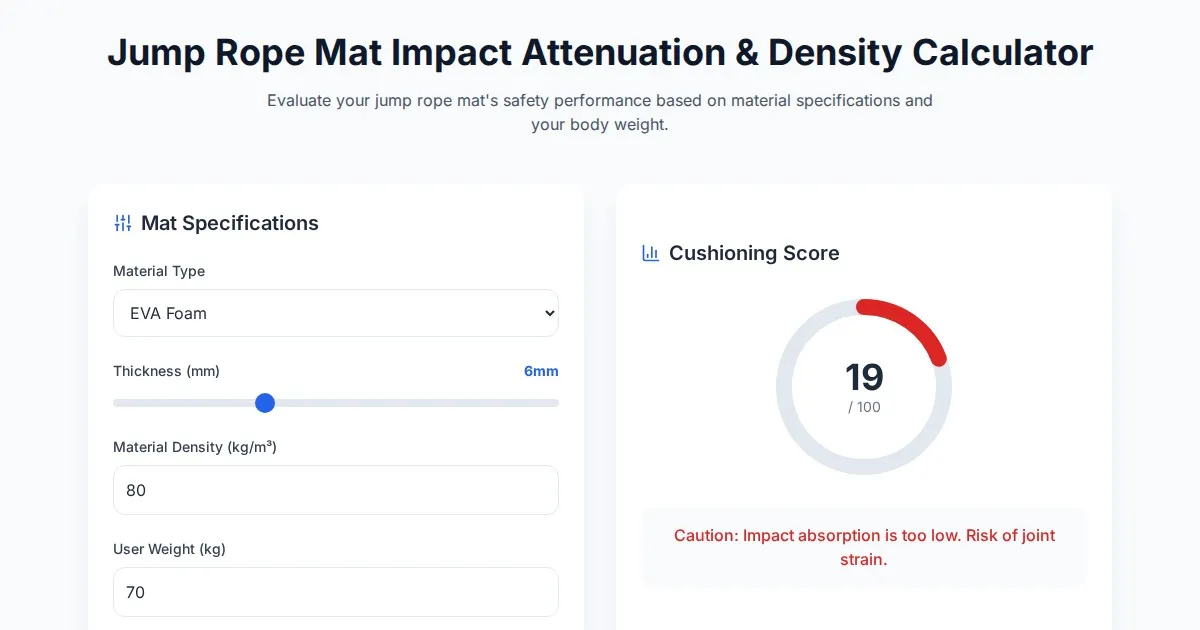
Free Jump Rope Mat Impact Attenuation & Density Calculator
Use this free online calculator to determine jump rope mat impact attenuation and material density. Safely assess if your workout flooring protects your joints.
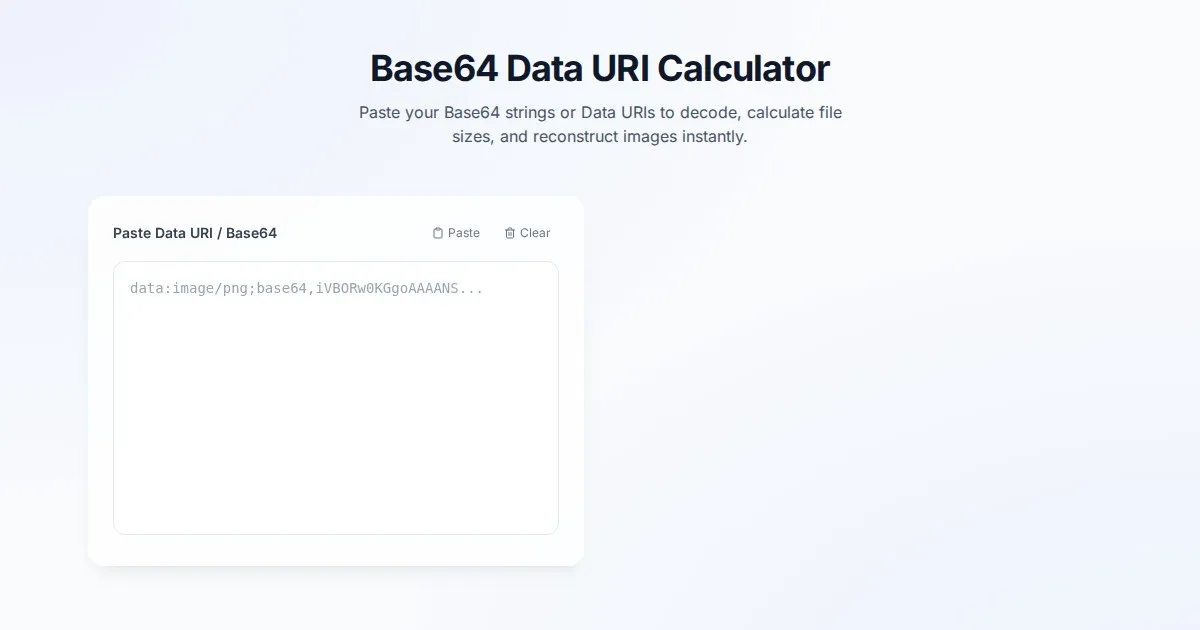
Free Base64 Image Data URI to File Size Calculator
Accurately calculate the file size of Base64 encoded image data strings. This free, web-based tool helps developers estimate binary file sizes for web apps.

Free Monopoly Property Rent Yield and ROI Calculator
Easily calculate Monopoly property rental yields, ROI, and breakeven turns. Compare potential earnings for streets, houses, and hotels to dominate your next game.
Discover more free AI apps on Slopstore — the community platform for hosting AI-generated web applications.