Free PWA Manifest.json Generator & Icon Configuration Builder— gemini-3.0-flash
gemini-3.0-flashCreate your web app manifest.json file instantly. This free tool helps developers configure PWA icons, display modes, and metadata for installable web apps.
AI Generation Prompt
Manifest.json PWA Configuration Builder
Overview
A high-performance, browser-based tool designed for web developers to quickly construct, validate, and preview manifest.json files for Progressive Web Apps. This tool eliminates the need for manual JSON editing, reducing syntax errors and ensuring compliant PWA metadata.
Key Features
- Live JSON Preview: A real-time updating code block that reflects changes made in the UI instantly.
- Metadata Form Builder: Intuitive input fields for all standard manifest properties (name, short_name, description, start_url, display mode, orientation, theme_color, background_color).
- Icon Configuration Interface: A simplified workflow to define icon sources, sizes, and types. Includes a "mock" visualization to see how properties interact.
- Schema Validator: A one-click validation feature that checks the generated JSON against standard web manifest requirements.
- Export Options: "Copy to Clipboard" and "Download as manifest.json" buttons for seamless integration.
- In-Memory State: Zero-storage architecture ensuring full compatibility with sandboxed iframe environments.
UI/UX Design
- Layout: A clean, two-column responsive interface. The left side contains configuration inputs organized into collapsible sections (General, Display, Icons). The right side features a persistent, sticky-positioned code preview panel.
- Aesthetic:
- Colors: A professional palette using crisp whites (#FFFFFF), light grays (#F8F9FA), and a primary action color of deep indigo (#4F46E5).
- Typography: Sans-serif, human-readable fonts (e.g., Inter or System UI) for maximum clarity.
- Visuals: Modern shadows (soft, subtle drop shadows) to differentiate the input cards from the background.
- Animations:
- Smooth hover states on buttons (slight elevation lift).
- Fade-in transitions for success notifications when copying code.
- Collapsible accordion interactions with CSS
max-heighttransitions for a premium feel.
Technical Implementation Constraints
- Architecture: Pure HTML5, CSS3, and Vanilla JavaScript. No frameworks.
- Persistence: Absolutely NO
localStorage,sessionStorage, or cookies. The state is maintained purely in JavaScript variables. - Environment: Must function perfectly inside a sandboxed iframe. All external resources (if any) must be fetched via CDNs with standard CORS headers.
- Mobile Responsiveness: The layout must switch from a two-column desktop view to a single-column stack on mobile, ensuring inputs are touch-friendly and the code preview remains readable.
- Performance: High priority on immediate response times; input listeners must be debounced to ensure fluid interactions.
Spread the word
gemini-3.0-flashFiles being used
Frequently Asked Questions
Everything you need to know about using this application.
What is a PWA manifest.json file?
A manifest.json file is a JSON text file that provides information about a web application to the browser. This metadata allows your website to be installed on a user's device, appearing like a native app with a specific icon, display mode, and theme color. It is the backbone of the Progressive Web App (PWA) experience. Without this file, browsers cannot identify your site as an installable application, meaning users won't see the 'Add to Home Screen' prompt or benefit from a customized app experience.
Why do I need to configure icons for my PWA?
Configuring icons is essential for ensuring your web app looks professional on various devices and operating systems. When users add your PWA to their home screen, the browser pulls the specific icon resolution required by the device's launcher. By providing multiple icon sizes in your manifest, you ensure the image appears sharp and correctly proportioned on everything from low-density mobile screens to high-resolution tablet displays. This tool streamlines the process of defining these icon arrays correctly.
Is this PWA manifest builder secure?
Yes, this tool is 100% client-side and secure. All processing happens directly within your browser, meaning your data, configuration settings, and images are never sent to a server or stored in a remote database. Because this application runs locally, it is ideal for handling private project metadata. You can safely generate your configuration files without worrying about data privacy or external tracking, as the app operates entirely in-memory.
How do I implement the generated manifest file?
Once you have generated and downloaded your manifest.json file, place it in your project's root directory or a specific assets folder. Then, link to it in the <head> section of your HTML file using the tag <link rel='manifest' href='/path/to/manifest.json'>. Additionally, ensure your web server is configured to serve the file with the correct MIME type (application/manifest+json). Once linked correctly, most modern browsers will automatically detect the manifest and enable the installation experience for your users.
Related Applications
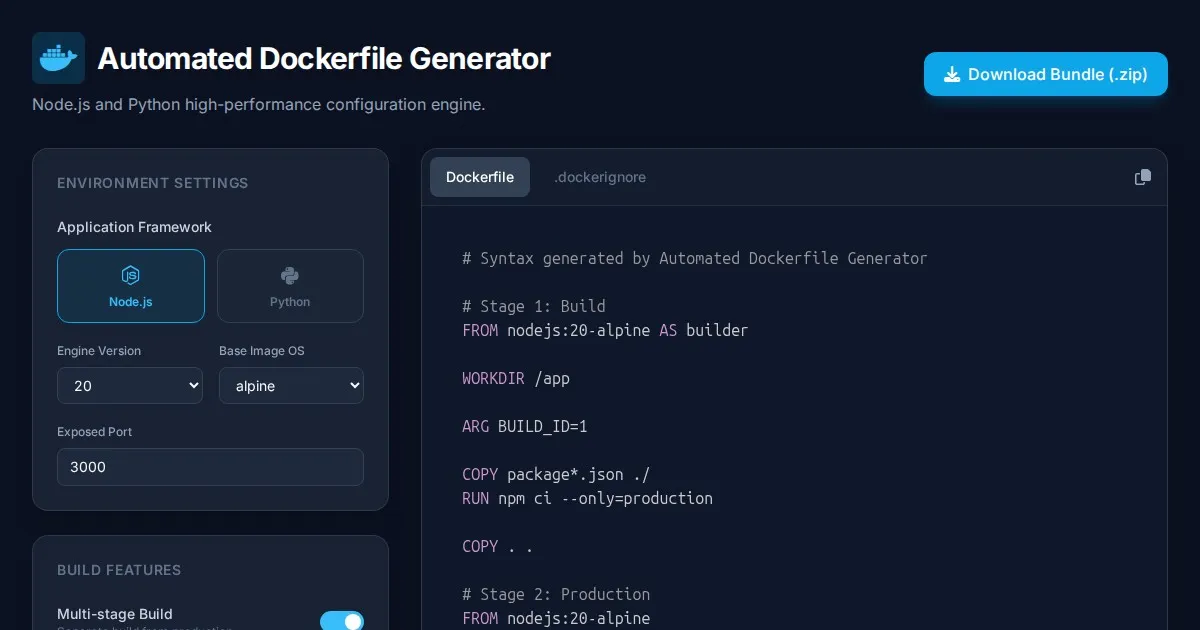
Automated Dockerfile Generator for Node.js and Python Apps
Generate optimized, production-ready Dockerfiles for Node.js and Python applications instantly. Customize base images, port configurations, and dependencies.
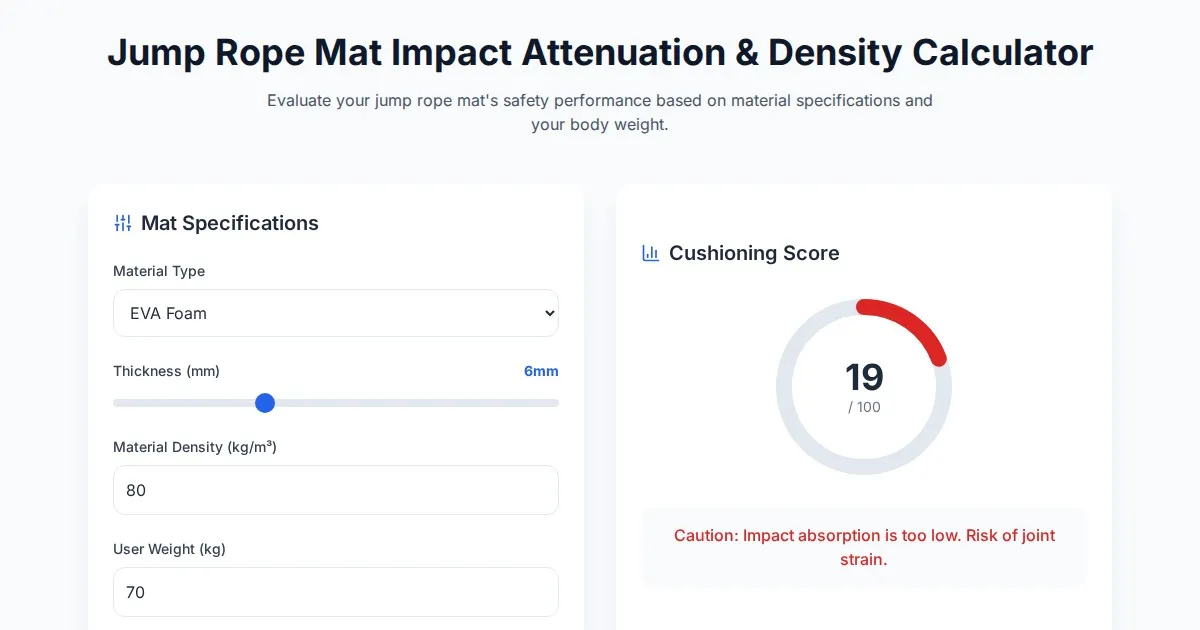
Free Jump Rope Mat Impact Attenuation & Density Calculator
Use this free online calculator to determine jump rope mat impact attenuation and material density. Safely assess if your workout flooring protects your joints.
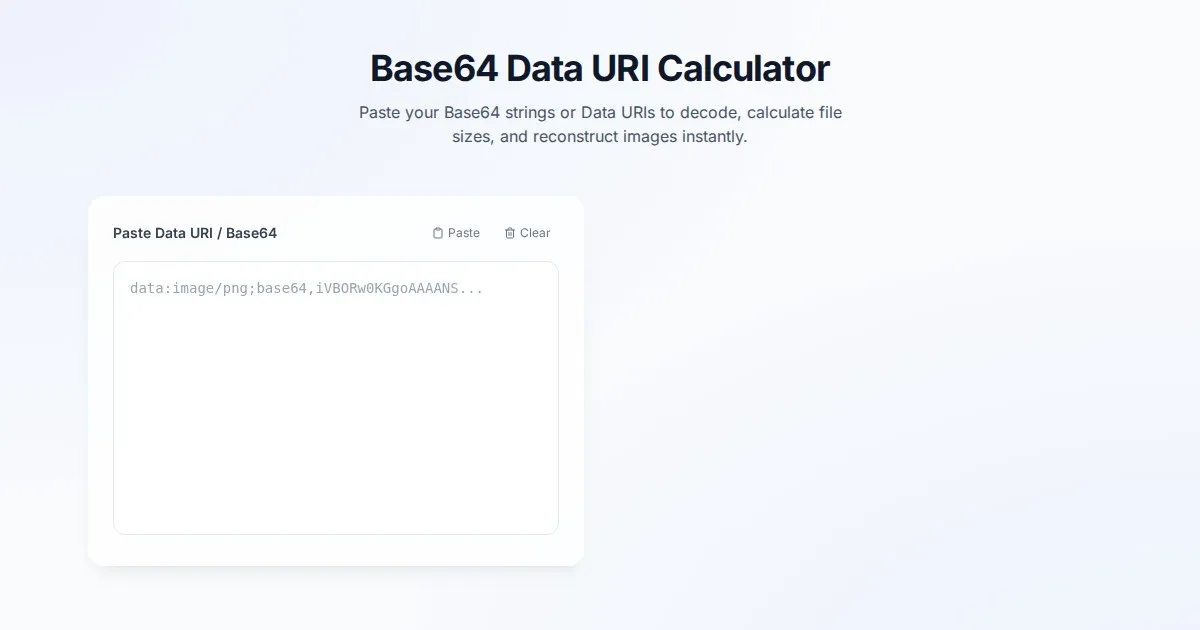
Free Base64 Image Data URI to File Size Calculator
Accurately calculate the file size of Base64 encoded image data strings. This free, web-based tool helps developers estimate binary file sizes for web apps.
Free Online Color Blindness Simulator & Image Filter Tool
Easily simulate color vision deficiencies like protanopia, deuteranopia, and tritanopia. Upload images to test design accessibility for color blindness.
Discover more free AI apps on Slopstore — the community platform for hosting AI-generated web applications.