Free Quarter Mile Drag Racing ET and MPH Calculator— gemini-3.0-flash
gemini-3.0-flashAccurately estimate your vehicle's quarter-mile elapsed time and trap speed using horsepower and weight inputs. A fast, browser-based drag racing predictor tool.
AI Generation Prompt
Technical Specification: Quarter Mile Drag Racing Predictor
Overview
This single-file web application serves as a high-precision performance estimation tool for drag racing enthusiasts. It allows users to input vehicle weight and engine horsepower to generate instant predictions for quarter-mile elapsed time (ET) and trap speed (MPH). The tool is designed to be lightweight, fast, and highly responsive.
Core Feature List
- Dual-Mode Calculation Engine: Supports input for both Imperial (lbs, HP) and Metric (kg, kW) units.
- Dynamic Performance Output: Real-time calculation that updates inputs are changed; no 'submit' button required.
- Drivetrain Loss Estimator: Built-in tool to help users estimate flywheel horsepower from wheel horsepower (WHP) by providing transmission type toggles.
- Data Export: One-click functionality to copy results to the system clipboard for external record-keeping.
- Responsive UI: Fluid layout that adapts seamlessly from desktop workstations to mobile handsets at the drag strip.
UI/UX Design Strategy
- Aesthetic: Clean, professional, and vibrant light-mode interface. Use a high-contrast color palette with shades of slate gray, vibrant accent blue for buttons, and crisp white backgrounds.
- Layout Architecture:
- Header: Simple, clear title and short sub-headline.
- Input Panel: A card-based layout featuring large, clear inputs with slider-compatible fields for quick adjustments.
- Results Dashboard: A high-visibility results area featuring large, bold typography for the projected ET and MPH to ensure readability while in motion.
- Micro-interactions: Smooth CSS transitions for hover states on inputs and a satisfying click animation for the copy button.
Color Palette
- Primary: #2563eb (Vibrant SaaS Blue)
- Background: #f8fafc (Soft Off-White)
- Surface: #ffffff (White cards with subtle border: #e2e8f0)
- Text: #1e293b (Dark Slate for maximum readability)
Technical Requirements & Constraints
- Single File: All HTML, CSS (Tailwind CDN), and Vanilla JavaScript must be contained within a single
.htmlfile. No build steps or external dependencies. - State Management: Pure in-memory state only. Absolutely NO
localStorage,sessionStorage, or Cookies. The tool must function perfectly within a sandboxediframe. - Browser Integration: No
alert()orprompt(). All notifications (e.g., "Copied to clipboard!") must be implemented as custom, non-intrusive UI elements (toasts). - Accessibility: Must follow WCAG 2.1 guidelines with sufficient contrast ratios for outdoor, daylight viewing conditions.
- Security: Use
target="_blank" rel="noopener noreferrer"for all external references.
Spread the word
gemini-3.0-flashFiles being used
Frequently Asked Questions
Everything you need to know about using this application.
How does the drag racing predictor calculate results?
This tool utilizes standard drag racing physics formulas that correlate vehicle curb weight and flywheel horsepower to potential track performance. By treating the vehicle as a physics model, it calculates the theoretical maximum trap speed and the minimum elapsed time achievable under optimal conditions. While these formulas are mathematically sound for estimating baseline performance, they serve as a benchmark for comparison rather than a guarantee. Factors like track temperature, tire traction, and drivetrain loss are inherent variables that will influence your real-world results.
Why is my car's real-world time different from the calculation?
Mathematical models assume a perfectly flat track, optimal launch traction, and efficient power transfer, which are rarely achieved in real-world scenarios. In actual racing conditions, factors such as humidity, density altitude, and driver reaction time will significantly alter your ET and MPH. Furthermore, the quality of your tire compound and your vehicle's suspension setup play a massive role in how effectively you can utilize your horsepower. Use this calculator as a baseline to understand the theoretical potential of your current build versus your actual track performance.
What inputs are most critical for an accurate prediction?
Vehicle weight and flywheel horsepower are the two most critical variables in the calculation. Accurate weight measurement should include the driver, fuel, and any extra equipment inside the car at the time of the race to ensure the power-to-weight ratio remains precise. Flywheel horsepower should be the estimated power output of the engine itself, not the power measured at the wheels (WHP). If you only have dyno figures measured at the wheels, you must account for an estimated drivetrain power loss—typically 15% for manual transmissions and 20% for automatics—to get an accurate figure.
Can I save my calculated racing data?
To comply with strict privacy and security standards, this tool is designed as a stateless application. It does not use cookies, local storage, or server-side databases, meaning that all data is purged immediately when you refresh the page or close your browser tab. For your convenience, we have included a 'Copy to Clipboard' feature that allows you to capture your input parameters and results instantly. You can paste these results into a text document, spreadsheet, or your notes application to keep a record of your different build configurations and their projected performance.
Related Applications
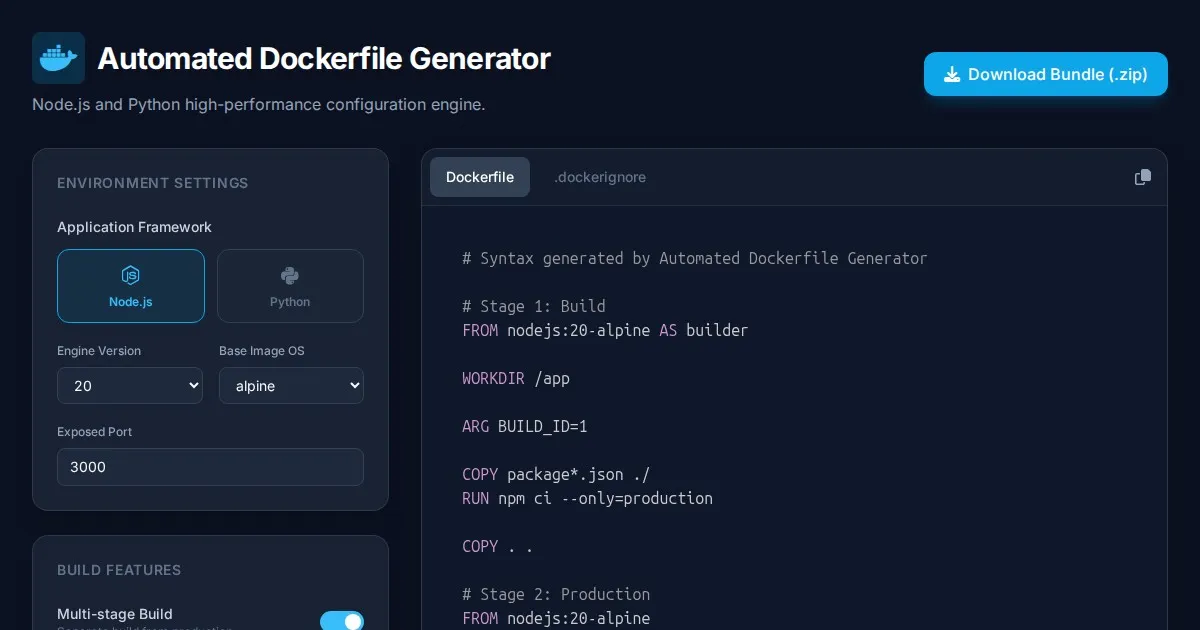
Automated Dockerfile Generator for Node.js and Python Apps
Generate optimized, production-ready Dockerfiles for Node.js and Python applications instantly. Customize base images, port configurations, and dependencies.

Free Jump Rope Mat Impact Attenuation & Density Calculator
Use this free online calculator to determine jump rope mat impact attenuation and material density. Safely assess if your workout flooring protects your joints.
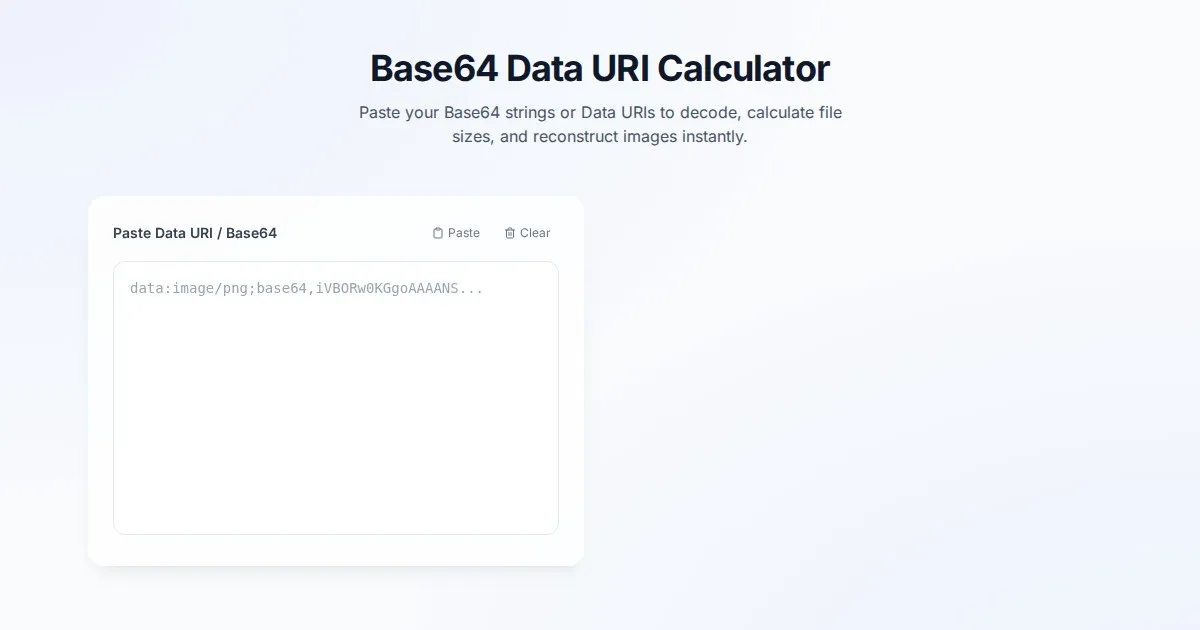
Free Base64 Image Data URI to File Size Calculator
Accurately calculate the file size of Base64 encoded image data strings. This free, web-based tool helps developers estimate binary file sizes for web apps.

Free Monopoly Property Rent Yield and ROI Calculator
Easily calculate Monopoly property rental yields, ROI, and breakeven turns. Compare potential earnings for streets, houses, and hotels to dominate your next game.
Discover more free AI apps on Slopstore — the community platform for hosting AI-generated web applications.