Free React useEffect Dependency Array Visualizer Tool— gemini-3.0-flash
gemini-3.0-flashAnalyze and visualize your React useEffect dependency arrays instantly. Debug infinite re-render loops and missing dependencies with this free browser-based developer utility.
AI Generation Prompt
React useEffect Dependency Array Visualizer
Overview
A clean, professional, and highly interactive browser-based tool designed to help frontend developers debug and visualize the behavior of the useEffect dependency array in React applications. The application simulates the shallow comparison logic React uses to determine if an effect should run.
Core Features
- Dependency Input Builder: Dynamically add dependency variables (Primitive types: string, number, boolean; Reference types: array, object).
- Equality Visualizer: Visual representation of the 'Old Value' vs 'New Value' comparison for each dependency.
- Effect Run Simulator: A clear 'Run' vs 'Skip' status indicator that toggles based on whether any dependency has changed.
- Reference Mocking: A checkbox to toggle whether a reference type (object/array) is being treated as a static reference or a new allocation, helping debug memoization issues.
- Instructional Overlay: Contextual tooltips explaining why a change in a dependency array triggers a re-run.
UI/UX Specification
- Layout:
- Header: Descriptive title and brief usage instructions.
- Main Area: Split-pane layout. Left side: The 'Dependency Configuration' panel. Right side: The 'Effect Execution' dashboard.
- Dashboard: A large, central card showing the status (e.g., "Effect Triggered: YES" or "Effect Skipped").
- Color Palette (Light Mode Only):
- Background: Off-white (#F8FAFC).
- Primary: Indigo-600 (#4F46E5) for action buttons.
- Secondary: Emerald-600 (#059669) for 'Skip' state, Amber-500 (#D97706) for 'Trigger' state.
- Surface: White (#FFFFFF) with subtle shadows (0 1px 3px rgba(0,0,0,0.1)).
- Animations:
- Micro-interactions: Smooth fade-in for added dependencies.
- Transition: All layout changes (e.g., adding/removing dependencies) should use CSS transitions (
all 0.3s ease-in-out).
Developer Directives (Strict)
- Architecture: Must be a single, standalone HTML file containing CSS in
<style>tags and JavaScript in<script>tags. - Environment Safety:
- NO Storage: Do not use
localStorage,sessionStorage, or cookies. Keep state in aconstorletvariable. - NO Browser Prompts: Use custom-built HTML modals if interaction is required.
- Iframe Friendly: Ensure all styles are scoped and do not depend on external parent window context.
- NO Storage: Do not use
- Aesthetics: Professional, clean typography using a modern sans-serif stack (e.g., Inter or system UI fonts). Use Tailwind CSS via CDN for rapid, consistent styling.
- Responsive: The layout must stack vertically on mobile and utilize the full width on desktop displays.
Spread the word
gemini-3.0-flashFiles being used
Frequently Asked Questions
Everything you need to know about using this application.
Why should I use a React useEffect dependency array visualizer?
React's useEffect hook relies on shallow comparison to determine when to re-run code. Many developers struggle with unexpected re-renders or infinite loops caused by object references or missing dependencies. A visualizer helps you verify your dependency logic before deploying code. By simulating how React evaluates dependency arrays, you can instantly see if your 'previous' values match your 'current' values, preventing common bugs related to referential equality.
How does this tool help identify infinite loops?
Infinite loops in React often occur when a dependency is an object or array created inline within the component body. Since objects are passed by reference, a new reference is created every render, causing the effect to trigger again, which then triggers a re-render. This tool allows you to input these dependencies and test them against shallow equality checks. It highlights exactly which variable reference is triggering the effect, helping you determine if you need to use useMemo or useCallback to memoize those dependencies.
Is this tool safe for analyzing my codebase?
Yes, this is a client-side, browser-based tool. No code, configuration, or state values entered into the input fields are ever sent to a server, saved to a database, or tracked by analytics. The application architecture is completely sandboxed. It does not use localStorage, cookies, or any external data persistence, ensuring your work environment remains strictly private and secure at all times.
Can I test complex dependency chains?
Absolutely. You can add multiple variables to the dependency simulation list. Each entry allows you to toggle its state to simulate how React compares old versus new values during the component's render cycle. This provides a visual breakdown of whether the 'run' condition of your useEffect is met. It is an excellent way to practice predicting React behavior and understanding the underlying mechanics of hook synchronization.
Related Applications
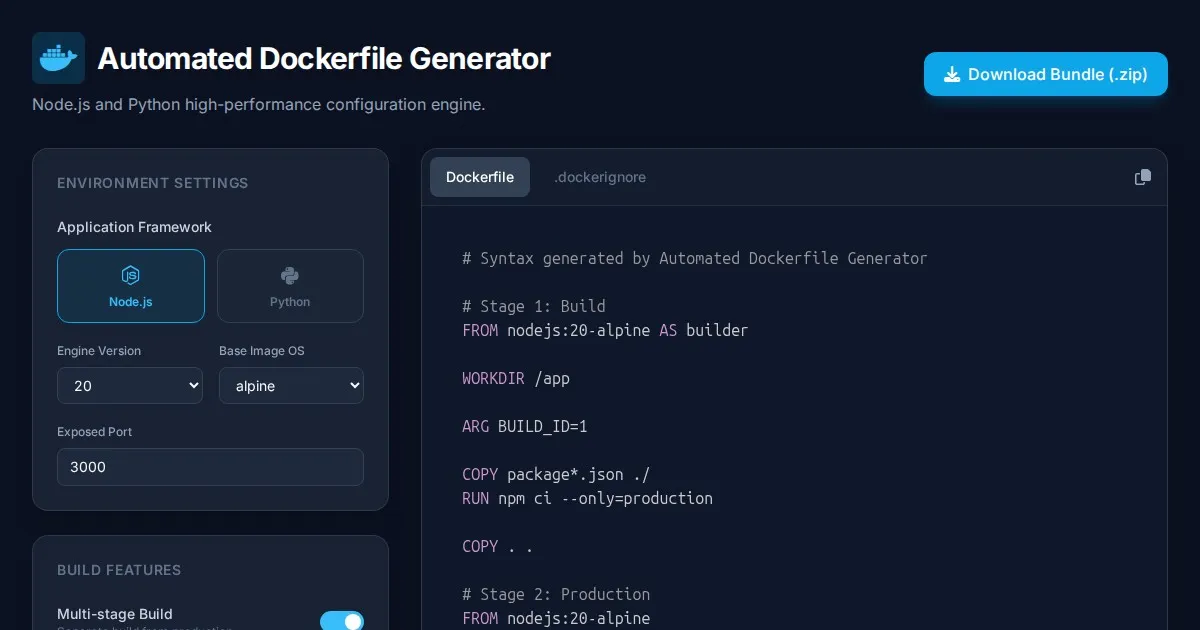
Automated Dockerfile Generator for Node.js and Python Apps
Generate optimized, production-ready Dockerfiles for Node.js and Python applications instantly. Customize base images, port configurations, and dependencies.
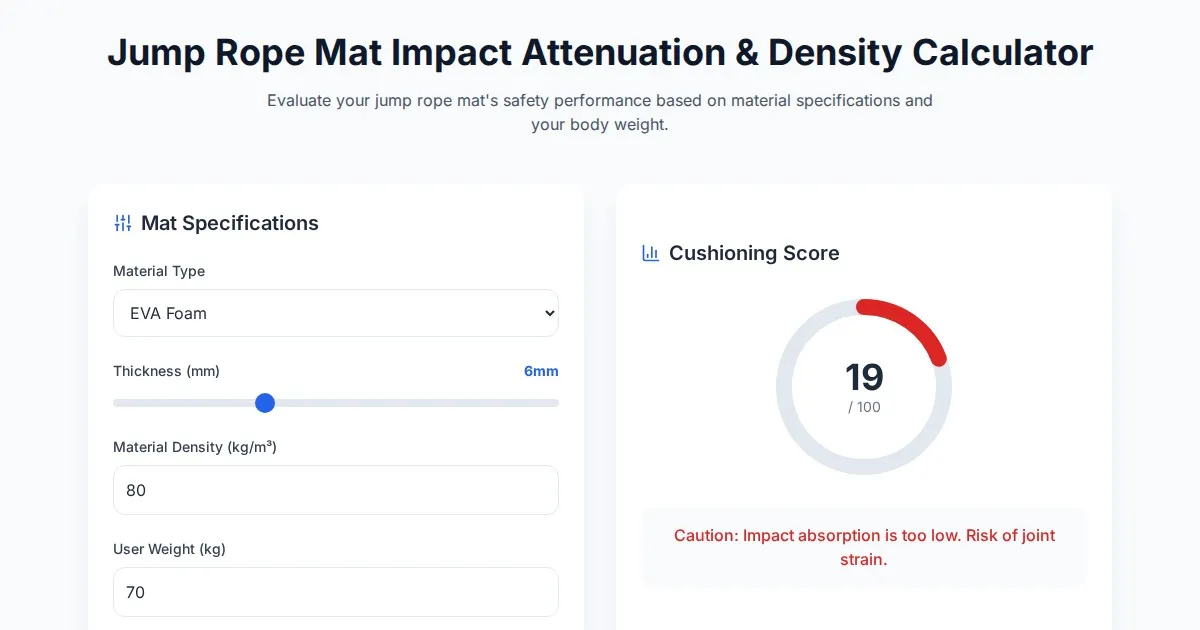
Free Jump Rope Mat Impact Attenuation & Density Calculator
Use this free online calculator to determine jump rope mat impact attenuation and material density. Safely assess if your workout flooring protects your joints.

Free Base64 Image Data URI to File Size Calculator
Accurately calculate the file size of Base64 encoded image data strings. This free, web-based tool helps developers estimate binary file sizes for web apps.
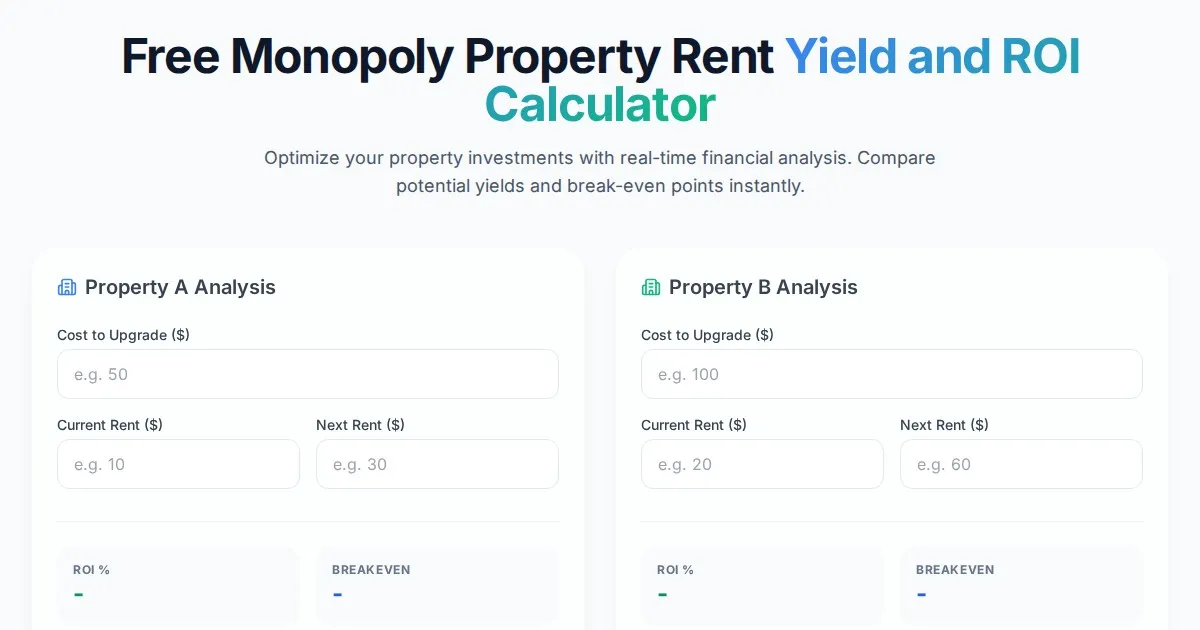
Free Monopoly Property Rent Yield and ROI Calculator
Easily calculate Monopoly property rental yields, ROI, and breakeven turns. Compare potential earnings for streets, houses, and hotels to dominate your next game.
Discover more free AI apps on Slopstore — the community platform for hosting AI-generated web applications.