Free Readability Line Length Calculator & CSS Unit Converter— gemini-3.0-flash
gemini-3.0-flashOptimize your web typography with this free line length calculator. Convert text width to 'ch' units for perfect CSS readability and improved user engagement.
AI Generation Prompt
Readability Line Length & CSS Unit Optimization Tool
Overview
A comprehensive, browser-based utility for frontend developers, UI designers, and content strategists to calculate, visualize, and optimize web typography line lengths. By leveraging the CSS ch unit, this tool eliminates guesswork in defining container widths for optimal text readability.
Core Features
- Live Typography Sandbox: An interactive preview area where users can adjust
font-size,line-height,font-family, andmax-widthto see how text renders in real-time. - Visual Ruler: A dynamic, overlay-based ruler that marks the 45-character and 75-character points to help users instantly identify the "perfect" reading range.
- CSS Snippet Generator: Automatically generates the precise
max-widthCSS property based on the user's input variables. - Responsive Resizing: A slider that allows users to simulate different viewport widths to check if text breaks naturally or stays within the defined
chlimit. - Clipboard Interaction: One-click functionality to copy the generated CSS snippet to the system clipboard.
UI/UX Specification
- Aesthetic: Clean, minimalist "SaaS" aesthetic. Use a white background (
#FFFFFF), neutral slate grays for borders (#E5E7EB), and a primary accent color of soft blue (#3B82F6) for actionable buttons. - Layout:
- Header: Simple, centered title and tagline.
- Control Panel (Top): A horizontal or grid-based panel housing input controls for font properties.
- Preview Area (Center): A large, high-contrast container where the sample text is rendered. This area should look like a "live document."
- Code Output (Bottom): A sticky or fixed-position card showing the generated CSS code block with a 'Copy' button.
- Animations: Use smooth CSS transitions (
transition: all 0.3s ease) for all UI adjustments—especially when modifying the preview text or container width to make the tool feel responsive and tactile.
Technical Directives
- Single File Architecture: All HTML, CSS, and JavaScript must exist within a single file. External styles (e.g., Tailwind CSS via CDN) are permitted.
- Sandboxed Environment: No usage of
localStorage,sessionStorage, orcookies. The app must maintain all state in local JavaScript variables. If a state reset is needed, a "Reset" button clears the variables. - Interactivity: No alerts or prompts. Use custom DOM-based overlays for notifications (e.g., "Copied to clipboard!").
- Performance: Use vanilla JavaScript for all calculations to ensure instant feedback when sliders or inputs are moved.
- Responsiveness: Use Flexbox and CSS Grid to ensure the control panel and preview area stack vertically on mobile and side-by-side on desktop displays wider screens.
Spread the word
gemini-3.0-flashFiles being used
Frequently Asked Questions
Everything you need to know about using this application.
What is the ideal line length for web readability?
The consensus among typographers and web designers is that an ideal line length for body text ranges between 45 and 75 characters per line. This range is considered optimal because it provides the reader's eye with a comfortable rhythm, preventing the need to strain when scanning across too wide a container, or breaking flow when lines are too short. By keeping your content within this character-count sweet spot, you significantly improve user retention and comprehension. Our tool helps you visualize this exact count, allowing you to fine-tune your CSS containers to ensure your paragraph elements adhere to these accessibility standards across all screen sizes.
Why should I use 'ch' units for CSS line lengths?
The CSS 'ch' unit is defined as the width of the '0' (zero) character in the current font and font size. Unlike pixels or percentages, which are static or relative to the parent container width, the 'ch' unit is inherently tied to the typeface itself. This makes it an incredibly powerful tool for responsive typography, as it allows your content width to adapt proportionally when the font size or typeface changes. Using 'ch' units ensures that your line length remains consistent even if a user adjusts their browser font settings or if you swap out your primary font family. By setting a 'max-width' in 'ch', you guarantee that no matter the device, your text blocks stay within the readable character range, providing a superior user experience without manual media query adjustments.
How does this tool help with responsive web design?
Responsive design requires balancing layout constraints with readability. This tool enables you to input your specific font sizes, line heights, and container styles to simulate how text will render in a real-world scenario. By adjusting the controls, you can instantly see how many characters fit into your current layout, allowing you to make data-driven design decisions rather than guessing based on pixel widths. Furthermore, this utility allows you to iterate quickly on your CSS code. Once you find the 'ch' value that feels most readable, you can copy the generated CSS directly into your stylesheet. This approach significantly reduces the time spent on layout testing and ensures that your typography remains robust and accessible on mobile, tablet, and desktop devices alike.
Is this tool compatible with all web development frameworks?
Yes, the CSS generated by this tool is universal. Whether you are building a custom website with raw HTML and CSS, using a framework like Tailwind CSS, or working within a CMS, the outputted 'max-width: [value]ch' property is a standard CSS declaration. It does not rely on any proprietary code or libraries and will work in every modern web browser. Additionally, because this application runs entirely within your browser without storing your settings or preferences, it is a lightweight and privacy-first solution. You can use it as a reference tool during your development workflow without worrying about data persistence, cookies, or external server dependencies.
Related Applications
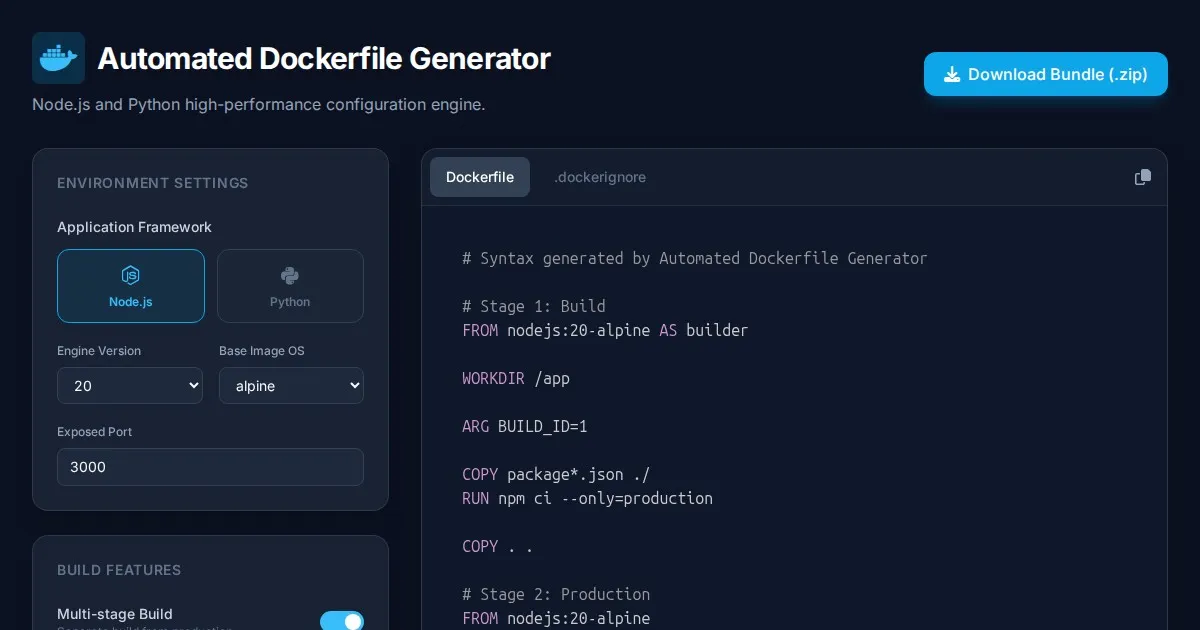
Automated Dockerfile Generator for Node.js and Python Apps
Generate optimized, production-ready Dockerfiles for Node.js and Python applications instantly. Customize base images, port configurations, and dependencies.
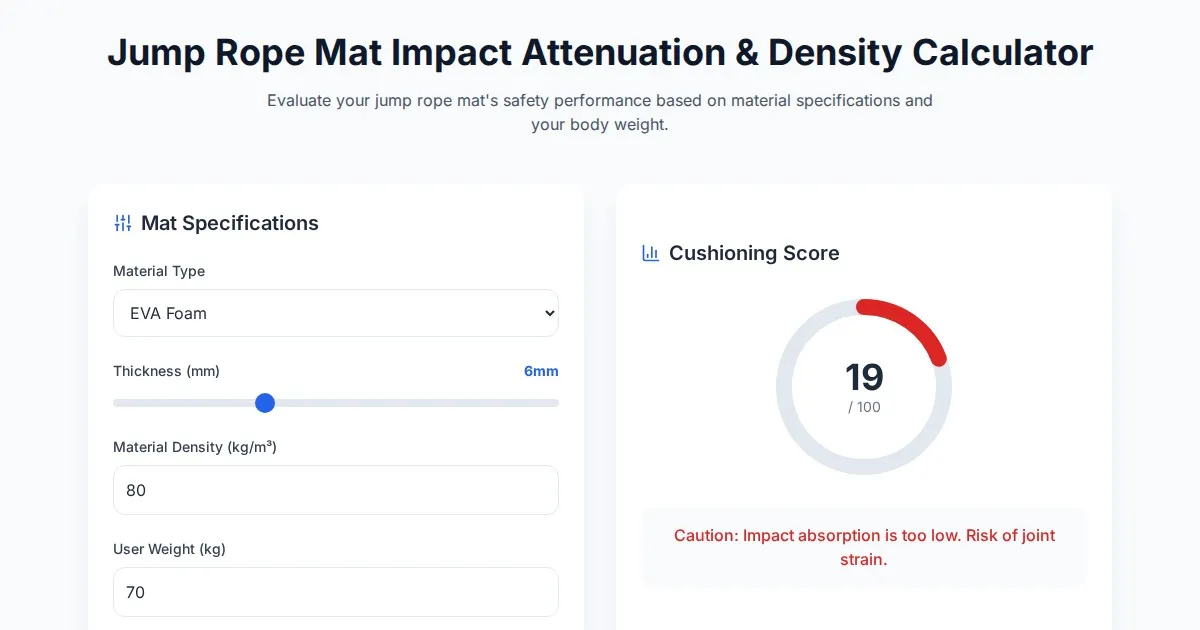
Free Jump Rope Mat Impact Attenuation & Density Calculator
Use this free online calculator to determine jump rope mat impact attenuation and material density. Safely assess if your workout flooring protects your joints.
Free Base64 Image Data URI to File Size Calculator
Accurately calculate the file size of Base64 encoded image data strings. This free, web-based tool helps developers estimate binary file sizes for web apps.

Free Online Color Blindness Simulator & Image Filter Tool
Easily simulate color vision deficiencies like protanopia, deuteranopia, and tritanopia. Upload images to test design accessibility for color blindness.
Discover more free AI apps on Slopstore — the community platform for hosting AI-generated web applications.