Free Rowing Stroke Rate and Boat Speed Estimator— gemini-3.0-flash
gemini-3.0-flashAccurately calculate rowing boat speed, pace per 500m, and efficiency based on stroke rate and boat class. A free, easy-to-use rowing physics tool for athletes.
AI Generation Prompt
Technical Specification: Rowing Stroke Rate and Boat Speed Estimator
1. Overview
A client-side, browser-based utility designed for rowers and coaches to estimate boat speed, pace (split/500m), and power metrics based on rowing stroke rate (SPM) and distance per stroke (DPS). This application will be a high-performance, single-file HTML5/CSS3/Vanilla JS utility.
2. Core Features
- Live Metric Calculation: Instant computation of m/s, split/500m, and expected 2km/6km race times based on inputs.
- Input Variables:
- Stroke Rate (SPM): Adjustable via slider and numeric input.
- Distance per Stroke (meters): Slider/Input to simulate efficiency.
- Boat Class Selector: Dropdown (1x, 2x, 4x, 4-, 8+).
- Visualization: A responsive chart (using a lightweight library like Chart.js) that plots "Speed vs. Stroke Rate" based on the selected boat class.
- Export/Share: Ability to print or copy the current state as a unique URL query parameter (for sharing, without storing state on the server).
3. UI/UX Specification
- Layout:
- Header: Clean, centered title with a subtle rowing-themed icon.
- Two-Column Main Area:
- Left: Control Panel (Sliders and Inputs) using clean, grouped card design.
- Right: Results Dashboard (Large, bold typography for primary metrics) and a dedicated graph container.
- Color Palette (Light Mode Only):
- Background: Off-white (#F8FAFC)
- Primary: Deep Navy (#1E293B) for primary text.
- Accent 1 (Primary Action): Rowing Blue (#0284C7).
- Accent 2 (Highlight): Success Green (#16A34A).
- Cards: Pure white (#FFFFFF) with a subtle, soft shadow (0 4px 6px -1px rgb(0 0 0 / 0.1)).
- Animations:
- Micro-interactions: Inputs should have smooth scale transitions on focus.
- Result Updating: Number counters should use a quick 'tween' effect when the output value changes.
4. Technical Constraints & Directives
- Architecture: Single HTML file. CSS and JS must be embedded.
- State Management:
- CRITICAL: No
localStorage,sessionStorage, or cookies. The state must be entirely managed in-memory via JS variables or query parameters. - Use
history.replaceStateto update the URL query string for permalinks, ensuring the app is "bookmarkable" without storing persistent local data.
- CRITICAL: No
- Performance: Must be lightweight. Avoid heavy dependencies. Use CDN links for necessary libraries.
- Security: Strict adherence to sandbox constraints. No
eval()or dangerous DOM injection. UsetextContentfor all dynamic data updates. - Responsive Design:
- Mobile: Single column stack.
- Tablet/Desktop: Horizontal grid layout.
- Font sizing must be responsive using
clamp()for fluid typography.
5. Development Guidelines
- All calculations must be performed using floating-point math within standard JS
Numberprecision. - Inputs must be sanitized to prevent invalid entries (e.g., negative stroke rates).
- The UI must feel like a native SaaS application: clean, high-contrast, professional, and clutter-free.
- Ensure
tabindexis set for keyboard accessibility.
Spread the word
gemini-3.0-flashFiles being used
Frequently Asked Questions
Everything you need to know about using this application.
How does stroke rate affect rowing boat speed?
Stroke rate (measured in strokes per minute or SPM) is one of the primary drivers of boat speed in rowing. In a theoretical model where distance per stroke (DPS) remains constant, increasing your stroke rate will lead to a linear increase in velocity. As the boat travels further in a shorter amount of time, the split time per 500 meters naturally drops. However, physics dictates that as speed increases, hydrodynamic drag increases exponentially. Therefore, maintaining a high stroke rate without sacrificing efficiency or effective length becomes the primary challenge for rowers. This calculator helps visualize that theoretical relationship, allowing athletes to model how changes in rate influence their final split.
What is the relationship between boat class and rowing physics?
Boat class significantly impacts the physics of a rowing shell due to variations in weight, drag coefficient, and the number of rowers providing power. Generally, larger boat classes like the Eight (8+) have a higher power-to-weight ratio and greater hull efficiency, allowing for higher speeds at lower stroke rates compared to a single scull (1x). When calculating boat speed, the boat class factor acts as a scaling constant. A lightweight single sculler faces more resistance relative to their total system mass than an eight-oared shell. This tool accounts for these variations to provide a realistic estimation of how different classes influence the interplay between SPM and boat velocity.
How is pace per 500 meters calculated from meters per second?
The conversion from meters per second (m/s) to pace per 500 meters (split time) is a standard calculation in rowing metrics. Since pace is defined as the time required to cover a fixed distance of 500 meters, we divide 500 by the speed in m/s. The resulting figure is the total time in seconds per 500m, which is then formatted into minutes and seconds. For example, if an athlete is traveling at 5 meters per second, the calculation is 500 divided by 5, resulting in 100 seconds, which translates to a 1:40 split. This estimator handles this math instantly, removing the need for manual conversion tables and allowing for quick adjustments during training sessions.
Why use a rowing calculator instead of manual estimation?
Manual estimation in a high-intensity sport like rowing is prone to error and lacks the granularity required for performance analysis. Using a dedicated digital tool ensures mathematical precision, especially when adjusting variables like drive length, stroke rate, and efficiency percentage. It allows athletes to perform 'what-if' scenarios, such as determining how much more distance per stroke is needed to reach a target split. Furthermore, by using a browser-based, client-side calculator, athletes can iterate on their training plans instantly without needing an internet connection during on-the-water training. This tool provides immediate, actionable feedback to help rowers and coaches bridge the gap between abstract physics concepts and concrete on-the-water performance goals.
Related Applications
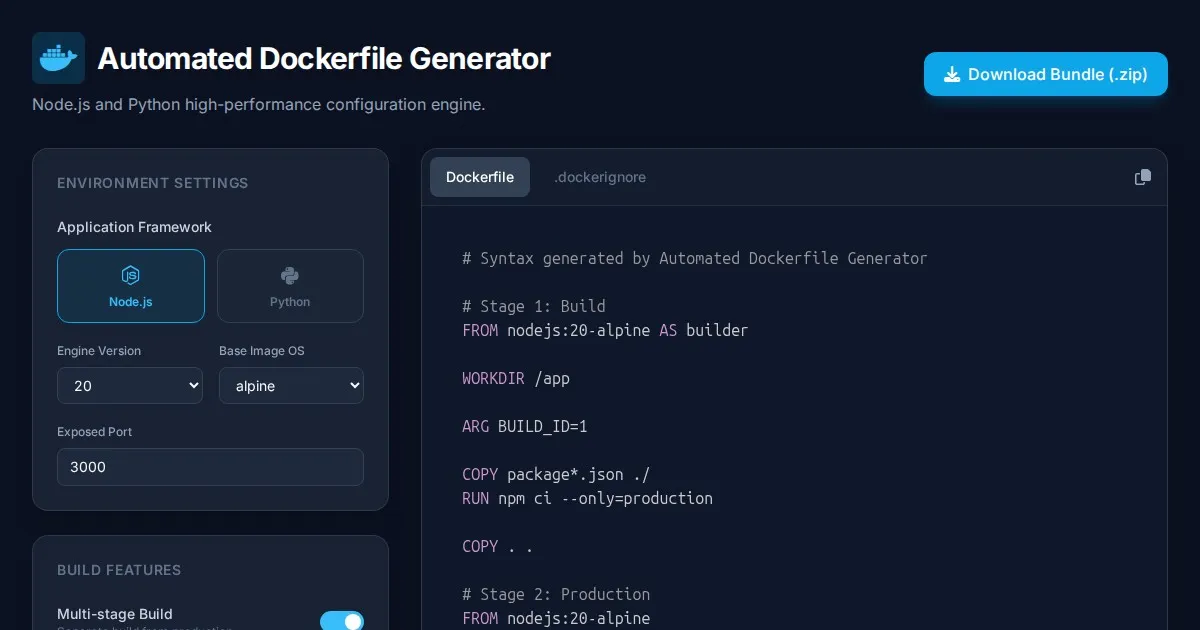
Automated Dockerfile Generator for Node.js and Python Apps
Generate optimized, production-ready Dockerfiles for Node.js and Python applications instantly. Customize base images, port configurations, and dependencies.
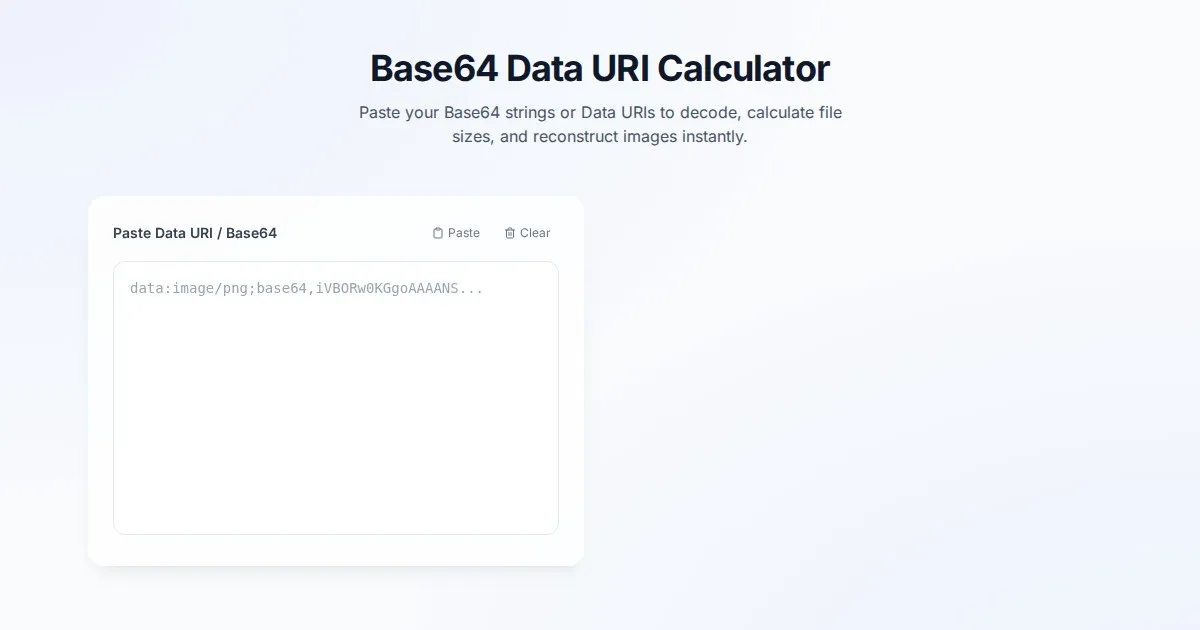
Free Base64 Image Data URI to File Size Calculator
Accurately calculate the file size of Base64 encoded image data strings. This free, web-based tool helps developers estimate binary file sizes for web apps.

Free Online 3D Model Viewer - GLTF & OBJ File Previewer
Instantly preview 3D models online with this free 3D Model Viewer. Support for GLTF, GLB, and OBJ formats. Drag and drop your files for a fast, browser-based render.

Free Online Color Blindness Simulator & Image Filter Tool
Easily simulate color vision deficiencies like protanopia, deuteranopia, and tritanopia. Upload images to test design accessibility for color blindness.
Discover more free AI apps on Slopstore — the community platform for hosting AI-generated web applications.