Free Static and Dynamic Engine Compression Ratio Calculator— gemini-3.0-flash
gemini-3.0-flashCalculate your engine's static and dynamic compression ratios easily. An essential free tool for automotive builders and tuners to optimize engine performance.
AI Generation Prompt
Technical Specification: Professional Engine Compression Calculator
1. Application Overview
A high-precision, browser-based tool designed for automotive engineers and engine builders. The application calculates both Static Compression Ratio (SCR) and Dynamic Compression Ratio (DCR) in real-time, helping users determine optimal engine parameters without complex spreadsheet formulas.
2. UI Layout Strategy
- Header: Clean, centered typography identifying the tool. A small "Instructions" toggle that reveals a slide-down guide for novices.
- Main Tool Area (Two-Column Layout):
- Left Column (Inputs): A clean form grouped into logical segments: "Cylinder Geometry" (Bore, Stroke, Rod Length), "Chamber/Piston Specs" (Chamber Volume, Deck Height, Gasket Specs), and "Cam Timing" (Intake Closing Angle).
- Right Column (Results/Dashboard): A "Live Results" panel that updates instantly. It displays the Static Compression Ratio and Dynamic Compression Ratio in large, bold numbers. A visual "Safety Meter" indicator (Green/Yellow/Red) provides immediate feedback based on common engine building safety thresholds.
- Interactions:
- Input fields use high-contrast labels and soft, rounded borders.
- Calculations trigger automatically on
inputevents (no submit button required). - Smooth CSS transitions (ease-in-out) when the result card updates values.
3. Aesthetics & Palette
- Color Palette:
- Primary: Deep Slate (#2D3748) for text.
- Secondary: Electric Blue (#3182CE) for accents and buttons.
- Background: Off-white (#F7FAFC) with pure white (#FFFFFF) cards for content.
- Safety Indicators: Success Green (#38A169), Caution Yellow (#D69E2E), Danger Red (#E53E3E).
- Design Language: Minimalist SaaS aesthetic. Use of soft shadows (
box-shadow: 0 4px 6px -1px rgba(0,0,0,0.1)) to create depth without clutter.
4. Technical Implementation Directives
- Architecture: Single HTML file (vanilla JS, Tailwind CSS via CDN).
- Responsiveness: Mobile-first stack. On small screens, the two columns stack vertically. On desktops, use a flexible side-by-side flexbox or grid layout.
- Memory Management: Use object literals to manage state. Do NOT use
localStorage,sessionStorage, orindexedDB. All variables must be reset on page refresh. - UX/Safety:
- No
alert()orprompt(). Use a custom modal component for errors (e.g., invalid input detection). - Inputs should only accept positive numerical values. Add regex validation to prevent non-numeric input.
- Ensure the tool is fully compatible with iframe sandboxing (all scripts must be internal or loaded via secure CDN; no cookies, no popups).
- No
- Performance: Calculations should be executed as synchronous functions for instant feedback (O(1) complexity).
5. Feature Roadmap
- Metric/Imperial Toggle: Global switch to swap between Millimeters/CCs and Inches/Cubic Inches.
- "What-If" Scenarios: A simple button to duplicate the current results into a "Compare" card, allowing users to tweak one variable (e.g., thicker gasket) and see the change side-by-side.
- Printable Report: A clean, CSS-based print stylesheet that hides the UI chrome and generates a formatted table of all inputs and results for workshop use.
Spread the word
gemini-3.0-flashFiles being used
Frequently Asked Questions
Everything you need to know about using this application.
What is the difference between static and dynamic compression ratios?
Static compression ratio refers to the volume of the cylinder when the piston is at bottom dead center compared to the volume when it is at top dead center. It is a mathematical constant based on physical dimensions like bore, stroke, and combustion chamber volume. Dynamic compression ratio, however, takes into account the timing of the intake valve closing. Because the intake valve remains open after the piston starts moving upward on its compression stroke, some air-fuel mixture is pushed back out. Dynamic compression is a more accurate measurement of the actual pressure created within the cylinder during operation.
Why is dynamic compression ratio important for engine builders?
Calculating dynamic compression is critical because it determines an engine's resistance to detonation and knock. A high static compression ratio might seem impressive, but if the dynamic compression is too high for the fuel octane being used, the engine will suffer from pre-ignition and potentially catastrophic failure. By adjusting camshaft timing, builders can manipulate the dynamic compression ratio to fit the fuel type and application, whether they are building a naturally aspirated track engine or a high-performance forced induction setup.
What inputs are required to use this compression calculator?
To get an accurate calculation, you will need the specific physical measurements of your engine components. This includes the bore, stroke, piston deck clearance, gasket thickness, head gasket bore diameter, and the volume of the combustion chamber in cubic centimeters (cc). For the dynamic compression calculation, you will also need the intake valve closing angle (IVC) at a specific lift, usually measured in degrees after bottom dead center (ABDC). These specs can typically be found in your service manual or the manufacturer's camshaft specification card.
Is this calculator suitable for forced induction engines?
Yes, this tool is highly useful for forced induction applications, such as turbocharging or supercharging. While the static compression calculation remains the same, dynamic compression is often even more critical in these builds to ensure the engine can handle the added cylinder pressure. However, note that this calculator focuses on the mechanical compression ratio. It does not account for the additional pressure generated by the boost levels of a turbocharger or supercharger, which would require an additional boost pressure calculation.
Related Applications
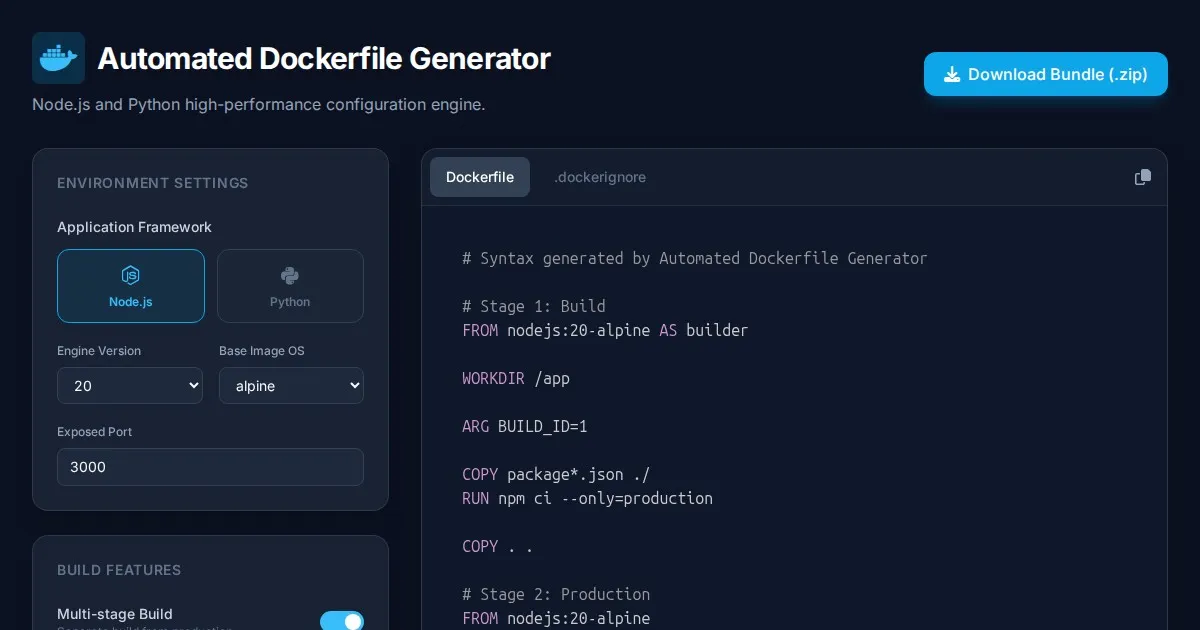
Automated Dockerfile Generator for Node.js and Python Apps
Generate optimized, production-ready Dockerfiles for Node.js and Python applications instantly. Customize base images, port configurations, and dependencies.
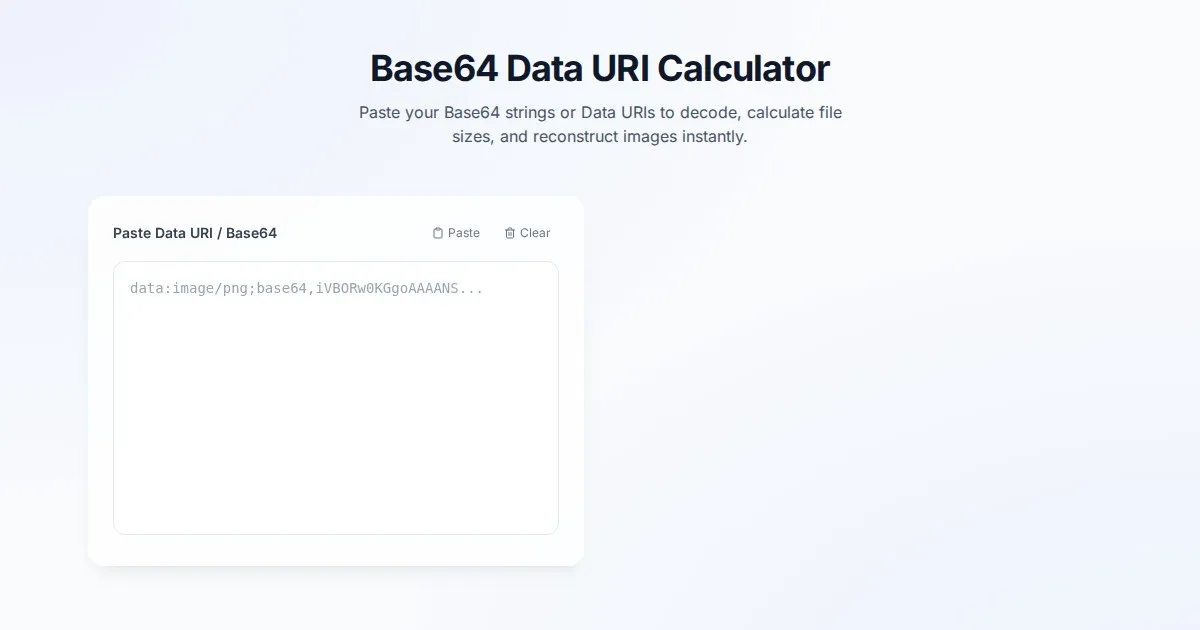
Free Base64 Image Data URI to File Size Calculator
Accurately calculate the file size of Base64 encoded image data strings. This free, web-based tool helps developers estimate binary file sizes for web apps.

Free Online 3D Model Viewer - GLTF & OBJ File Previewer
Instantly preview 3D models online with this free 3D Model Viewer. Support for GLTF, GLB, and OBJ formats. Drag and drop your files for a fast, browser-based render.

Free Online Color Blindness Simulator & Image Filter Tool
Easily simulate color vision deficiencies like protanopia, deuteranopia, and tritanopia. Upload images to test design accessibility for color blindness.
Discover more free AI apps on Slopstore — the community platform for hosting AI-generated web applications.