Free Studio Lighting Contrast Ratio Key to Fill Calculator— gemini-3.0-flash
gemini-3.0-flashCalculate your studio lighting key-to-fill ratio effortlessly. Optimize your photography and cinematography exposure with this free lighting contrast tool.
AI Generation Prompt
Studio Lighting Contrast Ratio Key vs Fill Calculator
Overview
This single-file application is a professional-grade utility for photographers, cinematographers, and lighting technicians. It calculates the contrast ratio between the primary light source (Key) and the secondary light source (Fill) to ensure consistent exposure and mood across studio sessions.
Technical Constraints & Compliance
- Single File: The entire application is contained in one HTML file using Tailwind CSS via CDN.
- Storage: No
localStorage,sessionStorage, or cookies. The app uses in-memory variables to maintain state during the session. If the page is refreshed, the data resets. - Security: Fully compatible with sandboxed
iframeenvironments. No external scripts or tracking pixels. - Interface: Strictly light-mode. No dark mode toggle.
Features
- Dual Input Modes: Users can input values in F-Stops or Lux/Footcandles.
- Real-Time Ratio Output: Displays the calculated ratio (e.g., 2:1, 4:1) instantly as inputs change.
- Visual Ratio Gauge: A CSS-based horizontal scale showing where the current ratio sits on the "Contrast Spectrum" (from Flat to Dramatic).
- Scenario Presets: Quick-select buttons for common lighting styles (e.g., "Beauty/Commercial 2:1", "Dramatic Portrait 4:1", "Film Noir 8:1").
- Responsive Design: Mobile-first layout that stacks inputs on small screens and expands to a side-by-side dashboard on tablets and desktops.
UI/UX Specification
- Color Palette:
- Background:
#F8FAFC(Slate 50) - Cards:
#FFFFFF(Pure White) - Primary Accent:
#0F172A(Slate 900) for text and heavy borders. - Secondary Accent:
#3B82F6(Blue 500) for active results and buttons. - Shadows: Soft, diffused shadows (
shadow-sm,shadow-md) to define input cards.
- Background:
- Animations:
- Smooth transitions on input focus and button hover states.
- Results section uses a fade-in animation when the calculation updates.
- Layout:
- Header: Simple, descriptive H1 title with a brief, helpful subtitle.
- Main Tool Area: Two-column grid for Key Light and Fill Light inputs. Each includes a numerical input field and a unit dropdown.
- Results Section: A prominent, large-text display showing the resulting ratio, accompanied by a dynamic progress bar indicating contrast intensity.
- Contextual Info: A "Guide" section at the bottom explaining what the specific calculated ratio implies for the final image.
Implementation Instructions
- Use Vanilla JavaScript to handle the calculation logic. Create an
update()function triggered by any inputoninputevent. - Ensure the math correctly handles F-stop logarithmic conversion if users select F-stops (converting to stops of difference) vs. simple intensity ratios if using lux/footcandles.
- Do not use any
alert()orprompt()calls; use custom<div>based overlays or inline text fields for any necessary user messaging. - Ensure all external documentation links are opened with
target="_blank"andrel="noopener noreferrer".
Spread the word
gemini-3.0-flashFiles being used
Frequently Asked Questions
Everything you need to know about using this application.
Why is the key-to-fill ratio important in studio lighting?
The key-to-fill ratio is the fundamental metric that determines the mood and depth of your photographic or cinematic scene. By controlling the relationship between your brightest light (the key) and the shadow-softening light (the fill), you dictate the perceived contrast of your subject, allowing you to move from high-key, flat lighting to dramatic, low-key, moody aesthetics. Mastering this ratio ensures that your images have consistent dimensionality. If the ratio is too low, the subject may appear flat and uninteresting, whereas a ratio that is too high might result in crushed shadows where details are lost. Using a dedicated calculator helps you achieve these specific cinematic looks with precision.
How do I measure my studio lights for this calculator?
To get the most accurate results, you should use a dedicated incident light meter. Position the meter at the subject's location and point the dome toward your key light while turning off the fill light to record the key value. Next, repeat the process by turning off the key light and pointing the dome toward the fill light to get your fill reading. Once you have these two values in stops or lux, input them into the calculator. It is important to measure from the subject's position rather than the camera's position, as incident metering measures the light actually hitting your subject, which is the only way to establish a true lighting ratio.
What is the ideal contrast ratio for professional portraits?
There is no single 'ideal' ratio, as the choice depends entirely on the aesthetic goals of your shoot. However, a 2:1 ratio (a 1-stop difference) is a common standard for beauty and commercial photography, providing enough shadow to give the face shape without hiding detail. This ratio creates a very natural, safe look that is flattering for most skin types. For more dramatic or moody portraits, photographers often move toward 4:1 (a 2-stop difference) or even 8:1 (a 3-stop difference). These higher contrast ratios add significant drama and emphasis on texture, making them ideal for character studies or edgy editorial work. Experimenting with these ratios is key to developing your unique lighting style.
Can I use this calculator for video production and cinematography?
Absolutely. This tool is designed for both still photography and cinematography. In video production, managing lighting ratios is critical to maintaining a consistent look across different shots and camera angles. By ensuring your lighting ratios remain constant, you avoid 'jumpy' edits where the scene's lighting depth shifts unexpectedly. This calculator functions perfectly for video because it relies on the same physics-based exposure values used in digital cinema cameras. By normalizing your lighting setup before the camera rolls, you save significant time in post-production color grading and exposure correction, as the footage will come out of the camera with the desired contrast baked into the sensor's data.
Related Applications

Automated Dockerfile Generator for Node.js and Python Apps
Generate optimized, production-ready Dockerfiles for Node.js and Python applications instantly. Customize base images, port configurations, and dependencies.

Free Base64 Image Data URI to File Size Calculator
Accurately calculate the file size of Base64 encoded image data strings. This free, web-based tool helps developers estimate binary file sizes for web apps.
Free Online Color Blindness Simulator & Image Filter Tool
Easily simulate color vision deficiencies like protanopia, deuteranopia, and tritanopia. Upload images to test design accessibility for color blindness.
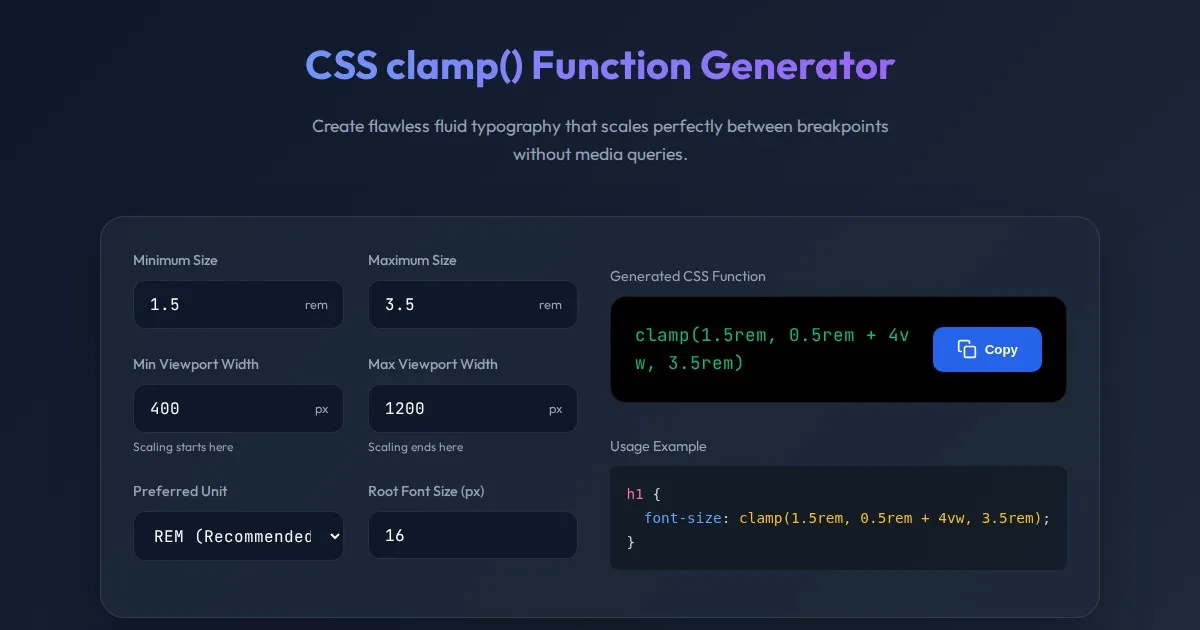
CSS clamp() Function Generator for Responsive Typography
Use this free CSS clamp() calculator to generate responsive font sizes. Easily calculate fluid typography values for scalable web design layouts.
Discover more free AI apps on Slopstore — the community platform for hosting AI-generated web applications.