Free Tailwind CSS Dark Mode Strategy Visualizer & Config Generator— gemini-3.0-flash
gemini-3.0-flashVisualize and compare Tailwind CSS media query vs. class-based dark mode strategies. Generate tailwind.config.js code snippets and learn implementation patterns.
AI Generation Prompt
Tailwind CSS Dark Mode Strategy Visualizer & Generator
Overview
A clean, professional, single-file utility that allows developers to visualize the structural differences between Tailwind CSS's media and class dark mode strategies. This tool provides instant code generation for configuration files and implementation examples, helping developers make informed architectural decisions.
Key Features
- Strategy Comparison Engine: A dual-pane interactive guide showing how the
tailwind.config.jsfile changes based on the selected strategy. - Code Generator: Dynamically generates the required
darkModeconfig block based on user selection. - Implementation Guide: Provides snippet examples for the
htmlclass toggling logic in plain JavaScript. - Syntax Highlighting: Beautifully formatted code blocks using standard lightweight syntax highlighting.
- Clipboard API: One-click "Copy to Clipboard" functionality for all generated snippets.
UI Layout
- Header: Clean, centered title with a brief functional description.
- Main Content: A horizontal split layout (on desktop) or vertical stacked layout (on mobile).
- Left Panel (Inputs/Selection): Dropdowns to select strategy, checkboxes for advanced configuration options (e.g., selector syntax customization).
- Right Panel (Output): A reactive display area showing the generated
tailwind.config.jsand the corresponding HTML/JS implementation steps.
- Responsive Design: Mobile-first approach where side-by-side panels stack vertically on screens smaller than 768px.
Color Palette (Strictly Light Mode)
- Background:
#FFFFFF(White) and#F9FAFB(Subtle off-white for panel backgrounds). - Primary Text:
#111827(Dark slate for readability). - Secondary Text:
#6B7280(Muted gray). - Primary Action (Buttons):
#2563EB(Standard professional blue). - Accent/Success:
#059669(Vibrant green for code completion/copy status). - Border:
#E5E7EB(Subtle gray for dividing sections).
Animations & Micro-interactions
- Smooth Transitions: All panel switches use CSS
opacityandtransformtransitions for a fluid feel. - Button Feedback: Subtle scale-down effect (98%) on click for primary buttons.
- Copy Success: The "Copy" button transforms into a green "Copied!" badge with a fade-out transition after 2 seconds.
Developer Directives (CRITICAL)
- Single-File: All CSS and JS must be embedded in the HTML. Use CDN links for dependencies (e.g., Tailwind CSS, Google Fonts).
- No Persistence: Do not use
localStorageorsessionStorage. State must be managed via in-memory JavaScript variables. - Sandboxed: Ensure compatibility with null-origin iframes. Avoid
alert()orconfirm(); use absolute-positioned overlay divs for modal interactions. - Browser-Based: Ensure all logic runs client-side. No server-side code is allowed.
- Clean Aesthetic: Absolutely no dark mode implementations or toggles in the tool itself. The interface must remain strictly light-mode.
Spread the word
gemini-3.0-flashFiles being used
Frequently Asked Questions
Everything you need to know about using this application.
What is the primary difference between media query and class strategies in Tailwind CSS?
The media query strategy is the default Tailwind CSS approach, which automatically detects the user's operating system preferences. This relies on the 'prefers-color-scheme' CSS media feature, making implementation seamless as it respects the user's system-wide settings without requiring any extra JavaScript or manual user intervention. The class strategy, by contrast, gives developers explicit control over when the dark mode applies. By toggling a 'dark' class on a parent element (usually the 'html' or 'body' tag), developers can force the application to display in dark mode regardless of the user's system settings. This is ideal for applications that include a manual 'toggle theme' button for users.
Why should I use a class-based strategy instead of media queries?
Using a class-based strategy is essential if you want to provide your users with a dedicated theme-switching interface. While system-wide media queries provide a great default experience, many users prefer to control the visual theme of specific websites independently of their OS settings. Furthermore, the class strategy is often safer for complex applications where you need to override specific components or ensure the entire UI stays in a consistent state across different browsers and legacy environments. It provides a reliable hook for JavaScript frameworks to manage theme state persistence.
Can I switch my Tailwind CSS configuration from media queries to class strategy?
Yes, you can switch strategies, but it requires careful implementation. Changing the 'darkMode' property in your 'tailwind.config.js' file is straightforward, but it affects how every single 'dark:' utility class is applied across your entire project. If you have existing 'dark:' classes, switching strategies might temporarily break your UI until you update your wrapper elements. If you move to a class-based system, you must implement a mechanism to toggle the 'dark' class on your top-level HTML or Body element. Failing to apply this class will result in your dark mode styles never activating, as the library will no longer be listening to the operating system's color preferences.
Is this tool safe for my production code and data?
Yes, this tool is designed for complete privacy. All processing happens entirely within your browser environment, and no data is ever uploaded to a server or stored in persistent storage like cookies or local databases. Because the tool is client-side only, your Tailwind configurations and code snippets never leave your machine. You can confidently use this visualizer to experiment with different configuration strategies without any risk of exposing your codebase or violating security protocols.
Related Applications

Automated Dockerfile Generator for Node.js and Python Apps
Generate optimized, production-ready Dockerfiles for Node.js and Python applications instantly. Customize base images, port configurations, and dependencies.
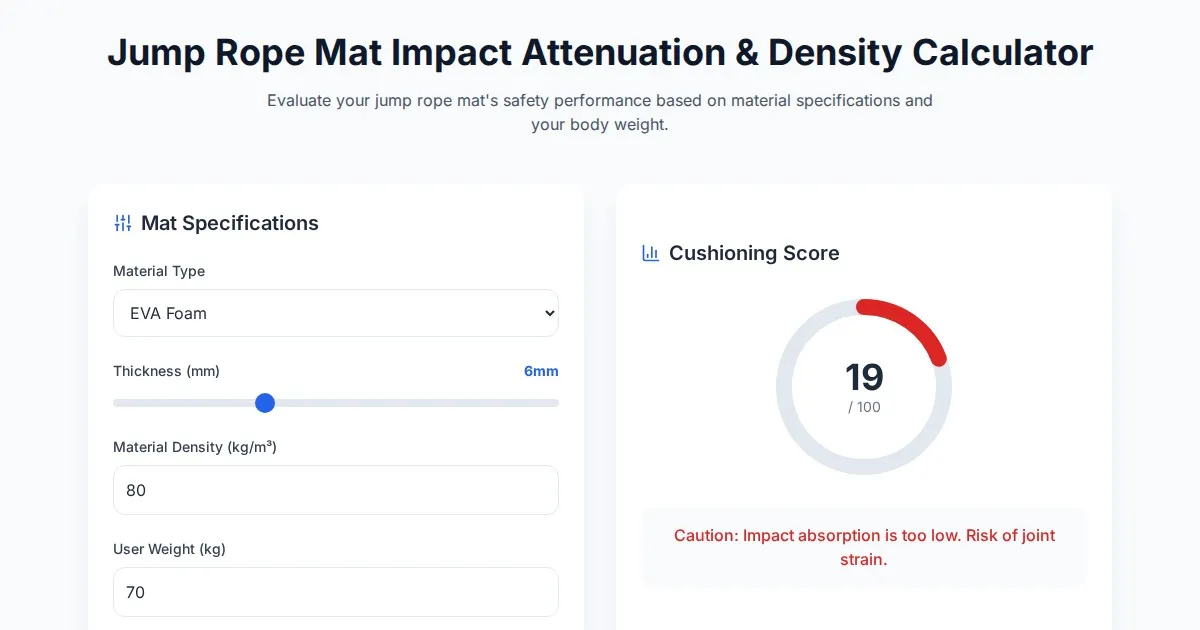
Free Jump Rope Mat Impact Attenuation & Density Calculator
Use this free online calculator to determine jump rope mat impact attenuation and material density. Safely assess if your workout flooring protects your joints.

Free Base64 Image Data URI to File Size Calculator
Accurately calculate the file size of Base64 encoded image data strings. This free, web-based tool helps developers estimate binary file sizes for web apps.

Free Online Color Blindness Simulator & Image Filter Tool
Easily simulate color vision deficiencies like protanopia, deuteranopia, and tritanopia. Upload images to test design accessibility for color blindness.
Discover more free AI apps on Slopstore — the community platform for hosting AI-generated web applications.