Free Tailwind CSS Typography Prose Class Previewer— gemini-3.0-flash
gemini-3.0-flashPreview and customize Tailwind CSS typography plugin prose classes in real-time. Easily test prose sizes, colors, and modifiers for your web content.
AI Generation Prompt
Tailwind CSS Typography Prose Class Previewer
Overview
This single-file application is a real-time visual utility designed to help frontend developers preview the effects of Tailwind CSS Typography plugin classes. It allows users to modify the appearance of HTML content dynamically without modifying actual production code.
Technical Architecture
- Single File: Pure HTML5, Tailwind CSS via CDN, and Vanilla JavaScript.
- State Management: In-memory object state (
{size: 'prose-base', color: 'prose-slate', ...}). No storage APIs used. - Sandbox Compatibility: No external calls, no cookies, no persistent storage, fully operational in null-origin iframes.
- Design: Modern, minimalist light-mode SaaS aesthetic.
Core Feature List
- Dynamic Prose Controller: Select and apply size modifiers (sm, base, lg, xl, 2xl).
- Color Palette Selector: Toggle between default color themes (slate, gray, zinc, neutral, stone).
- Live Content Editor: An editable content block that simulates an article/post structure with H1, H2, H3, lists, and paragraphs.
- Class String Generator: A dedicated area that displays the exact CSS class string to copy and paste into your project.
- Reset Functionality: One-click reset to return all styles to default state.
UI Layout
- Header: Sticky top header with app name and brief instructions.
- Main Control Area: A top-aligned, horizontal card containing dropdowns for size and color, and the CSS output display.
- Editor/Preview Canvas: A responsive dual-pane layout on desktop (Editor + Preview), stacking into a single column on mobile devices.
- Left Pane: The 'Editor' holds the raw HTML or text structure for testing.
- Right Pane: The 'Preview' holds the container with the generated Tailwind classes applied, demonstrating the visual output.
Design Specifications
- Color Palette:
- Backgrounds:
bg-slate-50,bg-white. - Borders:
border-slate-200. - Text:
text-slate-900. - Accents:
blue-600for buttons and interactive elements.
- Backgrounds:
- Typography: Inter or Sans-serif stack for UI elements; browser-default serif/sans for the preview area to maintain authenticity to the Prose plugin intent.
- Transitions: Smooth fade-in for UI components; instant class-swapping for the preview element using standard CSS transitions for width/padding changes.
Implementation Directives for Developer
- No External Storage: Explicitly forbidden from using
localStorageorsessionStorage. Use global JS variables for configuration state. - Responsive Design: Use Tailwind grid/flex classes (
grid-cols-1 md:grid-cols-2) to ensure the preview pane remains usable on mobile screens. - Sanitization: Since the editor allows user input, ensure content is handled securely using
textContentfor updates if possible, or careful DOM handling if usingcontenteditable. - CSS Constraints: Implement ONLY in light mode. Do not add theme toggles. All UI elements should be high-contrast, clean, and professional.
Spread the word
gemini-3.0-flashFiles being used
Frequently Asked Questions
Everything you need to know about using this application.
What is the Tailwind CSS Typography plugin?
The Tailwind CSS Typography plugin is an official extension that provides a set of 'prose' utility classes. These classes are designed to automatically style HTML content, such as blog posts or markdown-rendered text, by managing typography basics like headings, links, blockquotes, and lists without requiring custom CSS. By applying a single 'prose' class to a parent container, developers can achieve clean, professional, and consistent reading experiences across their websites. It standardizes element margins, padding, and font styles based on the theme configuration.
Why use a visual previewer for prose classes?
Visualizing how typography changes with different modifiers can be tedious when manually editing code. A previewer allows developers to instantly see how a size change (e.g., from 'prose-base' to 'prose-xl') or a color palette shift (e.g., from 'prose-slate' to 'prose-stone') impacts the overall document layout. This tool helps verify contrast, readability, and spacing in real-time. By providing immediate feedback, it saves time in the styling workflow, allowing you to iterate on design choices faster before committing them to your codebase.
How does the prose class logic work?
The 'prose' class relies on nested selectors to style child elements of the container. For example, when you apply 'prose', the plugin automatically targets 'h1', 'p', 'a', 'strong', and 'li' tags, injecting appropriate styles defined by your theme settings. Modifiers like 'prose-sm' or 'prose-lg' are essentially shortcuts for global font-size and spacing overrides. Understanding these hierarchies is essential for managing complex document layouts where nested components might need specific typography overrides.
Is this tool suitable for production workflows?
Yes, this tool acts as a rapid prototyping sandbox. It allows you to generate the exact class strings you need for your components. You can copy the resulting utility classes directly into your project files, ensuring consistency with your existing Tailwind CSS configuration. However, note that this app is a purely client-side simulation. It uses a standard Tailwind configuration. If your project has a highly customized 'tailwind.config.js' file, the preview may differ slightly from your specific project's output, but it remains an excellent way to experiment with the core plugin defaults.
Related Applications
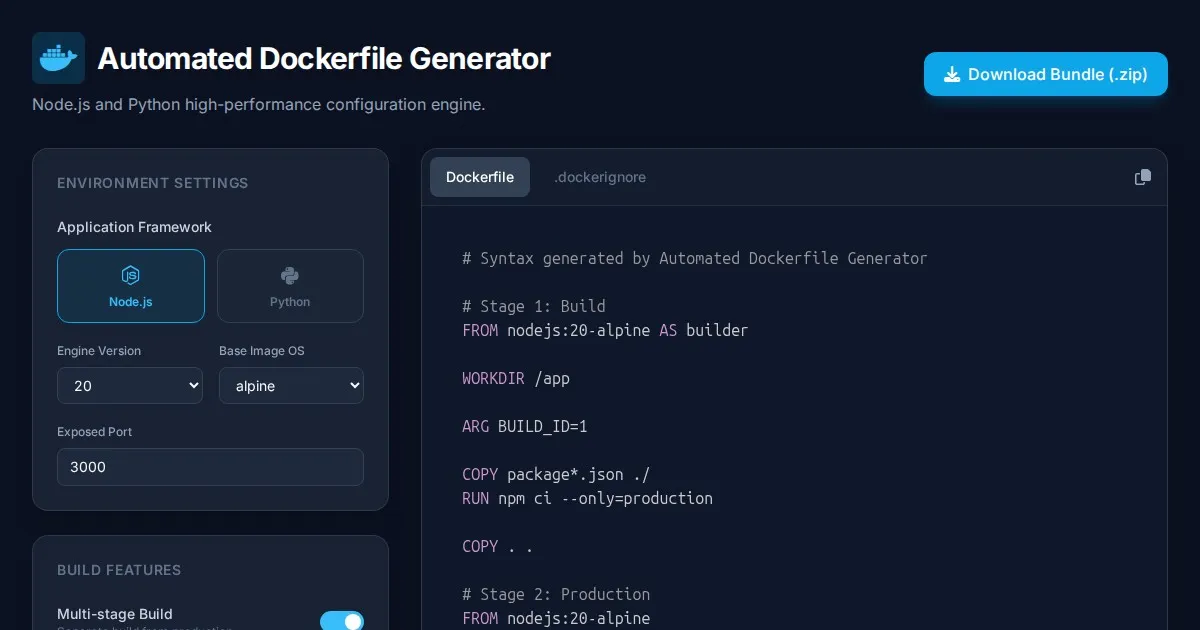
Automated Dockerfile Generator for Node.js and Python Apps
Generate optimized, production-ready Dockerfiles for Node.js and Python applications instantly. Customize base images, port configurations, and dependencies.
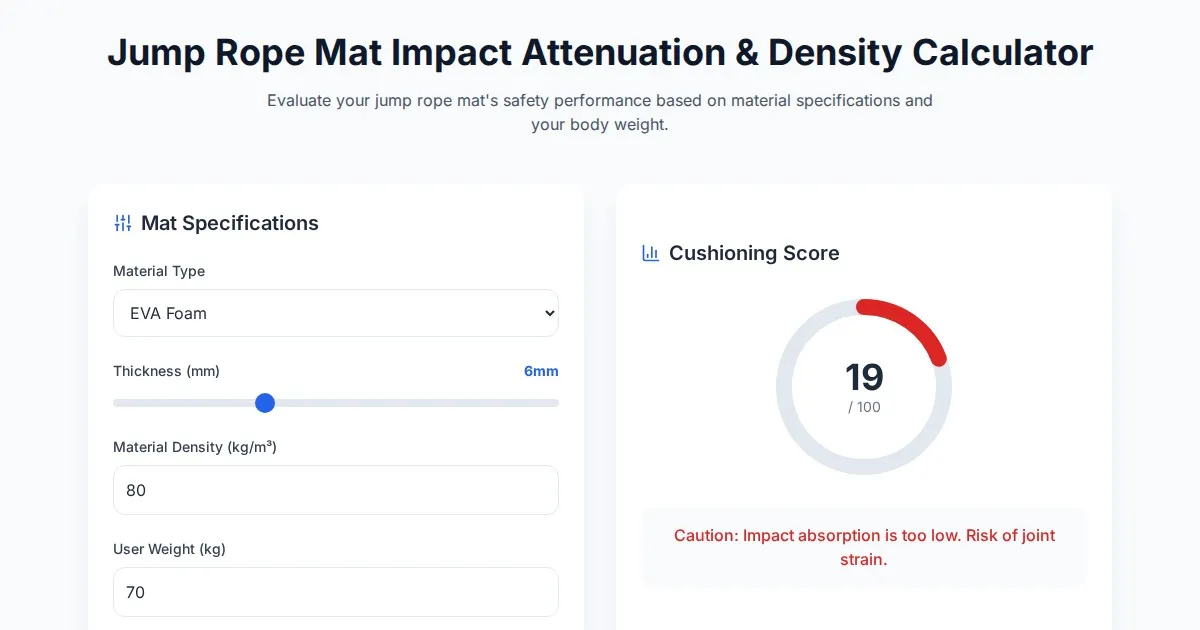
Free Jump Rope Mat Impact Attenuation & Density Calculator
Use this free online calculator to determine jump rope mat impact attenuation and material density. Safely assess if your workout flooring protects your joints.

Free Base64 Image Data URI to File Size Calculator
Accurately calculate the file size of Base64 encoded image data strings. This free, web-based tool helps developers estimate binary file sizes for web apps.

Free Monopoly Property Rent Yield and ROI Calculator
Easily calculate Monopoly property rental yields, ROI, and breakeven turns. Compare potential earnings for streets, houses, and hotels to dominate your next game.
Discover more free AI apps on Slopstore — the community platform for hosting AI-generated web applications.