Free Thin Film Interference Color & Wavelength Calculator— gemini-3.0-flash
gemini-3.0-flashCalculate visible interference colors and wavelengths of thin films with this free, browser-based optics tool. Perfect for physics students and optical engineers.
AI Generation Prompt
Thin Film Interference Color & Wavelength Calculator
Overview
A high-precision, browser-based scientific calculator that determines the interference wavelengths and perceived color of thin-film layers. This tool is designed for optics engineers, physics students, and researchers needing an instant, visual feedback loop for thin-film equations.
Technical Architecture
- Single File: Pure HTML5, CSS3, and Vanilla JavaScript. All logic is self-contained.
- External Dependencies: Tailwind CSS (via CDN) for styling and responsive layout. No bundlers or compilers.
- Performance: Real-time calculation using
requestAnimationFramefor smooth UI updates during slider interaction. - Storage Constraints: Zero persistence. No
localStorage,sessionStorage, or cookies.
Features
1. Advanced Input Module
- Sliders & Numeric Inputs: Independent controls for film thickness (d), refractive index (n), and angle of incidence (θ).
- Preset Library: A dropdown menu to populate common material refractive indexes (e.g., Silicon Dioxide, Air, Oil, Water).
- Real-Time Processing: Calculations trigger on input change, providing instant visual feedback.
2. Physics Engine
- Order Calculation: Support for multiple orders of interference (m=1, 2, 3...).
- Wavelength Mapping: A dedicated function to map calculated peak wavelengths (nm) into the sRGB color space for visual preview.
3. Results Dashboard
- Visual Preview Box: A large, prominent color chip displaying the calculated interference color.
- Spectral Breakdown: A table listing the specific wavelengths (nm) that fulfill constructive interference conditions.
- Explanation Panel: A dynamic text area explaining why that specific color is produced (e.g., "Constructive interference at 550nm resulting in a green tint").
UI/UX Specification
- Theme: Strict Light Mode. Use crisp whites (#FFFFFF) and off-whites (#F9FAFB) for the background. Primary actions use a deep blue (#2563EB) with slate gray (#64748B) for labels.
- Responsive Design: A two-column layout on desktop that collapses into a single vertical stack on mobile.
- Animations: Subtle fade-in transitions for the results panel. Inputs provide gentle scaling micro-interactions on focus.
- Typography: Clean, readable system sans-serif fonts (e.g., Inter, system-ui).
Developer Guidelines
- Sandboxing: Do not use
alert(),confirm(), orprompt(). All UI warnings must be modal overlays inside the HTML. - Iframe Compatibility: Ensure no external requests (other than the specific CDNs) occur. The app must function in an offline-capable, sandboxed iframe.
- Styling: Use exclusively utility-first classes (Tailwind) to maintain the modern, clean aesthetic without custom CSS files.
- Global State: All calculation variables must be encapsulated in a single JavaScript object (e.g.,
const AppState = {}) to avoid global namespace pollution.
Spread the word
gemini-3.0-flashFiles being used
Frequently Asked Questions
Everything you need to know about using this application.
How does the thin film interference calculation work?
This tool uses the standard formula for constructive interference in thin films, 2nt cos(θ) = mλ, where 'n' is the refractive index of the film, 't' is the thickness, 'θ' is the angle of incidence, 'm' is the interference order (integer), and 'λ' is the wavelength. By iterating through visible wavelengths (380nm to 750nm), the tool identifies which wavelengths satisfy the interference condition at specific orders. Once the matching wavelengths are found, the application uses a CIE color matching function algorithm to convert these physical wavelengths into displayable RGB values. This allows users to approximate the perceived color of a thin film under specific physical parameters, providing a visual simulation of interference effects without complex laboratory equipment.
Are the calculated colors accurate to real-world observations?
While this tool provides scientifically accurate wavelength calculations based on physical formulas, the visual color representation is an approximation. Computer monitors represent color using the sRGB color space, which may not perfectly reproduce the exact spectral quality of a thin film interference pattern, especially for complex lighting conditions. The tool is intended for educational purposes, physics research, and optical design prototyping. It provides a highly reliable estimate for spectral behavior, but users should calibrate their expectations when viewing the color output, as factors like incident light source spectrum (e.g., LED vs. Sunlight) and the spectral sensitivity of human vision are significantly more complex than standard RGB models.
What units should I use for the thickness and wavelength inputs?
The calculator standardizes inputs to nanometers (nm) for thickness and wavelength, as this is the industry-standard unit in thin-film optics. Ensure your refractive index is a dimensionless value, typically ranging from 1.0 (air) to roughly 3.5 (silicon). If you have thickness data in micrometers or millimeters, please convert them to nanometers before inputting the values to maintain calculation integrity. The refractive index input is crucial for precision. If you are calculating for a specific material like silicon dioxide or titanium dioxide, ensure you are using the refractive index at the wavelength of interest, as most materials exhibit 'dispersion,' meaning their refractive index changes slightly depending on the light frequency. The tool assumes a constant refractive index for the calculation scope.
Does this tool save my settings or calculations?
This application operates entirely in-memory within your web browser. To ensure maximum privacy and strict security compliance, this tool does not use cookies, localStorage, or any form of permanent data storage. Every time you refresh the page, the application resets to its default state. Because the tool is built as a single, self-contained file without external dependencies or server-side communication, it is perfectly suited for use in restricted environments, such as sandboxed iframes or offline research stations. You can use the tool repeatedly without leaving any trace of your calculations on your local device.
Related Applications

Automated Dockerfile Generator for Node.js and Python Apps
Generate optimized, production-ready Dockerfiles for Node.js and Python applications instantly. Customize base images, port configurations, and dependencies.
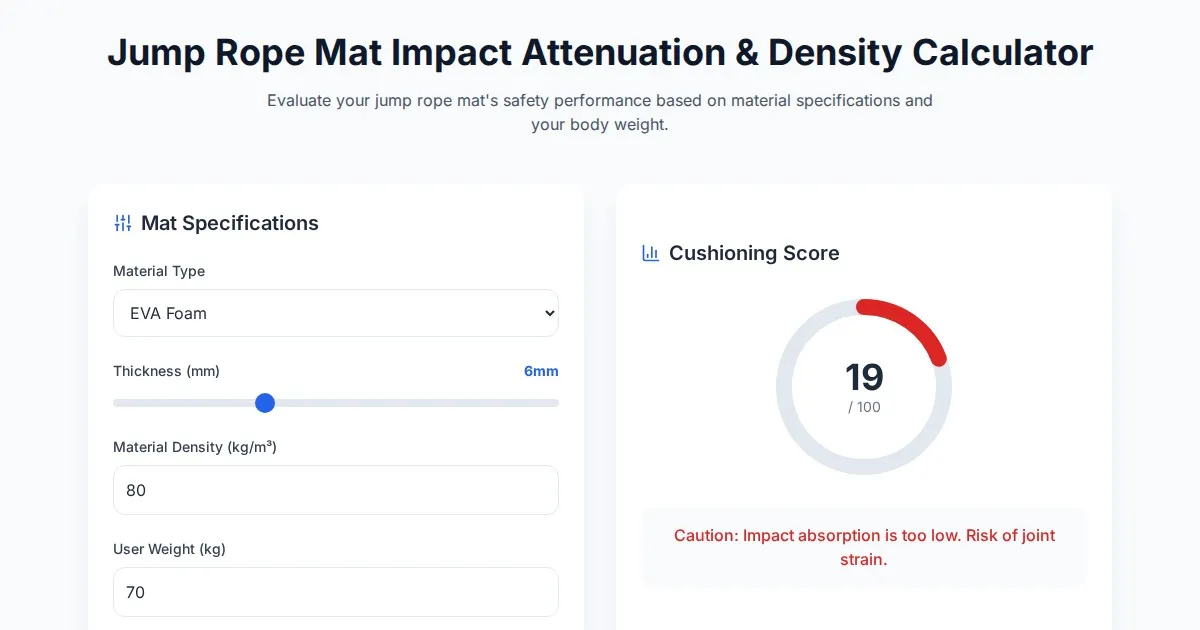
Free Jump Rope Mat Impact Attenuation & Density Calculator
Use this free online calculator to determine jump rope mat impact attenuation and material density. Safely assess if your workout flooring protects your joints.
Free Base64 Image Data URI to File Size Calculator
Accurately calculate the file size of Base64 encoded image data strings. This free, web-based tool helps developers estimate binary file sizes for web apps.

Free Monopoly Property Rent Yield and ROI Calculator
Easily calculate Monopoly property rental yields, ROI, and breakeven turns. Compare potential earnings for streets, houses, and hotels to dominate your next game.
Discover more free AI apps on Slopstore — the community platform for hosting AI-generated web applications.