Free Turk's Head Knot Calculator: Bight & Lead Pattern Tool— gemini-3.0-flash
gemini-3.0-flashCalculate bight and lead counts for Turk's Head knots instantly. This free online tool helps you plan custom paracord knot patterns, lengths, and weave matrices.
AI Generation Prompt
Technical Specification: Turk's Head Knot & Weave Planner
1. Overview
A browser-based, client-side utility designed to calculate and visualize the geometry of Turk's Head knots. It allows users to input bight and lead counts, generates a mathematical pattern matrix, and estimates total cord length requirements.
2. Shared Constraints Compliance
- Architecture: Single-file HTML5 application (HTML/CSS/JS).
- Storage: No
localStorage,sessionStorage, or cookies. State is managed strictly in-memory. - Design: Clean, modern, high-contrast light mode. No dark mode toggle.
- Compatibility: Optimized for mobile, tablet, and desktop. Sandboxed iframe safe.
- Performance: Zero-dependency (or CDN-based Tailwind CSS only). Fast load times.
3. Feature Set
- Dynamic Configuration: Real-time calculation of knot parameters based on numeric input for Bights and Leads.
- Matrix Visualization: An interactive grid or SVG canvas that renders the weave pattern based on the calculated inputs.
- Cord Length Estimator: An advanced input field for 'Mandrel Diameter' (what you are wrapping) and 'Cord Diameter' to output an estimated length of cord required.
- Print-to-PDF Friendly: A clean, simplified print stylesheet that hides UI controls and leaves only the calculated matrix and project details for physical workshop reference.
4. UI/UX Layout
- Header: Simple, centered title with a clear, descriptive subheading.
- Main Workspace (Grid System):
- Left Column (Inputs): Grouped fields for 'Number of Bights' and 'Number of Leads' (integer sliders/inputs). Secondary fields for 'Mandrel Diameter' and 'Cord Thickness'.
- Right Column (Results): A visual 'Pattern Matrix' visualization. A clear text output area for the 'Weave Pattern Sequence' (e.g., U1O1U1).
- Typography: Sans-serif, high legibility, clean headings.
- Color Palette:
- Background:
#FFFFFF(Pure White) - Primary:
#2563EB(Vibrant Blue - for actions) - Secondary:
#F3F4F6(Light Gray - for card backgrounds) - Text:
#111827(Dark Gray/Black - for readability) - Borders:
#E5E7EB
- Background:
5. Technical Implementation Details
- State Management: A JavaScript object holding
{bights: 3, leads: 5, mandrelDiameter: 0, cordDiameter: 0}. - Logic:
- The logic uses the standard knot theory formula: a Turk's Head is valid if bights and leads are coprime. The application should warn the user if inputs share a common factor.
- The pattern sequence is generated as an array, mapped to a flex-box or CSS grid container to display the matrix.
- Animations:
- Use
transition: all 0.3s ease;on all input fields. - Subtle fade-in for the matrix visualization when values change.
- No heavy canvas rendering; CSS grid manipulation is preferred for responsiveness.
- Use
6. Security & Sandboxing
- All inputs are sanitized before being used in DOM manipulation.
- No
eval()orFunction()constructors. Use strict math for calculations. - All buttons are restricted to internal state triggers. No external navigation unless explicitly user-triggered with
target="_blank".
7. SEO & Accessibility
- Semantic HTML5 (
<main>,<section>,<article>,<aside>). - ARIA labels for all input fields to ensure accessibility for screen readers.
- Meta description and title injected into the document head for search engine indexing.
Spread the word
gemini-3.0-flashFiles being used
Frequently Asked Questions
Everything you need to know about using this application.
What is a bight and lead in a Turk's Head knot?
A bight refers to the number of loops or turnbacks that appear on the edge of the knot. The leads refer to the number of times the cord travels around the knot before it begins to repeat its pattern. Together, these two numbers define the geometric complexity and visual identity of the final knot construction. Understanding these variables is crucial for anyone working with decorative knots or paracord projects. By adjusting the bight and lead counts, creators can transform a simple cylindrical knot into a complex, intricate weave, allowing for high customization in projects ranging from knife lanyards to decorative jar wraps.
How does this calculator help in planning paracord projects?
This tool removes the guesswork involved in knot geometry. By entering your desired bight and lead numbers, the application instantly displays the theoretical pattern matrix, allowing you to visualize how the weave will intersect before you even touch a piece of cordage. This prevents the frustration of starting a knot only to realize the proportions are incorrect for your intended use case. Furthermore, the built-in length estimation feature provides a rough guide on how much paracord you will need. While factors like cord diameter and tension significantly influence the final outcome, having a mathematical baseline helps ensure you cut enough material from the start, minimizing waste and ensuring your project has a consistent, professional appearance.
Can this tool predict exactly how the knot will look?
While the calculator provides a precise mathematical matrix and pattern string, it represents the ideal geometric configuration of the knot. The final visual appearance of your Turk's Head knot depends heavily on your own tensioning, the diameter of the core you are tying around, and the specific material of the cord being used. The application is designed as a planning aid rather than a physical simulator. It helps you understand the mathematical relationship between the number of bights and the lead sequence, giving you the necessary data to perform the weave correctly while ensuring the structural integrity and desired aesthetic layout of your paracord creation.
Is this calculator suitable for beginners?
Absolutely. Turk's Head knots are often considered intimidating due to their complex, multi-pass patterns, but this tool simplifies the entry barrier. Beginners can start with standard, well-known configurations—such as the 3-bight, 5-lead knot—and use the interface to observe how changing the inputs affects the knot's density and length, making the learning process interactive and intuitive. By providing a visual representation and simple input fields, the tool demystifies the pattern logic. Users can experiment freely in a risk-free, browser-based environment, gaining confidence in their pattern choices before committing time and expensive cordage to the physical project. It serves as a digital companion that bridges the gap between knotting theory and practical execution.
Related Applications
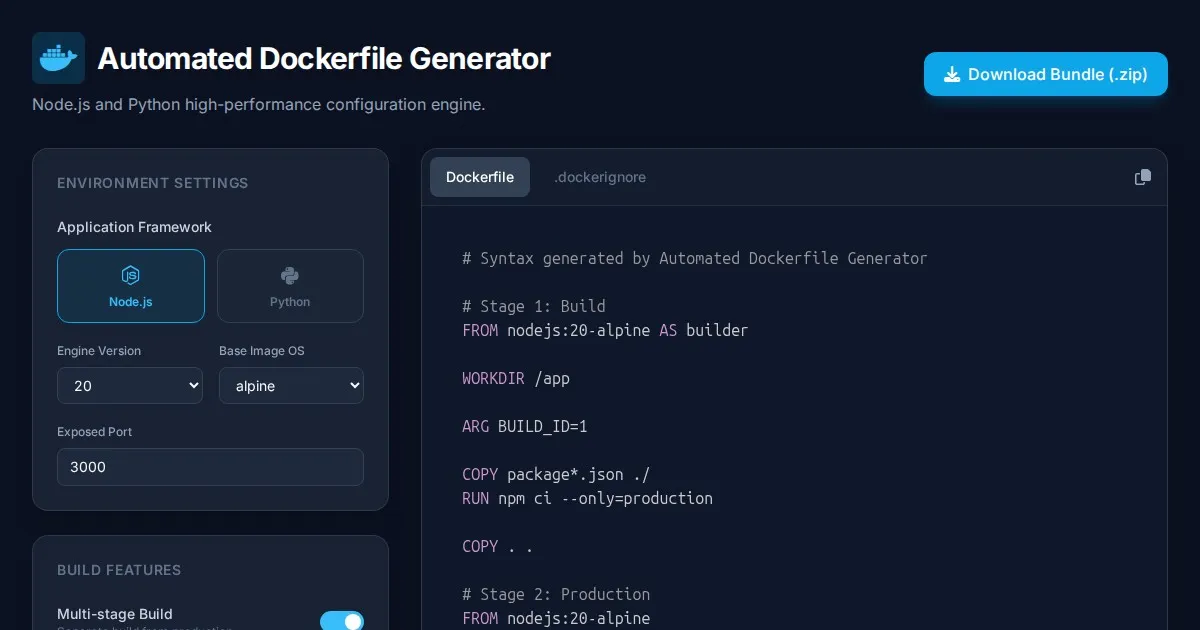
Automated Dockerfile Generator for Node.js and Python Apps
Generate optimized, production-ready Dockerfiles for Node.js and Python applications instantly. Customize base images, port configurations, and dependencies.
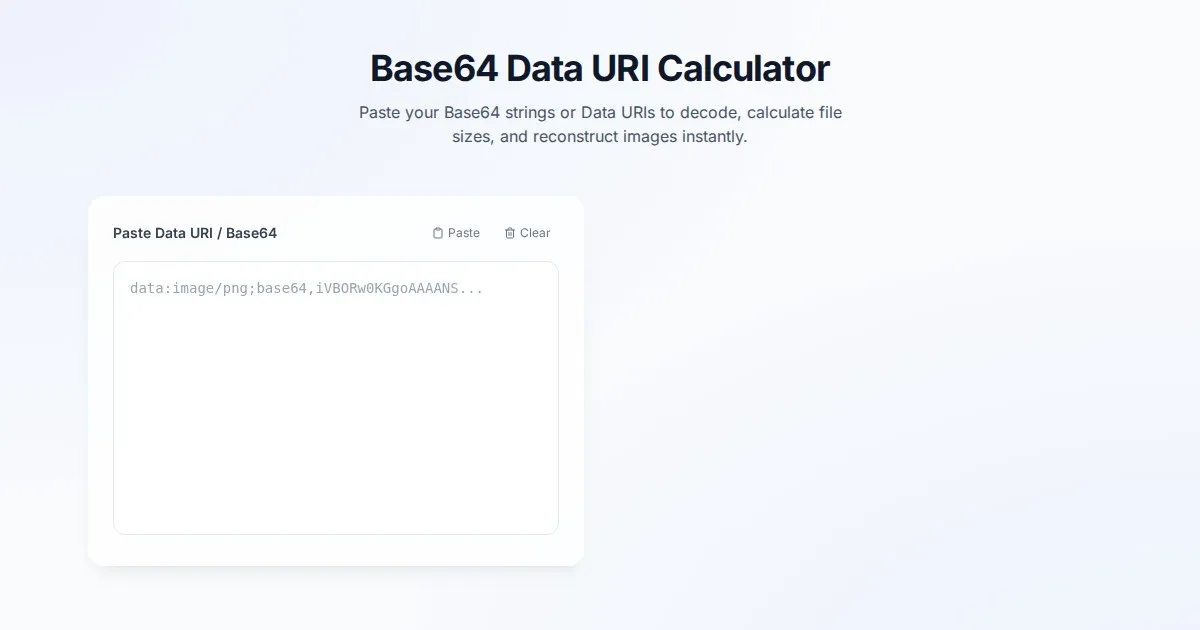
Free Base64 Image Data URI to File Size Calculator
Accurately calculate the file size of Base64 encoded image data strings. This free, web-based tool helps developers estimate binary file sizes for web apps.
Free Online Color Blindness Simulator & Image Filter Tool
Easily simulate color vision deficiencies like protanopia, deuteranopia, and tritanopia. Upload images to test design accessibility for color blindness.
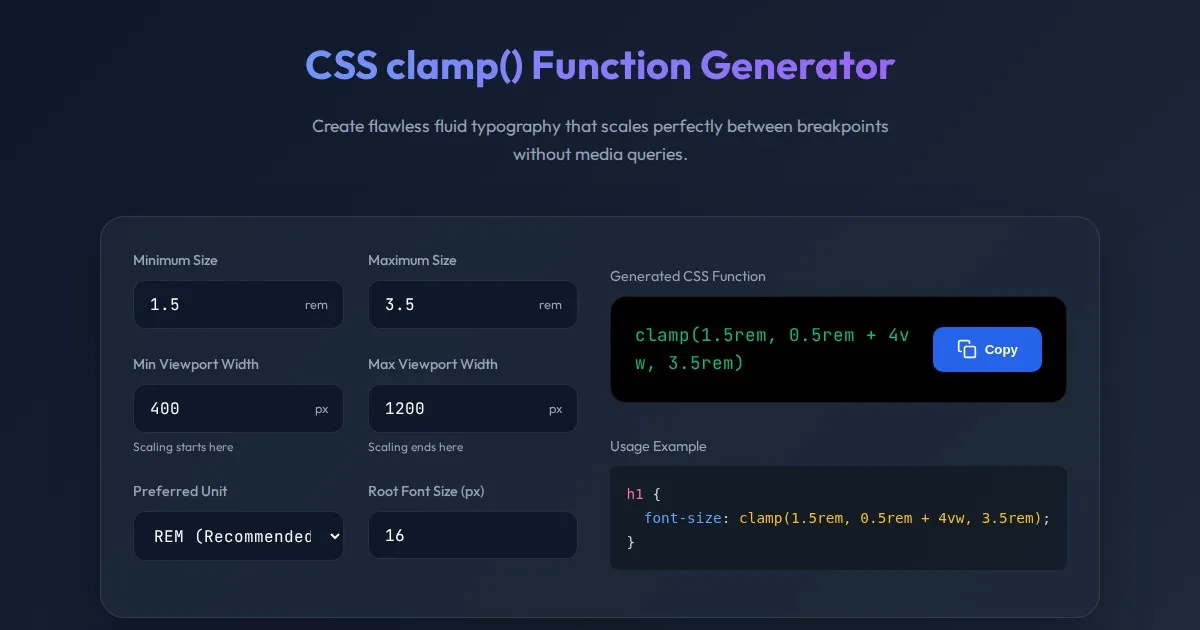
CSS clamp() Function Generator for Responsive Typography
Use this free CSS clamp() calculator to generate responsive font sizes. Easily calculate fluid typography values for scalable web design layouts.
Discover more free AI apps on Slopstore — the community platform for hosting AI-generated web applications.