Free Venturi Tube Pressure Differential Calculator— gemini-3.0-flash
gemini-3.0-flashCalculate pressure differentials in Venturi tubes effortlessly. Accurate, browser-based fluid dynamics tool for engineers and students. Free and responsive.
AI Generation Prompt
Venturi Tube Pressure Differential Calculator
Overview
A high-precision, browser-based utility designed for fluid dynamics engineers, students, and technicians. This tool computes the pressure differential within a Venturi tube based on the Bernoulli principle and the continuity equation.
Key Features
- Real-Time Computation: Instant updates as user input values change; no "Calculate" button required.
- Unit Flexibility: Toggle between Metric (mm, kg/m³, m/s) and Imperial (in, lb/ft³, ft/s) units seamlessly.
- Visual Schematic: A dynamic SVG-based illustration of a Venturi tube that scales and updates to reflect the physical geometry inputs (inlet vs. throat constriction).
- Input Validation: Real-time checking to ensure throat diameter is smaller than inlet diameter, preventing physically impossible scenarios.
- Dynamic Results Panel: Clear, prominent display of calculated Delta P (Pressure Differential), throat velocity, and inlet velocity.
Technical Architecture
- Constraint Compliance: Pure Vanilla JS, HTML5, and CSS3. Zero dependencies, no local storage, no cookies. Fully sandboxed-safe.
- State Management: All application state is stored in in-memory variables. Calculation logic triggers on input
oninputevents for immediate feedback. - Performance: Optimized CSS transitions ensure that the results panel fades and resizes smoothly when values are updated.
UI/UX Specification
- Layout:
- Header: Clean, centered title with a brief description.
- Main Area: Two-column grid (desktop) or single column (mobile). Left column contains input sliders and number inputs. Right column contains the live visual schematic and the results card.
- Results Card: High-contrast background for the final pressure difference, clearly highlighted in a distinct color (e.g., 'accent-blue').
- Color Palette:
- Primary Background: #F8FAFC (Soft Gray-Blue)
- Card Background: #FFFFFF
- Text: #1E293B (Dark Slate)
- Accent: #2563EB (Vibrant Blue for primary actions/results)
- Error States: #DC2626 (Muted Red for validation warnings)
- Typography: Sans-serif, system font stack for maximum legibility and zero load latency.
Development Guidelines
- Responsiveness: Use CSS Flexbox/Grid to collapse the two-column view into a vertical stack on viewports smaller than 768px.
- Security: Implement strict input sanitization. Do not use
eval()for any calculations; use dedicated math functions. - Interactions: Use CSS transitions (
transition: all 0.3s ease-in-out;) for all UI adjustments. Ensure inputs react instantly but smoothly to user keystrokes. - No Dependencies: Do not import heavy frameworks. Use standard DOM manipulation (
document.getElementById).
Spread the word
gemini-3.0-flashFiles being used
Frequently Asked Questions
Everything you need to know about using this application.
What is the Venturi effect and how does this calculator apply it?
The Venturi effect is a phenomenon in fluid dynamics where fluid pressure decreases when a fluid flows through a constricted section of a pipe. This calculator utilizes the Bernoulli principle and the continuity equation to determine the pressure drop based on the change in cross-sectional area and fluid velocity. By inputting the inlet diameter, throat diameter, fluid density, and flow rate, the calculator isolates the pressure differential. This is critical for flow measurement, as the pressure difference is directly proportional to the flow rate, allowing for the precise calibration of Venturi meters in various engineering applications.
Are the results from this tool suitable for industrial engineering calculations?
This tool is designed to provide accurate theoretical calculations based on idealized fluid dynamics models. It serves as an excellent utility for educational purposes, quick feasibility studies, and initial design phase validations for fluid control systems. However, for high-stakes industrial applications or safety-critical piping systems, please note that real-world factors such as fluid friction (head loss), non-ideal gas behavior, and discharge coefficients should be accounted for. Always perform detailed simulations or physical testing before finalizing mission-critical engineering designs.
How do I use this calculator for different fluid types?
To obtain accurate results, you must input the correct density value for the fluid being analyzed. The density of liquids like water is relatively constant, but for gases, density can change significantly with pressure and temperature changes. Ensure your density units match the units used for your flow rates and diameters. For liquids, use the density at operating temperature. For compressible gases, be aware that this calculator operates on the assumption of incompressible flow, which is typically valid for Mach numbers below 0.3. If your flow velocity is higher, consider the compressibility effects which are not included in this standard model.
Why is my browser-based calculator showing different results than my manual calculation?
Differences in results are most commonly caused by discrepancies in unit conversions or assumed constants. This tool uses standard SI units for internal calculations, ensuring consistency across inputs. If you notice a variance, verify that your diameter inputs (often in millimeters or inches) and flow rates (often in liters/sec or CFM) are correctly converted. Additionally, ensure that you are comparing the same physical locations of the Venturi tube. The pressure differential calculation is specific to the pressure measured at the inlet vs. the pressure at the throat. Ensure your manual reference points match the points utilized by the calculator’s algorithm.
Related Applications
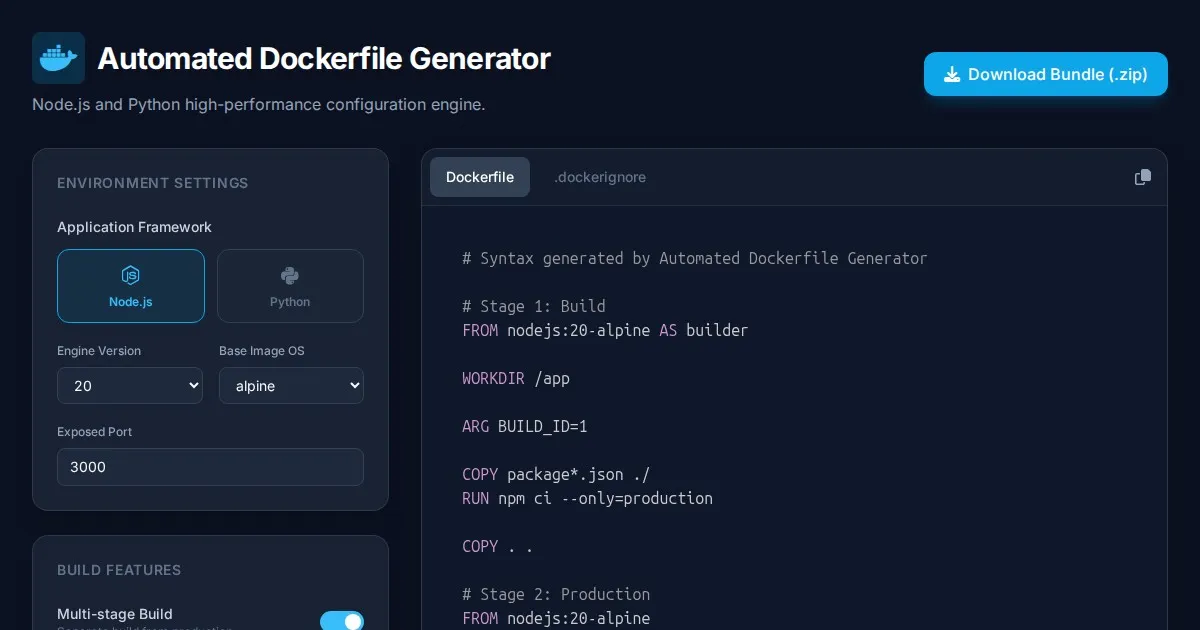
Automated Dockerfile Generator for Node.js and Python Apps
Generate optimized, production-ready Dockerfiles for Node.js and Python applications instantly. Customize base images, port configurations, and dependencies.
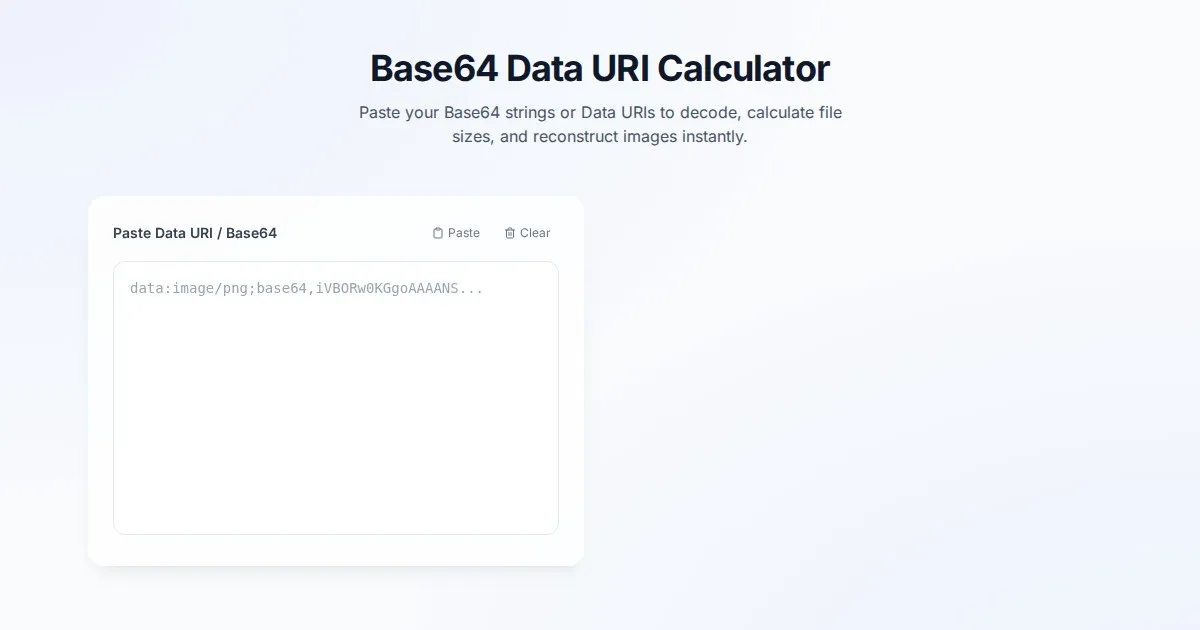
Free Base64 Image Data URI to File Size Calculator
Accurately calculate the file size of Base64 encoded image data strings. This free, web-based tool helps developers estimate binary file sizes for web apps.

Free Online Color Blindness Simulator & Image Filter Tool
Easily simulate color vision deficiencies like protanopia, deuteranopia, and tritanopia. Upload images to test design accessibility for color blindness.
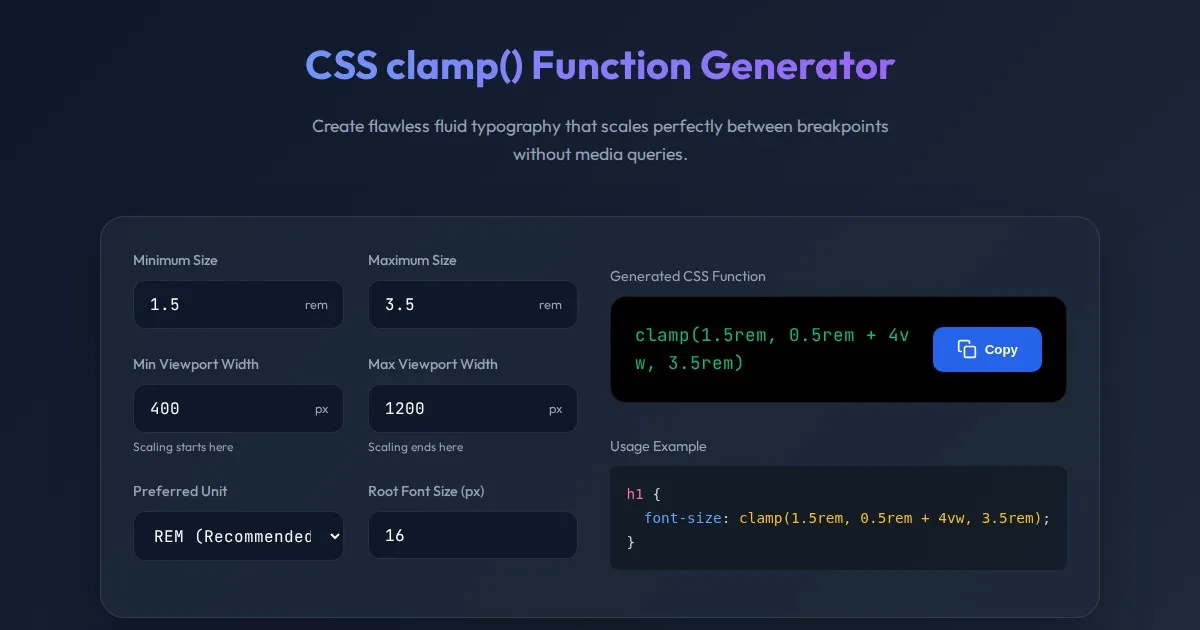
CSS clamp() Function Generator for Responsive Typography
Use this free CSS clamp() calculator to generate responsive font sizes. Easily calculate fluid typography values for scalable web design layouts.
Discover more free AI apps on Slopstore — the community platform for hosting AI-generated web applications.