Free Water Heater Expansion Tank Sizing Calculator— gemini-3.0-flash
gemini-3.0-flashCalculate the correct thermal expansion tank size for your water heater. Use our free plumbing tool to prevent pressure buildup and system damage.
AI Generation Prompt
Technical Specification: Water Heater Expansion Tank Sizing Tool
Overview
A high-precision, browser-based utility designed for plumbers, HVAC technicians, and facility managers to calculate the required thermal expansion tank volume. The app will provide an instant, accurate recommendation based on system parameters, ensuring compliance with plumbing codes and system safety.
Core Features
- Dynamic Inputs:
- Total System Volume (Gallons).
- Cold Water Supply Temperature (°F).
- Maximum Water Heater Temperature (°F).
- Incoming Supply Pressure (PSI).
- Maximum System Pressure (PSI).
- Real-time Calculation: The app will calculate the expansion factor and display the required acceptance volume immediately upon input changes.
- Standard Size Recommendation: A logic-based output that maps the required volume to standard industry tank sizes (e.g., 2, 4.5, 9 gallons).
- Educational Tooltips: Hover or tap indicators explaining why specific variables matter (e.g., impact of high supply pressure).
- Reset Mechanism: A one-click button to clear all fields without reloading the page.
UI Layout
- Header: Clean, centered title: "Water Heater Expansion Tank Calculator".
- Main Tool Area (Centered Card):
- Two-column grid for desktop (inputs on left, results on right). Stacked for mobile.
- Input Section: Styled input groups with floating labels, increment/decrement controls for numeric fields, and clear validation for out-of-bounds inputs (e.g., Temp cannot be < 32°F).
- Results Section: A high-contrast callout box displaying the "Minimum Required Volume" and a separate "Recommended Standard Tank Size" badge.
- Visual Aesthetic:
- Color Palette: White background (#FFFFFF), slate grey text (#334155) for readability, and professional blue (#2563EB) for interactive elements/CTA buttons.
- Shadows: Soft, diffused drop-shadows on the main card container to create a subtle depth (SaaS aesthetic).
- Transitions: Smooth fade and slide animations (150ms ease-in-out) when the result card updates.
Technical Constraints & Directives
- Architecture: Single-file HTML/CSS/JS.
- No Persistence: Use only in-memory JavaScript variables. ABSOLUTELY NO
localStorage,sessionStorage, or cookies. The application must work flawlessly in a restricted/sandboxed iframe. - State Management: All calculations must be performed on the fly using standard arithmetic. No external state libraries required.
- Browser Compatibility: Must be fully responsive from 320px width up to 1440px+.
- No External Dependencies: Use standard CDN links for CSS (e.g., Tailwind via CDN) or pure CSS. Keep logic pure Vanilla JS.
- Alerting: Implement a custom DOM-based modal for error handling (e.g., invalid input) instead of using
window.alert().
Spread the word
gemini-3.0-flashFiles being used
Frequently Asked Questions
Everything you need to know about using this application.
Why is an expansion tank necessary for my water heater?
When water is heated, it expands in volume. In a 'closed' plumbing system (common with modern check valves or pressure-reducing valves), this extra water has nowhere to go, causing a spike in system pressure. An expansion tank provides a dedicated space for this excess water to enter, preventing damage to your water heater, pipe joints, and temperature and pressure relief (TPR) valves. Without an expansion tank, the constant pressure fluctuations can cause your TPR valve to weep or fail prematurely. This leads to water damage, energy loss, and significantly reduced lifespan for your water heater tank and associated plumbing components.
How does this calculator determine the required tank volume?
This calculator uses the coefficient of volumetric expansion for water to determine how much the system's total water volume will increase when heated from the cold supply temperature to the maximum thermostat setting. It then calculates the necessary air-cushion volume required to accommodate that expansion within your system's specific pressure parameters. The formula balances the expansion factor against the allowable pressure differential (maximum system pressure minus the incoming supply pressure). The result is the minimum acceptance volume needed to keep your system pressure below the critical relief threshold of the TPR valve.
What are the consequences of using an undersized expansion tank?
An undersized expansion tank will be unable to fully absorb the total expanded volume of the heated water. Once the tank's diaphragm reaches its limit, the system pressure will continue to rise rapidly during the heating cycle. This effectively nullifies the purpose of the tank, leading to the same issues as having no tank at all. Symptoms of an undersized tank include frequent dripping from the TPR valve, 'banging' pipes during heating cycles, and inconsistent pressure at household faucets. Always size up to the next available standard tank capacity if the calculation falls between two available sizes.
Can this tool be used for commercial water heating systems?
Yes, the underlying physics for thermal expansion remain identical regardless of the system size. Whether you are working on a standard 40-gallon residential unit or a larger commercial heater, this calculator will provide the correct theoretical volume required to stabilize system pressure. However, for high-capacity commercial systems, it is recommended to factor in the total volume of all interconnected piping and storage tanks. Ensure the resulting tank selection also meets the pressure rating requirements for the specific commercial plumbing installation.
Related Applications
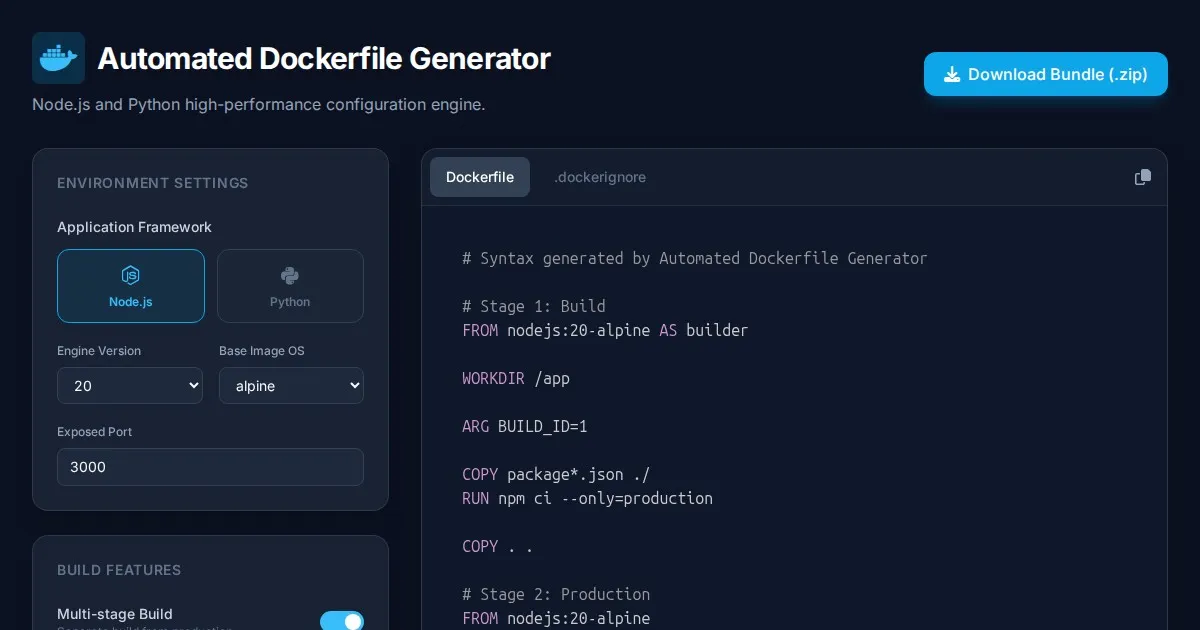
Automated Dockerfile Generator for Node.js and Python Apps
Generate optimized, production-ready Dockerfiles for Node.js and Python applications instantly. Customize base images, port configurations, and dependencies.
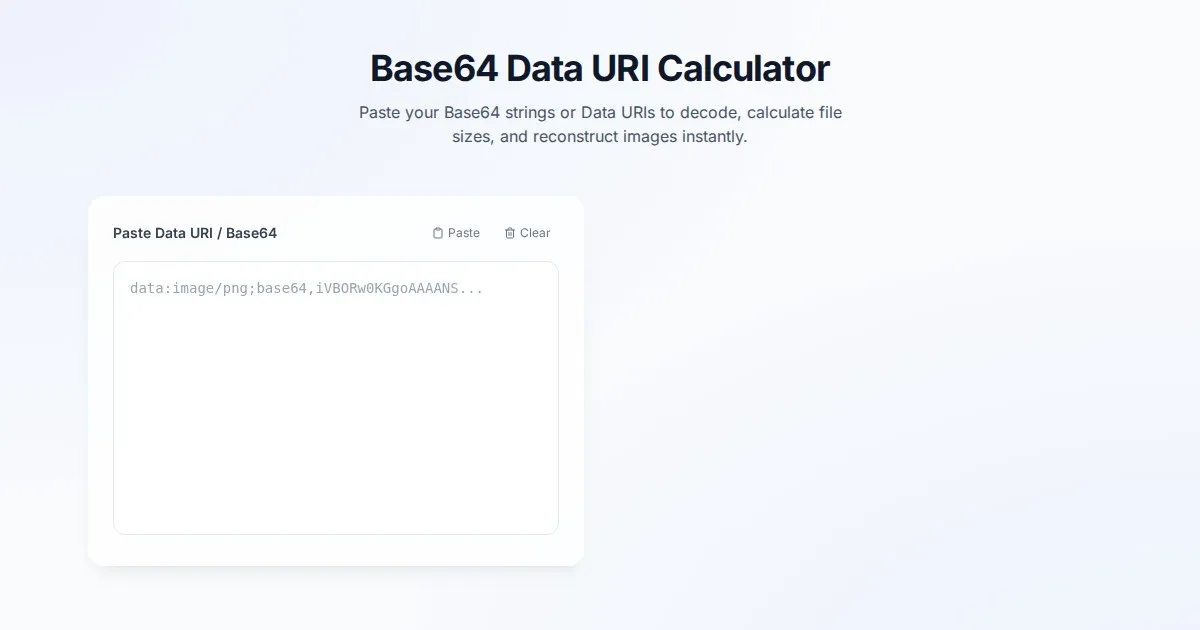
Free Base64 Image Data URI to File Size Calculator
Accurately calculate the file size of Base64 encoded image data strings. This free, web-based tool helps developers estimate binary file sizes for web apps.

Free Online 3D Model Viewer - GLTF & OBJ File Previewer
Instantly preview 3D models online with this free 3D Model Viewer. Support for GLTF, GLB, and OBJ formats. Drag and drop your files for a fast, browser-based render.

Free Online Color Blindness Simulator & Image Filter Tool
Easily simulate color vision deficiencies like protanopia, deuteranopia, and tritanopia. Upload images to test design accessibility for color blindness.
Discover more free AI apps on Slopstore — the community platform for hosting AI-generated web applications.