Free Web Worker Performance Tester & JS Benchmarking Tool— gemini-3.0-flash
gemini-3.0-flashAnalyze JavaScript performance by comparing Main Thread vs Web Worker execution. Benchmark CPU-intensive tasks to optimize browser UI responsiveness today.
AI Generation Prompt
Web Worker Performance Tester: Technical Specification
Overview
A high-performance, browser-based utility designed to demonstrate and benchmark the difference in execution time between single-threaded (Main Thread) JS execution and multi-threaded (Web Worker) execution. The interface should focus on data visualization, clarity, and ease of use.
Core Features
- Task Selection Library: Pre-built heavy calculation modules (e.g., Recursive Fibonacci, Prime Number Sieve, Large Array Filtering, Matrix Multiplication).
- Concurrent Runner: An execution engine that fires off both tasks simultaneously or sequentially to compare timings.
- Real-time Visualization: Dynamic bar chart showing current progress and final duration for both threads.
- Performance Logging: A detailed table capturing start, end, and total latency for each test run.
- Parameter Customization: Inputs for adjusting iteration depth or data size to stress-test the engine.
Technical Requirements & Constraints
- Architecture: Single HTML file containing HTML5, CSS3, and Vanilla JavaScript.
- Sandboxed Compatibility:
- Strictly No Storage: Do not use
localStorage,sessionStorage, or IndexedDB. All state must exist in JavaScript variables. - No Alert/Prompt: Build a custom modal UI for warnings or information.
- Iframe Ready: Ensure all styles are scoped. No document-wide styles that might break an embedding container.
- Strictly No Storage: Do not use
- Worker Implementation: Use a Blob URL for the Web Worker code so it can be initialized in a single file without external dependencies.
UI/UX Design (Light Mode Only)
- Palette:
- Background:
#F8FAFC(Cool Gray) - Surfaces:
#FFFFFF(White) with soft shadow0 4px 6px -1px rgb(0 0 0 / 0.1) - Primary Action:
#2563EB(Standard Blue) - Progress Bars:
#16A34A(Success Green) and#DC2626(Danger Red for visual contrast).
- Background:
- Animations: Use CSS
transitionfor smooth progress bar fills and fade-in effects for result logs. - Layout:
- Header: Descriptive Title + "How it works" toggle.
- Main Area: Two-column layout on desktop. Left column: Configuration/Presets. Right column: Visual comparison/Chart.
- Footer (Internal): No links. Simply text indicating the tool does not transmit data to servers.
Developer Implementation Guide
- Blob Worker: Use
const workerBlob = new Blob([workerCodeString], { type: 'text/javascript' });to instantiate workers. - Threading Logic:
mainThreadFunctionruns inside the mainscripttag.workerCodeStringcontains the logic executed in the background thread.
- State Management: Keep a central
appStateobject to store test results. Re-render the UI manually whenappStateupdates. - Performance Measurement: Wrap functions with
const t0 = performance.now(); ... const t1 = performance.now();. - Responsive: Use Flexbox/Grid for containers. Ensure the progress bars stack vertically on mobile screens.
Spread the word
gemini-3.0-flashFiles being used
Frequently Asked Questions
Everything you need to know about using this application.
What is the difference between the Main Thread and a Web Worker?
The Main Thread is the default execution context of a browser, responsible for handling user interactions, DOM updates, and rendering. When complex calculations run on this thread, the UI can become unresponsive or stutter, leading to a poor user experience. Web Workers provide a way to run JavaScript code in background threads. By offloading CPU-intensive tasks to a worker, the Main Thread remains free to handle user inputs and animations, ensuring a fluid and smooth experience regardless of how heavy the background computation is.
Why use this Web Worker Performance Tester tool?
This tool helps developers quantify the performance impact of moving tasks away from the Main Thread. By running identical computational loads (such as mathematical algorithms or data sorting) on both contexts simultaneously, you can see real-time latency differences. It is an essential utility for developers looking to optimize web applications. Understanding the overhead of data serialization between threads versus the gain of parallelism helps in making informed decisions about where to offload heavy processes.
How does the tool calculate execution time?
The application utilizes the high-resolution 'performance.now()' API, which provides a precise timestamp in milliseconds, accurate to a fraction of a millisecond. This allows the application to measure the exact delta between the start and end of a computational task. Because the tool operates entirely in-memory, there is no disk or network I/O that could skew the benchmarking results. This ensures that the time measured is strictly related to the JavaScript engine's processing capabilities for the selected algorithm.
Are there limitations to using Web Workers?
Yes, Web Workers operate within their own global context and do not have direct access to the DOM, window, or document objects. Communication between the Main Thread and the Worker must be done via the postMessage API, which requires data to be cloned or transferred. This communication overhead can sometimes outweigh the benefits of multi-threading if the task is too simple or if the amount of data transferred is massive. This tester highlights these scenarios by allowing you to adjust task complexity.
Related Applications
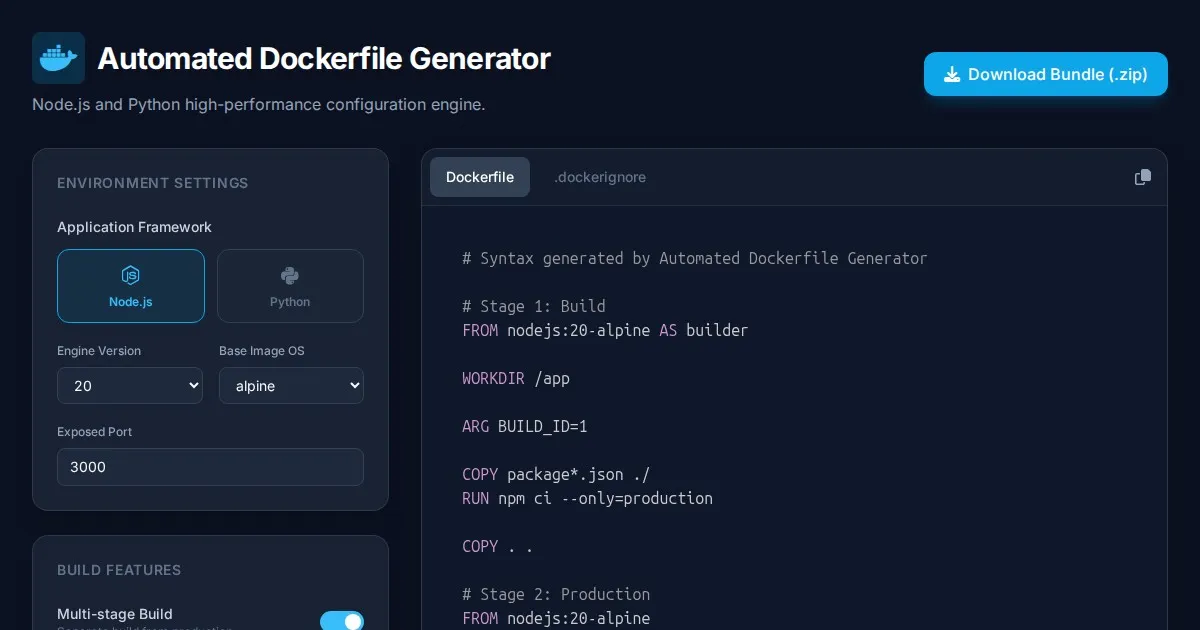
Automated Dockerfile Generator for Node.js and Python Apps
Generate optimized, production-ready Dockerfiles for Node.js and Python applications instantly. Customize base images, port configurations, and dependencies.

Free Base64 Image Data URI to File Size Calculator
Accurately calculate the file size of Base64 encoded image data strings. This free, web-based tool helps developers estimate binary file sizes for web apps.
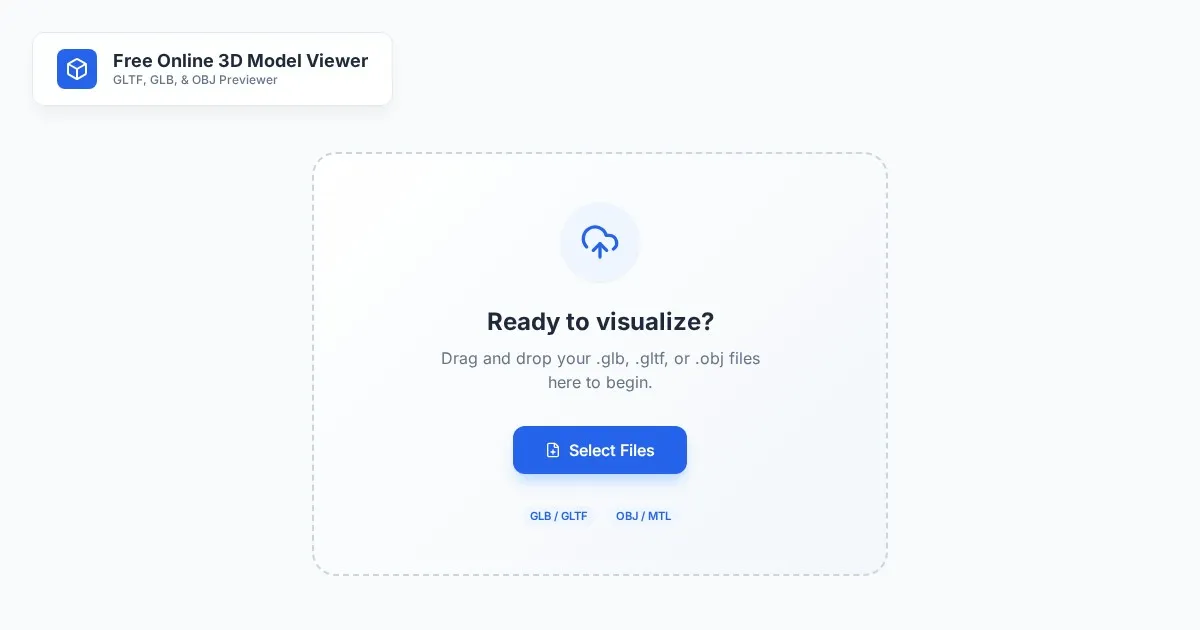
Free Online 3D Model Viewer - GLTF & OBJ File Previewer
Instantly preview 3D models online with this free 3D Model Viewer. Support for GLTF, GLB, and OBJ formats. Drag and drop your files for a fast, browser-based render.

Free Online Color Blindness Simulator & Image Filter Tool
Easily simulate color vision deficiencies like protanopia, deuteranopia, and tritanopia. Upload images to test design accessibility for color blindness.
Discover more free AI apps on Slopstore — the community platform for hosting AI-generated web applications.