Free Webpack DefinePlugin Configuration Generator— gemini-3.0-flash
gemini-3.0-flashEasily generate precise Webpack DefinePlugin configuration objects. Simplify your build process with our free tool to define environment variables for Webpack.
AI Generation Prompt
Technical Specification: Webpack DefinePlugin Generator
Overview
A high-performance, client-side utility designed to streamline the creation of webpack.DefinePlugin configuration objects. This tool allows developers to define environment variable key-value pairs via a clean interface and outputs a ready-to-use JavaScript snippet for their webpack.config.js files.
Core Features
- Dynamic Configuration Rows: Add or remove unlimited key-value pair rows.
- Smart Stringification: Automatically handles
JSON.stringifylogic for values, ensuring strings are properly formatted for Webpack’s text-replacement engine. - Real-time Syntax Preview: A live-updating code block that visualizes the final output.
- One-Click Copy: A "Copy to Clipboard" feature with visual feedback.
- Input Validation: Prevents invalid key naming conventions (e.g., space characters in keys) that would break the Webpack build.
UI/UX Design
- Aesthetic: Minimalist, professional SaaS-oriented design using a palette of soft whites, light grays, and a primary "Action Blue" for buttons.
- Responsiveness: Fully fluid design using Flexbox and Grid. The table of inputs becomes a stacked card view on small mobile screens.
- Interactions:
- Subtle hover states on input fields.
- Smooth fade-in/out animations for adding or removing rows.
- "Copied!" success toast notification using CSS animations.
Technical Constraints & Implementation
- Single File Architecture: The entire application (HTML, CSS, JS) must be contained in one file.
- Frameworks: No external frameworks (React/Vue/etc.). Use vanilla JavaScript with ES6+ syntax.
- Dependencies: Use CDN links for Tailwind CSS (styling) and Prism.js (syntax highlighting for the code preview).
- Sandboxed Compatibility:
- NO
localStorageorsessionStorage. - NO server-side communication.
- NO use of
eval()ornew Function()for security. - All state management must be handled in-memory within a main JS object.
- NO
- Styling:
- Use a high-contrast sans-serif font stack (Inter or system-ui).
- Ensure generous padding and white space to reduce visual clutter.
Layout Structure
- Header: Clean title and brief description of the tool.
- Input Section: A clean table or list where users input keys (e.g.,
PROCESS_ENV.API_URL) and values (e.g.,https://api.example.com). Each row has a distinct remove button. - Output Section: A side-by-side or below-input code block panel. It displays the code as
new webpack.DefinePlugin({ ... }). - Actions: A prominent 'Copy' button located at the bottom of the output section.
Spread the word
gemini-3.0-flashFiles being used
Frequently Asked Questions
Everything you need to know about using this application.
What is the Webpack DefinePlugin and why do I need this tool?
The DefinePlugin is a built-in Webpack plugin that allows you to replace constants in your code at compile-time. It is essential for injecting environment-specific variables like API endpoints, version numbers, or feature flags into your frontend application directly from your build configuration. This tool simplifies the process by generating the necessary JavaScript object literal. By automating the creation of these configurations, you eliminate common syntax errors and ensure that your values are correctly stringified, which is a common stumbling block when setting up Webpack configurations.
How does this tool handle stringification for Webpack constants?
Webpack's DefinePlugin performs direct text replacement in your code. This means that if you want a variable to be equal to a string like 'production', you actually need to define it as the string '"production"'. Beginners often forget the nested quotes, leading to build errors where the compiler thinks the value is a variable name rather than a static string. Our generator automatically wraps your input values in JSON.stringify() to ensure they are interpreted correctly by the Webpack compiler. This removes the manual effort required to double-check formatting and ensures your build process remains error-free and compliant with Webpack's strict configuration requirements.
Is this Webpack tool secure for my environment variables?
Yes, this tool is completely secure. It is a client-side application that runs entirely within your browser environment. No data, configuration, or environment variable keys are ever transmitted, saved, or uploaded to any external server, ensuring your sensitive build configurations stay local to your machine. Since we do not use cookies, local storage, or server-side databases, your privacy is protected by design. Every action performed in this tool is transient and resides only in your current browser tab, providing a safe and isolated environment for generating your configuration snippets.
How do I integrate the generated code into my project?
Once you have entered your key-value pairs and verified the preview, click the copy button to capture the generated code block. You can then navigate to your project's webpack.config.js file and paste this object directly into the plugins array within your configuration object. Ensure that you have imported the webpack package at the top of your configuration file if you are using a standard Node.js setup. The generated snippet is designed to be plug-and-play, meaning you should be able to drop it into your existing configuration structure with minimal adjustments to your overall build flow.
Related Applications
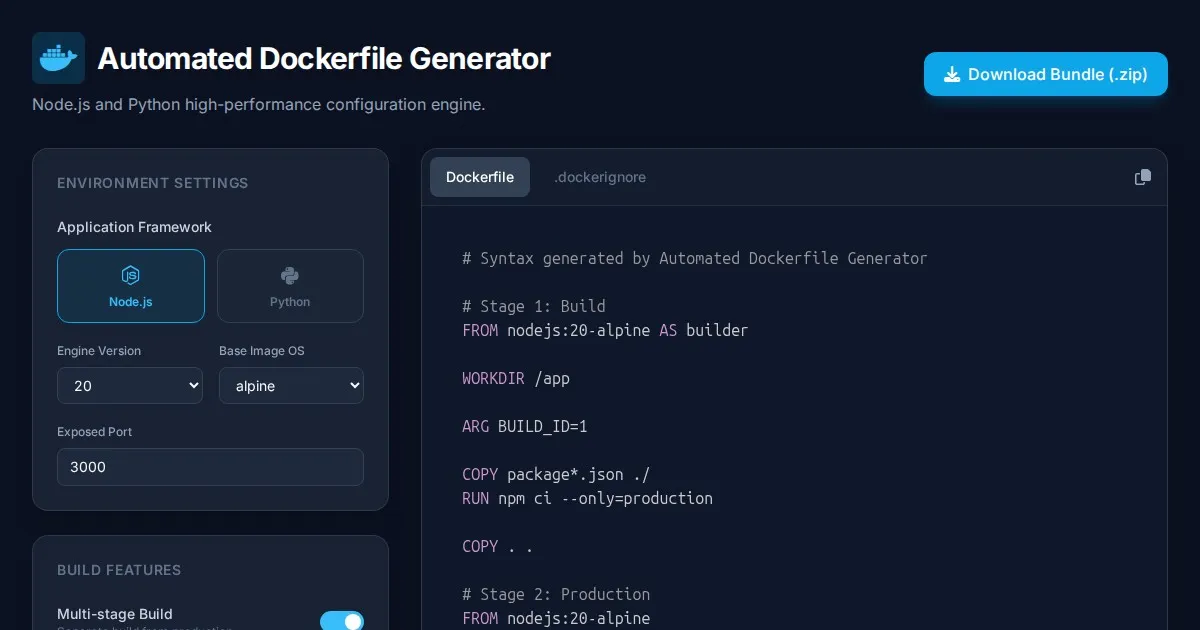
Automated Dockerfile Generator for Node.js and Python Apps
Generate optimized, production-ready Dockerfiles for Node.js and Python applications instantly. Customize base images, port configurations, and dependencies.

Free Jump Rope Mat Impact Attenuation & Density Calculator
Use this free online calculator to determine jump rope mat impact attenuation and material density. Safely assess if your workout flooring protects your joints.
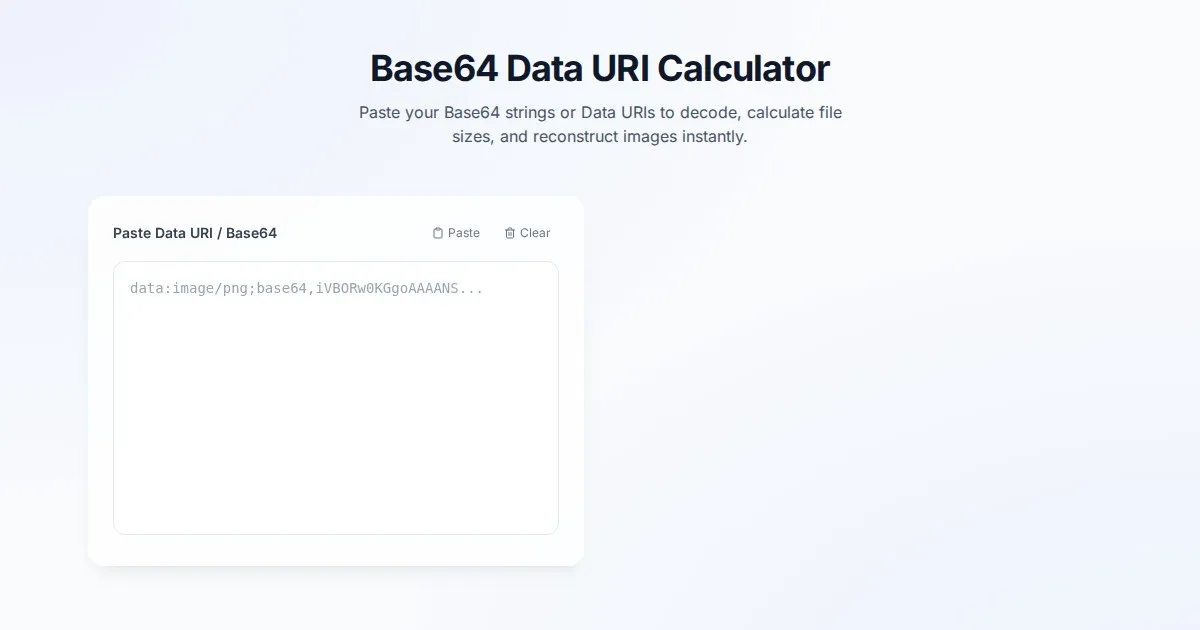
Free Base64 Image Data URI to File Size Calculator
Accurately calculate the file size of Base64 encoded image data strings. This free, web-based tool helps developers estimate binary file sizes for web apps.

Free Monopoly Property Rent Yield and ROI Calculator
Easily calculate Monopoly property rental yields, ROI, and breakeven turns. Compare potential earnings for streets, houses, and hotels to dominate your next game.
Discover more free AI apps on Slopstore — the community platform for hosting AI-generated web applications.