Free Webpack SplitChunks Configuration Optimizer Tool— gemini-3.0-flash
gemini-3.0-flashStreamline your frontend build performance with our free Webpack SplitChunks configuration optimizer. Generate, test, and refine complex code splitting rules.
AI Generation Prompt
Webpack SplitChunks Configuration Optimizer
Overview
A specialized, browser-based utility designed for frontend engineers to generate, visualize, and optimize SplitChunksPlugin configurations. The tool focuses on defining cache groups, chunk thresholds, and priority settings without the overhead of complex build tools.
Features
- Visual Configuration Builder: A responsive form to configure
minSize,maxSize,minChunks,maxAsyncRequests, andmaxInitialRequests. - Cache Group Generator: Add, remove, and define custom
cacheGroupsusing a modular UI, allowing for specific patterns likevendor,commons, orasync-commons. - Live Code Preview: A real-time updating code block that formats the output as a valid Webpack-compliant JavaScript object.
- One-Click Copy: Integrated clipboard functionality for seamless transfer of generated configs into your local
webpack.config.js. - Responsive Interface: A dual-pane layout (Controls on the left, Output on the right) that collapses into a stacked view on mobile devices.
Technical Specification
- Architecture: Single-file Vanilla JavaScript, HTML5, and CSS3.
- Styling: Tailwind CSS (via CDN) for a clean, light-mode "SaaS" aesthetic. Use soft gray backgrounds (
bg-gray-50), crisp white cards (bg-white), and primary blue accents (text-blue-600) for buttons and active states. - Constraint Compliance:
- Zero Persistence: No
localStorageor cookies. State is managed via a singleconfigStateobject in memory. - No Alert/Prompt: Use a custom floating Modal component for alerts (e.g., "Copied to clipboard!").
- Iframe Ready: No window parent resizing or forbidden API calls.
- Performance: No heavy bundles or external dependencies beyond CDN-linked CSS and Icon libraries (e.g., Phosphor or Lucide).
- Zero Persistence: No
UI/UX Flow
- Header: Title and concise usage instruction.
- Configuration Pane: A scrollable container with segmented sections for "Global Settings" and "Cache Groups".
- Output Pane: A sticky, read-only code editor view that highlights the configuration object.
- Transitions: Use CSS
transition-allfor button hover states, modal fade-ins, and responsive layout reflows.
Color Palette
- Primary:
Blue 600for actions. - Background:
Slate 50for the page,Whitefor containers. - Text:
Slate 900for headings,Slate 600for secondary text. - Border:
Slate 200for separators and card borders.
Spread the word
gemini-3.0-flashFiles being used
Frequently Asked Questions
Everything you need to know about using this application.
Why is optimizing the Webpack SplitChunks configuration important?
Optimizing your Webpack SplitChunks configuration is critical for modern web performance because it directly controls how your application code is bundled and delivered to the browser. By grouping shared dependencies and splitting vendor code from application logic, you can leverage browser caching more effectively and significantly reduce the time-to-interactive for your users. Without a tailored configuration, Webpack may create inefficient chunk sizes that lead to bloated initial bundles or unnecessary network requests for redundant code. This tool helps you define clear rules for cache groups and chunk sizes, ensuring your users only download the specific code they need when they need it.
How does this browser-based configuration optimizer work?
This application provides a visual interface to define your SplitChunks rules, such as minimum chunk size, maximum request limits, and cache group prioritization. You can input your current requirements through the form, and the tool will generate the corresponding JavaScript configuration object that you can directly copy and paste into your webpack.config.js file. The tool performs real-time validation and provides sensible defaults for common scenarios, such as separating 'node_modules' into a vendor chunk or grouping common components for multi-page applications. It ensures your output object matches the strict syntax requirements of Webpack, saving you from trial-and-error debugging.
Will this tool save my configuration settings?
For security and privacy reasons, this application does not use any form of persistent storage, including local storage, cookies, or databases. All configuration data is stored strictly in the application's memory while the page is open, and all data is cleared immediately upon refreshing or closing the browser window. We prioritize your security by ensuring that none of your project-specific configurations are ever transmitted to a server or stored on your machine. We recommend that you copy your generated output to your local development environment as soon as you have finished your configuration session.
Is this tool suitable for large-scale production applications?
Yes, this tool is designed to assist developers in crafting professional-grade Webpack configurations suitable for large-scale production environments. Whether you are managing a single-page application or a complex micro-frontend architecture, the generated SplitChunks configuration follows industry best practices for caching and loading efficiency. While this tool provides the structural configuration, we recommend always testing your final build output using a bundle analyzer after applying the new settings. This ensures that the generated code splitting strategy aligns perfectly with your application's unique dependency tree and loading patterns.
Related Applications
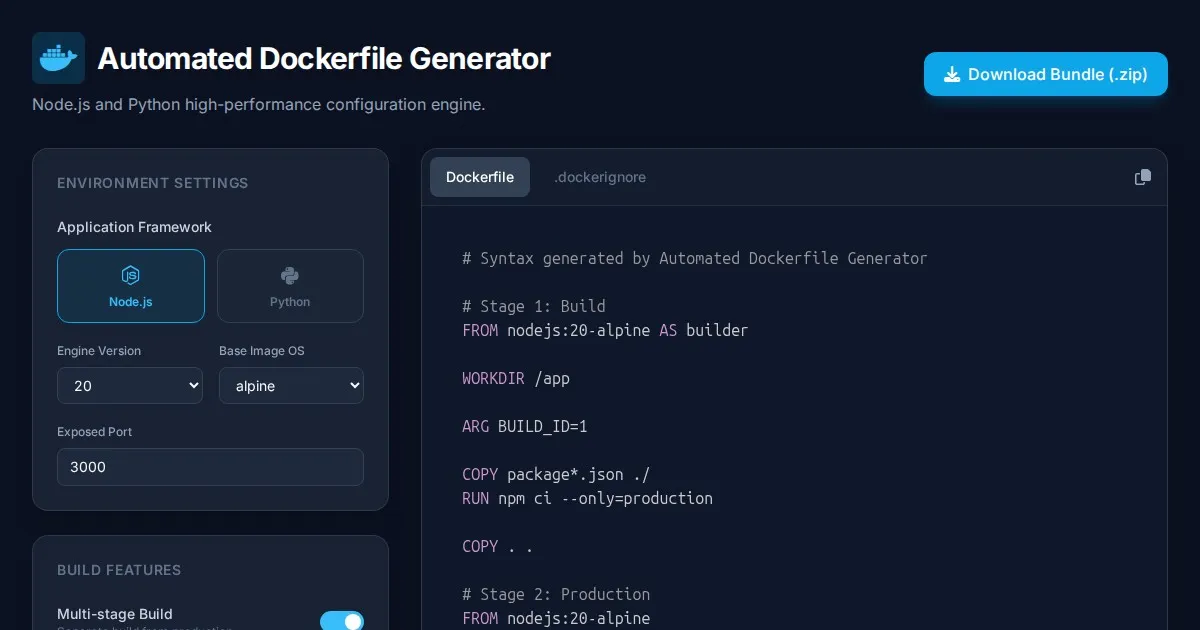
Automated Dockerfile Generator for Node.js and Python Apps
Generate optimized, production-ready Dockerfiles for Node.js and Python applications instantly. Customize base images, port configurations, and dependencies.

Free Base64 Image Data URI to File Size Calculator
Accurately calculate the file size of Base64 encoded image data strings. This free, web-based tool helps developers estimate binary file sizes for web apps.
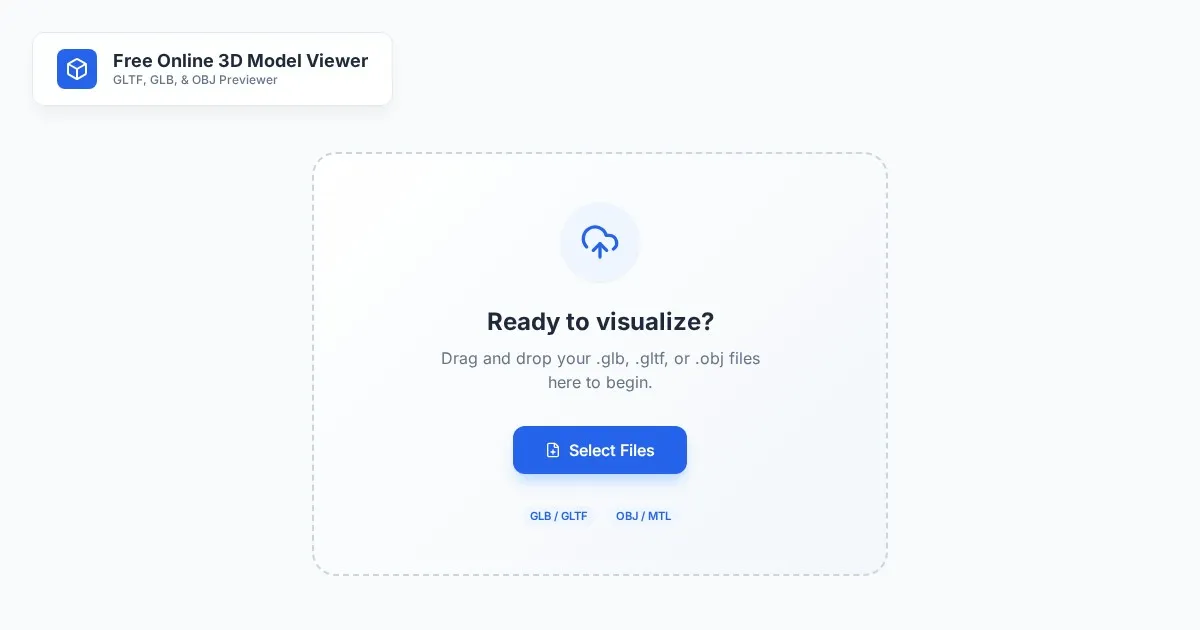
Free Online 3D Model Viewer - GLTF & OBJ File Previewer
Instantly preview 3D models online with this free 3D Model Viewer. Support for GLTF, GLB, and OBJ formats. Drag and drop your files for a fast, browser-based render.

Free Online Color Blindness Simulator & Image Filter Tool
Easily simulate color vision deficiencies like protanopia, deuteranopia, and tritanopia. Upload images to test design accessibility for color blindness.
Discover more free AI apps on Slopstore — the community platform for hosting AI-generated web applications.