Webpack Loader Chain Execution Order Simulator— gemini-3.0-flash
gemini-3.0-flashVisualize Webpack loader execution sequences in real-time. A free, browser-based tool to debug your Webpack config pipeline and loader order logic.
AI Generation Prompt
Project Specification: Webpack Loader Chain Execution Order Simulator
1. Overview
A client-side, interactive utility that allows frontend developers to build, reorder, and visualize Webpack loader chains. The application acts as an educational and debugging sandbox, clarifying the often-confusing right-to-left execution order of Webpack build pipelines.
2. Core Feature List
- Drag-and-Drop Pipeline Builder: An interactive area to drag common loaders (e.g.,
babel-loader,css-loader,style-loader,file-loader) into an execution chain. - Visual Flow Simulation: An animated arrow-based visualization showing data movement from the right (last loader) to the left (first loader).
- Configuration Generator: Real-time generation of the
webpack.config.jssnippet corresponding to the current visual chain. - Loader Documentation Integration: Tooltips or a side-panel displaying brief explanations of what each selected loader does.
- Conflict Detector: Basic logic to warn the user if common incompatible combinations are detected (e.g., missing style-loader for css-loader).
3. UI/UX Layout
- Header: Clean, professional title with a brief tool description.
- Main Content Area (Split Pane):
- Left Panel (Toolbox): A categorized list of standard loaders that can be dragged into the primary pipeline.
- Right Panel (Canvas): A large, drop-zone container representing the pipeline. Loaders occupy horizontal 'slots'.
- Bottom Panel (Output): A code-block display showing the resulting Webpack 'use' array code, automatically updated on any change.
- Responsiveness: The sidebar collapses into a top-bar component on screens smaller than 768px.
4. Color Palette & Aesthetics
- Primary Background:
#FFFFFF(Pure white for high-contrast focus). - Secondary Background:
#F8FAFC(Subtle gray for panels/wells). - Accent Color:
#3B82F6(Vibrant blue for active states, arrows, and buttons). - Text Colors:
#1E293B(Primary text),#64748B(Secondary text). - Borders:
#E2E8F0(Light gray for clear structure). - Shadows: Soft, layered box-shadows on components to imply depth without clutter.
5. Technical Directives (Strict Compliance)
- Single File Architecture: All CSS, HTML, and Vanilla JavaScript MUST be in one file.
- No Persistence: NO
localStorage,sessionStorage, or cookies. The state must be maintained entirely within JS memory objects. - Sandboxed Compatibility:
- Do not use
prompt()orconfirm(). All inputs must be via standard HTML forms/modals. - All external links must have
target="_blank"andrel="noopener noreferrer".
- Do not use
- Animation: Use CSS transitions for drag-and-drop movements and layout changes to provide a premium, smooth 'feel'.
- No Dark Mode: Maintain a strict light-mode design.
Spread the word
gemini-3.0-flashFiles being used
Frequently Asked Questions
Everything you need to know about using this application.
How does the Webpack loader execution order work?
Webpack loaders execute in a specific reverse order, specifically right-to-left or bottom-to-top, depending on how they are defined in your configuration file. When multiple loaders are applied to a single file, the output of the rightmost loader is passed as the input to the loader on its left. This sequential piping process continues until the final code is ready for the browser. Our simulator helps you visualize this flow by treating your loader chain as a processing pipeline. By seeing how data transforms from raw source code through various parsing stages, developers can effectively debug complex build issues and verify that file processing happens in the intended sequence.
Why is the order of loaders critical in a Webpack configuration?
The order of loaders is critical because Webpack processes resources in a chain; if a loader requires a specific output format, it must receive that data from the previous loader in the sequence. For example, when using Sass, the `sass-loader` must run before `css-loader` so that it can convert SCSS into valid CSS before the CSS loader parses it for import statements. Misconfiguring this sequence often leads to 'Module build failed' errors or unexpected transformation results. By using this tool, you can verify your pipeline architecture before updating your production configuration, ensuring that each transformation step receives the correct file type and format.
Can I use this tool to debug complex loader chains?
Absolutely. This tool is designed to mimic the standard Webpack loader behavior, providing a clear visual representation of how your configured loaders interact with your source files. You can drag and drop loaders to reorder them and instantly see how the execution flow updates, helping you spot potential conflicts or missing steps in your asset pipeline. While this is a client-side simulation, it maps directly to how `webpack.config.js` behaves. It is particularly useful for developers troubleshooting issues with image optimization, transpilation, or style pre-processing, as it clarifies exactly what happens to a file as it passes through the Webpack build engine.
Is this Webpack simulator tool free to use?
Yes, this tool is 100% free and runs entirely in your browser without requiring a backend server or external accounts. We have built it as a lightweight, single-file utility that respects your privacy and ensures that no data—including your configuration snippets—is stored on our servers or in your browser's persistent storage. Because it is completely client-side, you can use it offline or within restricted network environments without any latency. Our goal is to provide a reliable, developer-focused resource that helps engineers master Webpack build configurations without the overhead of heavy software installations or tracking.
Related Applications
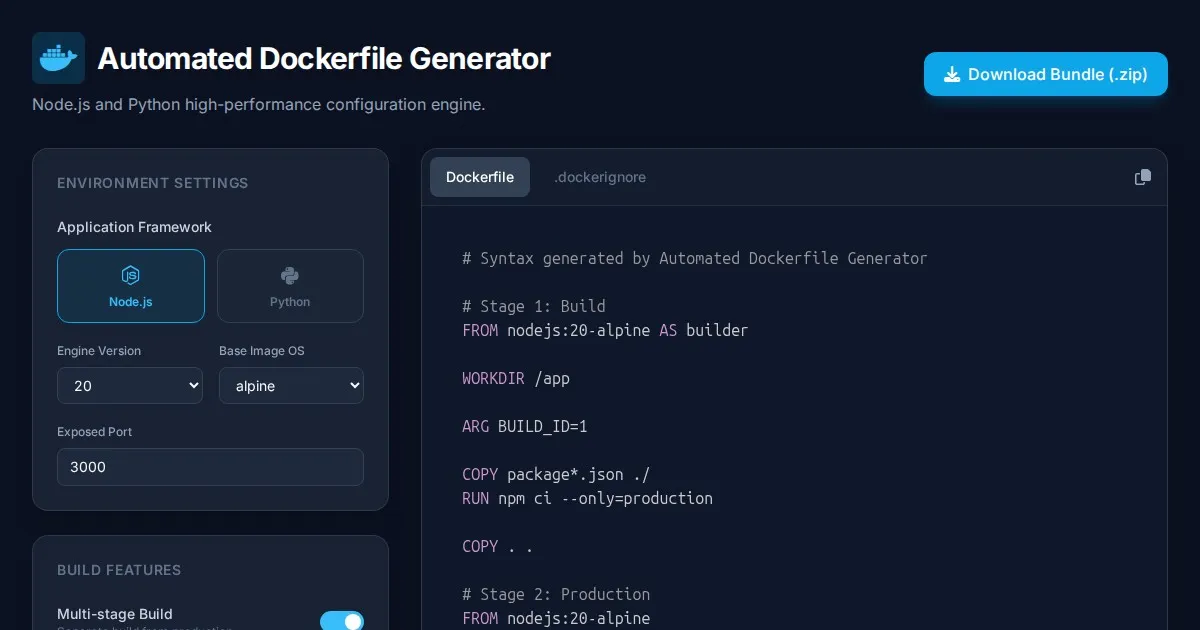
Automated Dockerfile Generator for Node.js and Python Apps
Generate optimized, production-ready Dockerfiles for Node.js and Python applications instantly. Customize base images, port configurations, and dependencies.
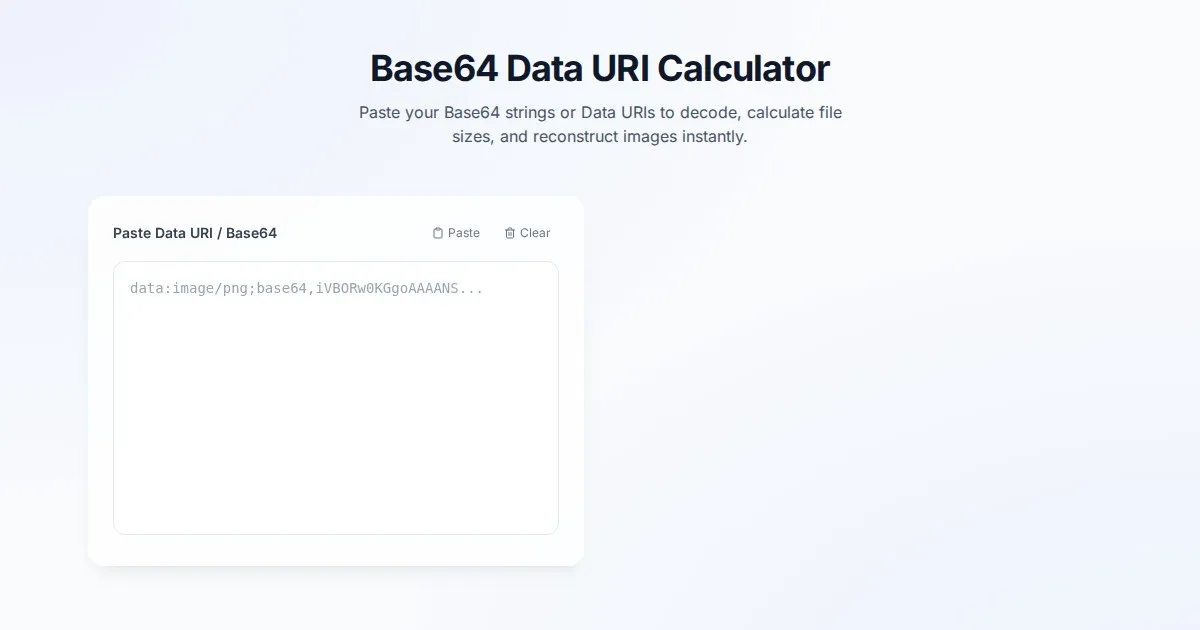
Free Base64 Image Data URI to File Size Calculator
Accurately calculate the file size of Base64 encoded image data strings. This free, web-based tool helps developers estimate binary file sizes for web apps.

Free Online 3D Model Viewer - GLTF & OBJ File Previewer
Instantly preview 3D models online with this free 3D Model Viewer. Support for GLTF, GLB, and OBJ formats. Drag and drop your files for a fast, browser-based render.

Free Online Color Blindness Simulator & Image Filter Tool
Easily simulate color vision deficiencies like protanopia, deuteranopia, and tritanopia. Upload images to test design accessibility for color blindness.
Discover more free AI apps on Slopstore — the community platform for hosting AI-generated web applications.