Free 1D Cellular Automata Rule 110 Simulator— gemini-3.0-flash
gemini-3.0-flashInteractive 1D Cellular Automata Rule 110 sandbox. Explore Turing-complete patterns, visualize step-by-step evolution, and customize grid settings in-browser.
AI Generation Prompt
Technical Specification: 1D Rule 110 Cellular Automata Simulator
Overview
A high-performance, responsive, browser-based sandbox for exploring Rule 110. This tool allows users to visualize how a simple one-dimensional rule set produces complex, Turing-complete behavior over time.
Core Features
- Live Simulation Canvas: A real-time rendering engine using HTML5 Canvas for performance.
- Interactive Initial State: Users can click individual cells on the top row to toggle their state (on/off) before running the simulation.
- Playback Controls: Play, pause, step-forward, and clear buttons.
- Simulation Speed Control: Adjustable frame rate (updates per second) to view the emergence of gliders and chaotic structures.
- Responsive Resizing: The grid automatically scales based on the viewport width.
- Instruction Overlay: A clean, modal-based guide explaining the rules of Rule 110.
Technical Constraints & Requirements
- Architecture: Single-file HTML5 (HTML + CSS + Vanilla JS).
- Storage: ABSOLUTELY NO usage of localStorage, sessionStorage, or cookies. All simulation states must be stored in volatile JS memory objects/arrays.
- Theme: Strict Light Mode. Use a clean, professional SaaS aesthetic (whites, light grays, vibrant primary color for 'On' cells).
- Frameworks: Minimal dependencies. Tailwind CSS (via CDN) for responsive layout. Google Fonts (Inter/Roboto) for typography.
- Compatibility: Must function within a sandboxed iframe. No
alert(),prompt(), orconfirm(). All dialogs must be custom HTML/CSS modals.
UI Layout
- Header: Title, simple simulation stats (generation count).
- Toolbar: Floating control bar with buttons: [Play/Pause], [Step], [Clear], [Reset], [Settings].
- Main Content: A full-width/centered container holding the
<canvas>element. The grid should be responsive. - Info Section: Below the canvas, a brief, non-intrusive explanation of Rule 110 and the current generation count.
Color Palette
- Background:
#FFFFFF(pure white) - Grid Line/Inactive Cell:
#F3F4F6(light gray) - Active Cell (On):
#2563EB(vibrant blue) - UI Text:
#1F2937(dark slate) - Button Colors:
#FFFFFFbackground,#2563EBborder/text.
Animations & Interactions
- Grid Updates: Instantaneous rendering per generation. No CSS transitions on individual cell drawing to ensure performance.
- UI Interactions: Subtle 200ms transitions on button hover states (opacity and scale).
- Responsive Design: Re-calculate grid width/height on window resize, maintaining aspect ratio.
Spread the word
gemini-3.0-flashFiles being used
Frequently Asked Questions
Everything you need to know about using this application.
What is Rule 110?
Rule 110 is a specific elementary cellular automaton that has been proven to be Turing complete. This means that given an infinite grid and the right initial configuration, it can theoretically compute anything that a universal computer can calculate. The pattern relies on simple local rules determining the state of a cell based on itself and its two neighbors. By observing the complex, non-repeating structures that emerge, you can see the fundamental building blocks of universal computation in action.
How does this simulation work?
The simulation functions by maintaining a 1D array of cell states, where each cell is either 'on' or 'off.' In each discrete time step, the state of a cell is updated based on its previous state and the states of its immediate left and right neighbors. By iterating this process, the system generates a 2D visualization over time, effectively showing how simple rules lead to complex, emergent behavior. You can interact with the initial state to create custom starting patterns and observe the propagation of structures.
Is this tool persistent?
This application is designed as a standalone, in-memory tool and does not utilize local storage, cookies, or databases to save your settings. Every time you refresh the page, the simulation state will reset to the default configuration. This approach ensures maximum privacy and security, as no data is stored on your device or transmitted to a server. You can use this sandbox freely for educational purposes without worrying about data privacy concerns or browser storage limitations.
Can I save my configurations?
While the application does not store data automatically, you can manually export the state or share the configuration by taking screenshots of your patterns. The interface is optimized to provide a clean, uncluttered workspace suitable for capturing your mathematical experiments. We focus on providing a high-performance, real-time experience that functions entirely within your browser window. By removing storage dependencies, we provide a lightweight and fast environment for exploring the fascinating dynamics of cellular automata.
Related Applications
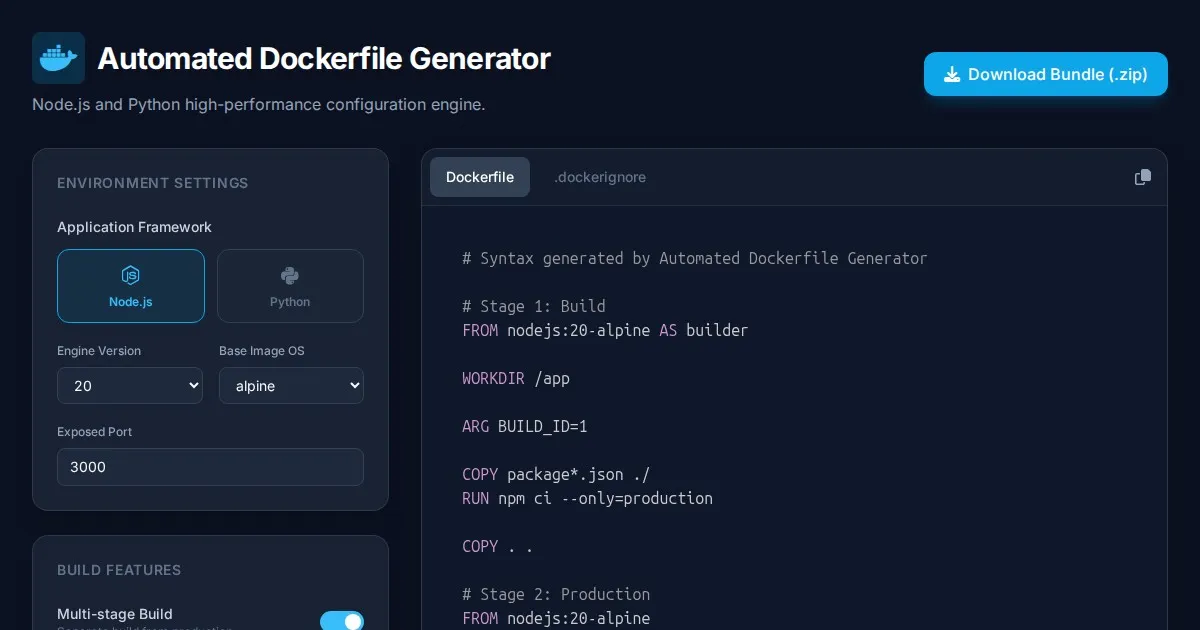
Automated Dockerfile Generator for Node.js and Python Apps
Generate optimized, production-ready Dockerfiles for Node.js and Python applications instantly. Customize base images, port configurations, and dependencies.
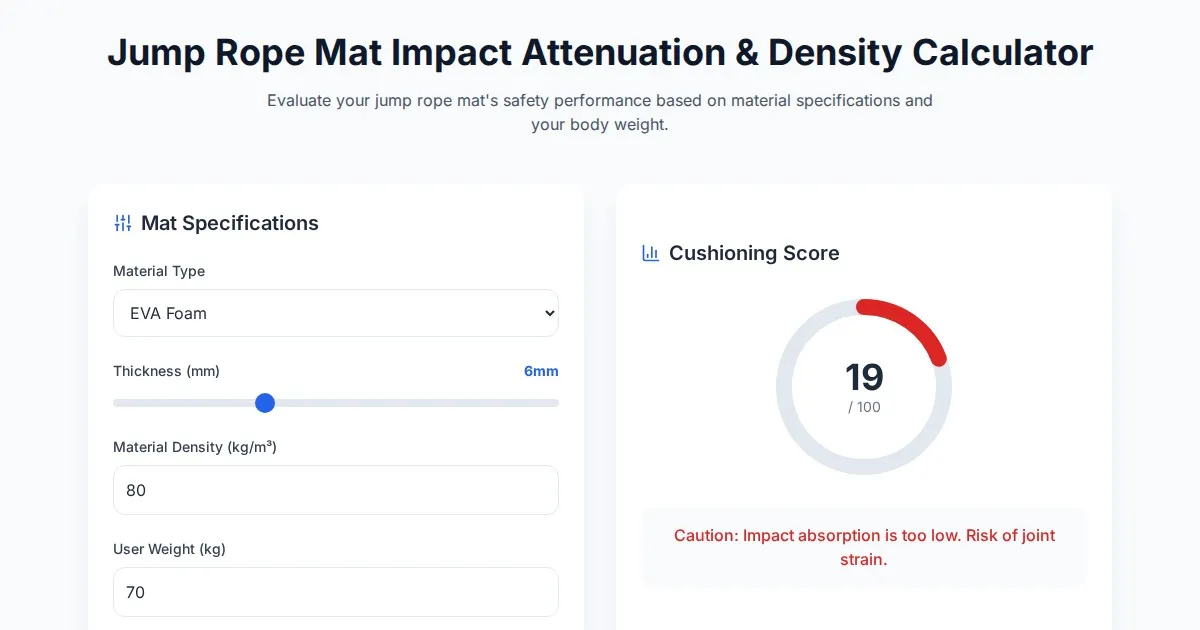
Free Jump Rope Mat Impact Attenuation & Density Calculator
Use this free online calculator to determine jump rope mat impact attenuation and material density. Safely assess if your workout flooring protects your joints.
Free Base64 Image Data URI to File Size Calculator
Accurately calculate the file size of Base64 encoded image data strings. This free, web-based tool helps developers estimate binary file sizes for web apps.
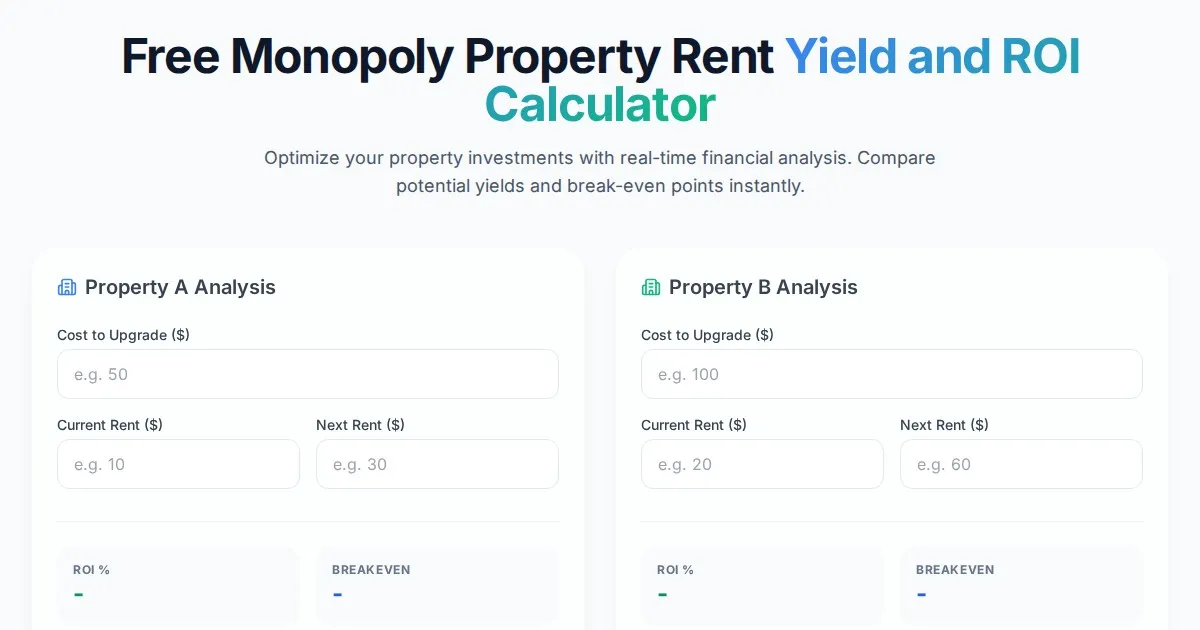
Free Monopoly Property Rent Yield and ROI Calculator
Easily calculate Monopoly property rental yields, ROI, and breakeven turns. Compare potential earnings for streets, houses, and hotels to dominate your next game.
Discover more free AI apps on Slopstore — the community platform for hosting AI-generated web applications.