Free Aquarium Glass Thickness & Safety Factor Calculator— gemini-3.0-flash
gemini-3.0-flashAccurately calculate the required glass thickness and safety factor for your custom aquarium. Ensure structural integrity for your DIY fish tank project easily.
AI Generation Prompt
Aquarium Glass Thickness & Safety Factor Calculator
Project Overview
This single-file application is a specialized engineering utility designed for DIY aquarium hobbyists. It allows users to calculate the minimum safe glass thickness required for a custom aquarium based on physical dimensions and a defined safety factor. The app emphasizes structural integrity through a clean, data-driven, and highly responsive interface.
Core Features
- Dynamic Unit Toggling: Seamless switching between Metric (mm, cm) and Imperial (inches, gallons) measurement systems.
- Adjustable Safety Factor: A slider interface allowing users to select safety factors ranging from 2.5 to 5.0, with a default setting of 3.8 (industry standard).
- Structural Warning System: A visual indicator that changes color (Green/Yellow/Red) based on the calculated stress load relative to the chosen glass thickness.
- Real-Time Calculation: Instant updates to the required thickness whenever an input field is modified, providing immediate feedback.
- Educational Tooltips: Integrated help text explaining why certain values (like water height) are critical to the calculation.
UI/UX Design Specification
- Aesthetic: A "SaaS-light" design. Use a white-on-cool-gray palette (
#f9fafbbackground,#111827text). Use soft, rounded borders (rounded-xl), and subtle drop shadows (shadow-sm) on input cards. - Layout:
- Header: Centered title with a brief, helpful subtitle.
- Main Content: A two-column layout on desktop (Input panel on the left, Results dashboard on the right) that stacks vertically on mobile devices.
- Input Panel: Text fields with clean labels for Length, Width, Height, and a range slider for the Safety Factor.
- Results Section: A prominent "Metric Card" displaying the recommended glass thickness in bold, high-contrast typography.
- Typography: Use a modern sans-serif stack (e.g., Inter, system-ui).
Technical Implementation Constraints
- Architecture: 100% Vanilla JS, HTML5, and Tailwind CSS (via CDN). No external frameworks.
- Sandbox Compatibility:
- No Storage: No use of
localStorage,sessionStorage, or cookies. State must reside in JavaScript objects. - No Popups: Do not use
alert()orconfirm(). Create modal overlays using absolute-positioneddivelements if user interaction is needed.
- No Storage: No use of
- Responsiveness: Use CSS Grid and Flexbox to ensure the tool functions perfectly from mobile phones up to widescreen desktops.
- State Management: Simple reactive pattern: Input change listener -> validate input -> update calculation function -> render DOM updates.
Logic & Calculation Basis
- The calculation will utilize the standard aquarium glass stress formula:
t = sqrt((L^2 * H * S) / (K * (L^2 + 2H^2)))(Note: This logic should be implemented via internal helper functions, ensuring the app is self-contained). - Ensure the app explicitly warns the user that this is a calculation tool and not a guarantee of structural success, advising them to consult professional aquarium builders for tanks larger than a certain volume (e.g., > 100 gallons).
Spread the word
gemini-3.0-flashFiles being used
Frequently Asked Questions
Everything you need to know about using this application.
How do I calculate the required glass thickness for an aquarium?
Calculating glass thickness requires analyzing the hydrostatic pressure exerted by the water column based on the tank's height. This tool uses standard engineering formulas that account for the water density, the length and height of the glass panels, and your chosen safety factor to output a recommended thickness. It is vital to understand that as water depth increases, pressure increases exponentially. Therefore, while length affects the potential for glass bowing, the height is the primary variable determining the necessary thickness of the front and back panes.
What is a standard safety factor for aquarium glass?
In aquarium construction, a safety factor of 3.8 is widely considered the industry standard for ensuring long-term structural integrity. This factor accounts for potential variations in glass quality, silicone adhesion strength, and accidental impacts that might occur during the lifespan of the tank. Beginners are strongly advised to use a minimum safety factor of 3.8, while more experienced builders or those constructing very large displays may choose higher safety factors to provide additional overhead for potential settling or micro-fractures over time.
Does the type of glass affect the calculation?
Yes, the type of glass significantly influences the safety calculation. Standard float glass has different stress tolerances compared to tempered or acrylic materials. This calculator provides estimates based on standard annealed float glass, which is the most common material used by DIY aquarium builders. If you are using tempered glass, note that it cannot be drilled or modified once tempered, and it has different failure characteristics. If you are using acrylic, the calculation models differ entirely from glass due to the material's flexibility and thickness-to-strength ratio.
Why is it important to use a professional calculator for tank builds?
A DIY aquarium failure can result in catastrophic water damage and the loss of livestock. Calculating the structural load incorrectly is the primary cause of seam bursts and glass panel failures in home-built setups. Using a vetted tool ensures your math accounts for all critical dimensions. Furthermore, using a calculator allows you to experiment with dimensions to see how they impact cost and structural needs. For example, reducing the tank height by even a few inches can drastically lower the required glass thickness, making the project both safer and more affordable.
Related Applications
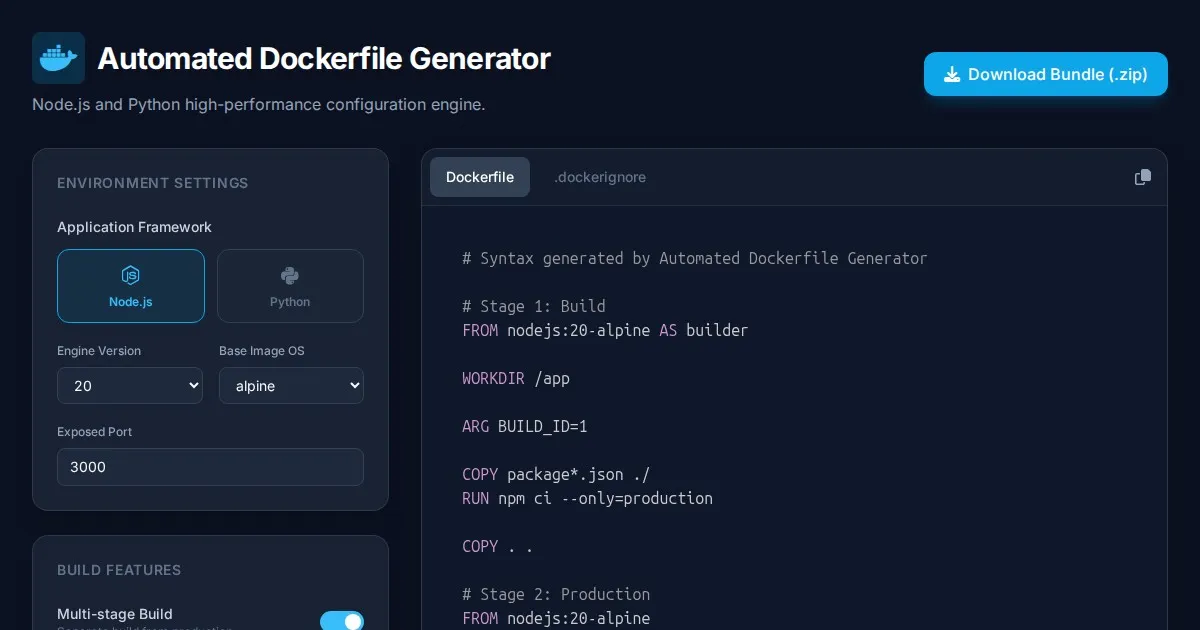
Automated Dockerfile Generator for Node.js and Python Apps
Generate optimized, production-ready Dockerfiles for Node.js and Python applications instantly. Customize base images, port configurations, and dependencies.
Free Base64 Image Data URI to File Size Calculator
Accurately calculate the file size of Base64 encoded image data strings. This free, web-based tool helps developers estimate binary file sizes for web apps.

Free Online Color Blindness Simulator & Image Filter Tool
Easily simulate color vision deficiencies like protanopia, deuteranopia, and tritanopia. Upload images to test design accessibility for color blindness.
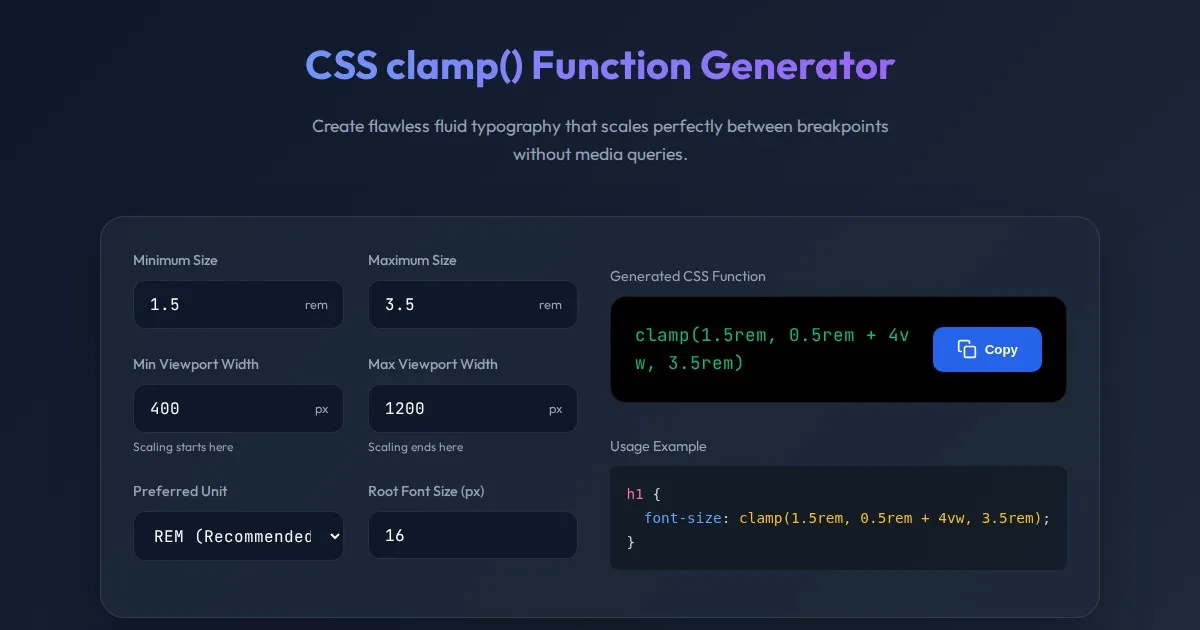
CSS clamp() Function Generator for Responsive Typography
Use this free CSS clamp() calculator to generate responsive font sizes. Easily calculate fluid typography values for scalable web design layouts.
Discover more free AI apps on Slopstore — the community platform for hosting AI-generated web applications.