Free Banjo 5th String Capo & Spike Transposition Calculator— gemini-3.0-flash
gemini-3.0-flashEasily calculate the correct fret for your 5th string banjo spike or capo. A free, easy-to-use tool for bluegrass banjo players to transpose keys instantly.
AI Generation Prompt
Banjo 5th String Capo & Spike Transposition Calculator
Overview
This single-file, browser-based utility provides banjo players with an instant reference for 5th string capo or spike placement. The tool removes the guesswork from transposing to different keys, ensuring the 5th string drone note remains harmonic with the rest of the instrument.
Technical Architecture
- Single File: The entire application must be contained in a single
index.htmlfile using embedded CSS and Vanilla JavaScript. - No Storage: Due to sandboxed iframe constraints, the application will not use
localStorage,sessionStorage, or cookies. The state is maintained in-memory. - Performance: Designed to be lightweight and load instantly without external dependencies beyond a single Google Font and Tailwind CSS via CDN.
- Compatibility: Fully compliant with sandboxed, null-origin iframes (no popups, no tracking).
User Interface (UI) Specification
- Header: Clean, centered title with a brief subtitle explaining the tool's purpose.
- Input Section:
- Dropdown or segmented control for 'Capo Position' (Frets 0-5).
- Dropdown for 'Target Key' (A, Bb, B, C, D, E, F).
- Output Display:
- A prominent, large-text 'Result Card' that displays the recommended 5th string fret.
- A secondary 'visual aid' showing a graphic representation of a banjo neck, highlighting the selected spike position.
- Aesthetic:
- Color Palette: Professional light-mode theme using
#F8FAFC(background),#FFFFFF(cards),#2563EB(primary action), and#1E293B(typography). - Typography: Inter or System UI fonts for readability.
- Transitions: Subtle
fade-inandtransformanimations when results update.
- Color Palette: Professional light-mode theme using
Feature Set
- Real-Time Calculation: Results update instantly as inputs change, with no need for a 'calculate' button.
- Spike vs. Capo Context: Tips on which fret to use if a player has a full suite of spikes versus a single-point capo.
- Visual Guide: A high-contrast graphic representation of the fretboard indicating exactly where the 5th string should be fixed.
- Responsive Design: The UI stacks vertically on mobile devices and expands into a two-column grid on desktop/tablets.
Development Directives
- No External Dependencies (Build-free): Use only CDN-linked libraries (Tailwind CSS, standard fonts). Do not use build tools like Webpack or Vite.
- Clean Code: Use Vanilla JavaScript (ES6+) with event delegation. Do not use jQuery or React.
- Accessibility: Ensure high contrast ratios and keyboard navigation support for all inputs.
- No Popups: Implement any alerts or notifications as toast-style UI elements within the document flow.
- Light Mode Only: Enforce a clean, light-colored aesthetic at all times; do not include a dark mode switcher.
Spread the word
gemini-3.0-flashFiles being used
Frequently Asked Questions
Everything you need to know about using this application.
Why is a 5th string capo or spike necessary for banjo?
The 5th string on a standard 5-string banjo is shorter than the other four strings and is typically tuned to a high G note. When you play in keys other than G or C, the open 5th string will often clash with the chord progression if not transposed to match the key. Using a 5th string capo or a set of railroad spikes allows you to 'capo' the 5th string up to match the new root note of your key. This ensures the 5th string remains harmonic with the rest of the banjo while playing in keys like A, B, or D.
How does this banjo transposition calculator work?
The calculator takes your current capo position (for strings 1-4) and your target musical key as input. By calculating the interval relationship between the open strings and the capoed strings, it determines the precise fret position needed to re-tune the 5th string. Once you enter your current capo fret and the key you intend to play in, the application will display the exact fret number for your 5th string spike or capo. It provides quick, visual feedback to ensure you are always in the correct key for your performance.
What is the difference between banjo spikes and a 5th string capo?
Banjo spikes are small metal pins installed directly into the fretboard at specific intervals (usually frets 7, 8, 9, and 10). To change the pitch, you tuck the 5th string under the head of the spike. This is a semi-permanent solution preferred by many bluegrass professionals for its speed and stability. A 5th string capo, by contrast, is a removable mechanical device that clamps onto the neck, similar to a standard capo. While less permanent, some players find them more cumbersome to install during a performance compared to simply hooking a string under a pre-installed spike.
Can I use this tool for tenor or plectrum banjos?
This specific tool is designed primarily for the standard 5-string banjo configuration where the 5th string is tuned significantly higher and originates from the 5th fret. Tenor and plectrum banjos have four strings and do not utilize a '5th string' in the same harmonic manner, meaning this calculator would not apply to those instruments. If you are playing a standard 5-string banjo, this tool provides accurate guidance for standard bluegrass and clawhammer tunings. Always ensure your banjo is tuned to open G before using the calculator for the best results.
Related Applications
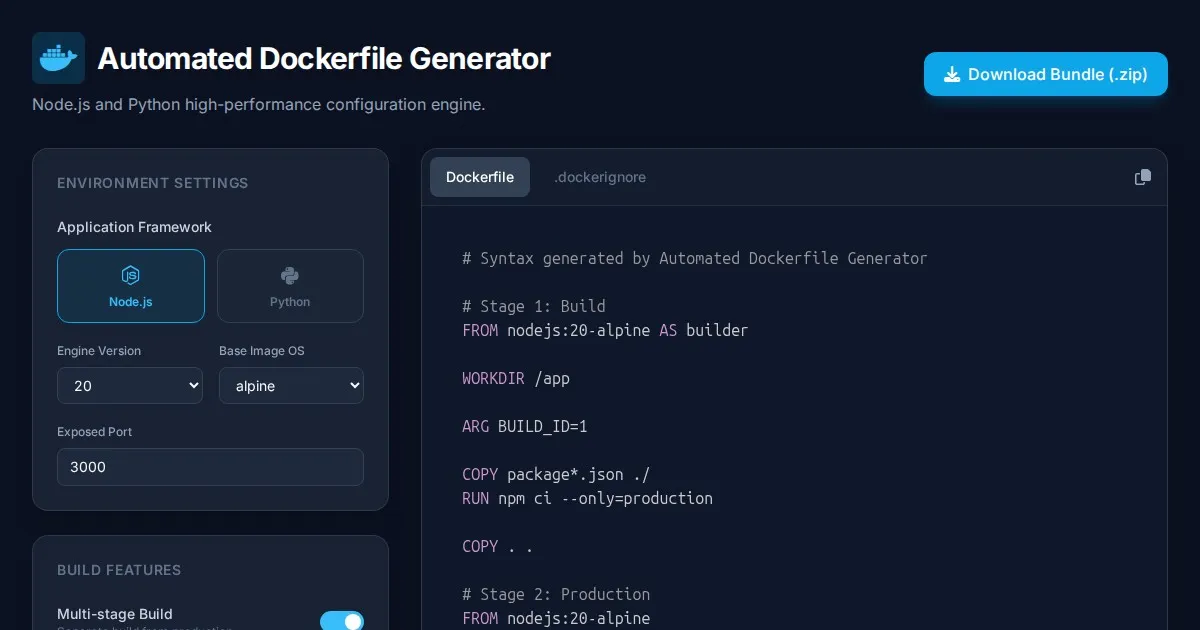
Automated Dockerfile Generator for Node.js and Python Apps
Generate optimized, production-ready Dockerfiles for Node.js and Python applications instantly. Customize base images, port configurations, and dependencies.
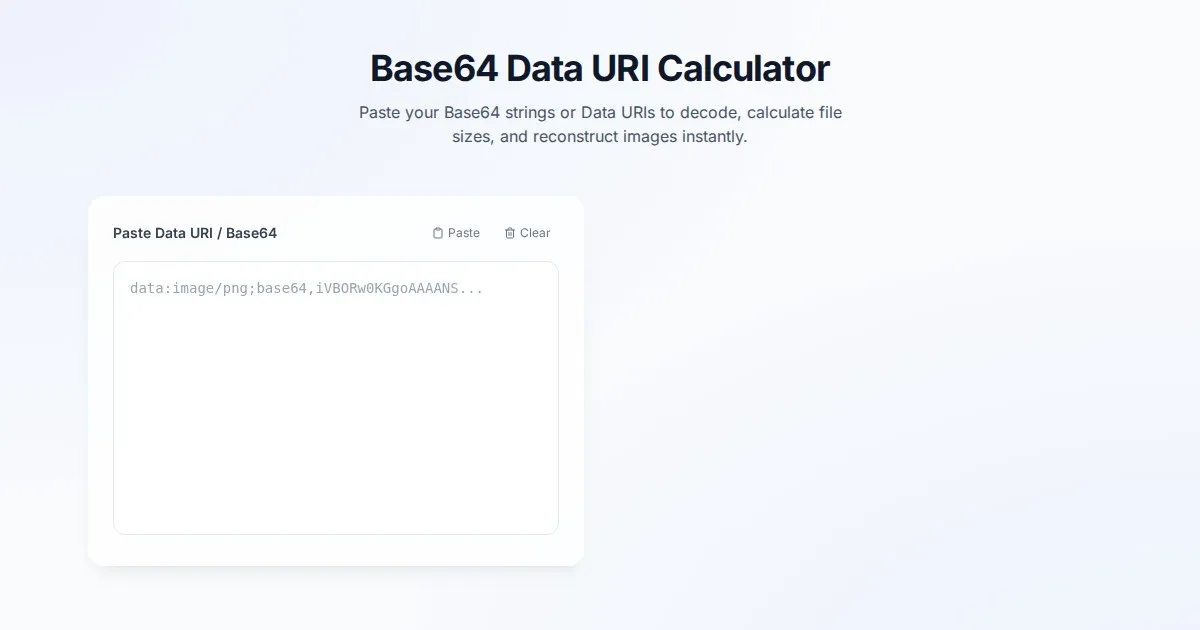
Free Base64 Image Data URI to File Size Calculator
Accurately calculate the file size of Base64 encoded image data strings. This free, web-based tool helps developers estimate binary file sizes for web apps.

Free Online 3D Model Viewer - GLTF & OBJ File Previewer
Instantly preview 3D models online with this free 3D Model Viewer. Support for GLTF, GLB, and OBJ formats. Drag and drop your files for a fast, browser-based render.

Free Online Color Blindness Simulator & Image Filter Tool
Easily simulate color vision deficiencies like protanopia, deuteranopia, and tritanopia. Upload images to test design accessibility for color blindness.
Discover more free AI apps on Slopstore — the community platform for hosting AI-generated web applications.