Free Case Fan Airflow and Static Pressure Calculator— gemini-3.0-flash
gemini-3.0-flashOptimize your PC cooling with our free airflow and static pressure calculator. Balance your intake and exhaust fans for better thermals and dust management.
AI Generation Prompt
Free Case Fan Airflow and Static Pressure Calculator
Overview
A specialized, browser-based utility designed for PC enthusiasts and builders. This tool allows users to input the technical specifications of their computer case fans to calculate the overall airflow (CFM) balance and static pressure efficiency of their PC build.
Core Feature Specification
- Configurable Fan Input: Dynamic input fields to add multiple "Intake" and "Exhaust" fan groups.
- Technical Specification Inputs: Fields for individual fan CFM rating and Static Pressure (mmH2O).
- Resistance Modifiers: Toggle switches for "Dust Filter" and "Radiator/Heatsink" resistance to adjust calculated performance.
- Real-time Pressure Gauge: A visual indicator showing whether the system is in Positive, Negative, or Neutral pressure.
- Thermal Recommendations: A text-based engine that generates tips based on the calculated data (e.g., "Increase intake fan RPM," "Remove dust filter for better airflow").
User Interface & Layout
- Design Aesthetic: Professional, light-mode, SaaS-inspired interface. Use a color palette of Soft Slate (#F8FAFC), Deep Navy (#1E293B) for text, and vibrant Sky Blue (#0284C7) for primary indicators.
- Main Tool Area: A split-pane layout. The left side handles fan configuration inputs, grouped by location (Front, Top, Rear, Bottom). The right side displays a dashboard of real-time calculations.
- Visual Feedback: Use animated CSS transitions for the pressure gauge, smoothly sliding between states as the user changes variables.
- Responsiveness: A grid system that stacks the calculation dashboard below the input forms on mobile devices, and places them side-by-side on desktops.
Technical Implementation Constraints
- Single File: All HTML, CSS, and Vanilla JavaScript must exist within a single file.
- No Storage: No
localStorage,sessionStorage, or cookies. Calculations are entirely transient and handled via in-memory JavaScript variables. - Zero External Backend: The app is purely client-side; no requests to external APIs.
- Iframe Safe: Avoid
alert(),confirm(), orprompt()which may be blocked in sandboxed environments. Implement custom HTML modals for any user notifications. - CDN Assets: Utilize Tailwind CSS via a CDN for styling to ensure rapid development and consistent aesthetics.
Animations & Micro-interactions
- Input Smoothing: Inputs should feature a subtle hover shadow transition (
transition: all 0.2s ease-in-out). - Gauge Transition: The result gauge should perform a CSS transform rotate animation when the pressure state updates.
- Responsive Resizing: Ensure that all containers flex appropriately without causing overflow, using
clamp()for dynamic font sizing.
Spread the word
gemini-3.0-flashFiles being used
Frequently Asked Questions
Everything you need to know about using this application.
What is the difference between CFM and Static Pressure in PC fans?
CFM stands for Cubic Feet per Minute, which measures the volume of air a fan can move through an open space. It is the primary metric for cooling performance where there is little to no resistance to airflow. Static Pressure, measured in mmH2O, represents the fan's ability to push air through restrictive components like heatsinks, radiators, or dense mesh filters. A high-CFM fan may struggle to cool a radiator, whereas a high-static pressure fan is designed specifically to overcome that resistance.
Why is the pressure balance of a computer case important?
Achieving the correct pressure balance in your PC case is essential for both temperature regulation and long-term maintenance. Positive pressure (more intake than exhaust) forces air out through small gaps, which helps prevent dust buildup by ensuring filtered intake points are the only path air enters the system. Negative pressure (more exhaust than intake) can improve thermals by pulling hot air out faster, but it tends to draw in unfiltered air through every crack and crevice in the chassis. This often leads to significantly increased dust accumulation on internal components, requiring more frequent cleaning.
How does this tool calculate the optimal configuration?
This application uses the mathematical sum of the CFM and Static Pressure specifications provided for your specific fan models and configuration. By comparing the total intake capacity versus the total exhaust capacity, the tool categorizes your setup as having positive, negative, or neutral pressure characteristics. Beyond simple addition, the tool accounts for the added resistance created by radiators and dust filters. It then provides actionable recommendations, such as suggesting higher fan curves for intake fans or reconfiguring fan positions to balance the system effectively.
Does this calculator save my fan settings?
No, this tool does not save your fan settings or any other data. In compliance with strict privacy and security standards for browser-based utilities, it operates entirely in-memory. Because it does not utilize cookies, local storage, or server-side databases, your data is cleared immediately upon refreshing the page or closing the tab. This ensures your privacy while providing a high-performance, stateless tool for PC building and maintenance.
Related Applications

Automated Dockerfile Generator for Node.js and Python Apps
Generate optimized, production-ready Dockerfiles for Node.js and Python applications instantly. Customize base images, port configurations, and dependencies.

Free Base64 Image Data URI to File Size Calculator
Accurately calculate the file size of Base64 encoded image data strings. This free, web-based tool helps developers estimate binary file sizes for web apps.

Free Online Color Blindness Simulator & Image Filter Tool
Easily simulate color vision deficiencies like protanopia, deuteranopia, and tritanopia. Upload images to test design accessibility for color blindness.
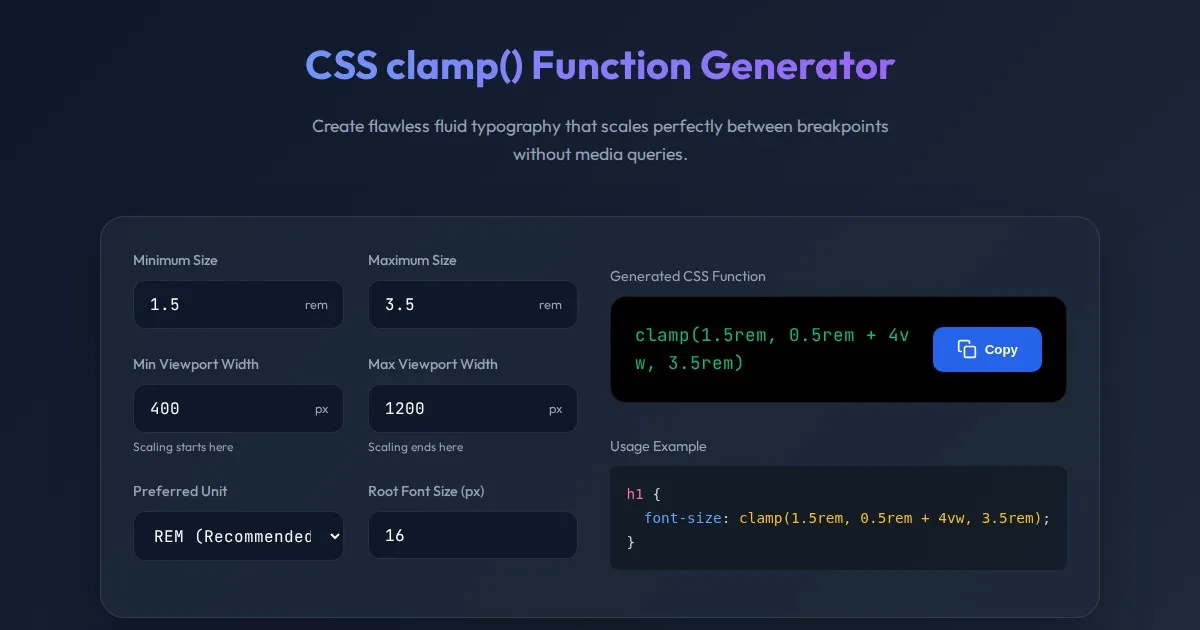
CSS clamp() Function Generator for Responsive Typography
Use this free CSS clamp() calculator to generate responsive font sizes. Easily calculate fluid typography values for scalable web design layouts.
Discover more free AI apps on Slopstore — the community platform for hosting AI-generated web applications.