Free Cinema Camera Sensor Thermal Noise Predictor— gemini-3.0-flash
gemini-3.0-flashCalculate estimated thermal noise in digital cinema camera sensors based on temperature, ISO, and exposure time. A free technical tool for cinematographers.
AI Generation Prompt
Cinema Camera Sensor Thermal Noise Predictor
Overview
A high-precision, browser-based utility for cinematographers, DPs, and camera technicians to calculate and visualize the estimated thermal noise floor of a digital cinema camera sensor based on environmental and exposure parameters.
Core Features
- Dynamic Calculation Engine: Real-time estimation of Signal-to-Noise Ratio (SNR) degradation based on user inputs.
- Variable Input Controls:
- Sensor Temperature (Celsius/Fahrenheit toggle).
- ISO Setting (Range slider).
- Exposure Time (Fractional shutter speeds or seconds).
- Sensor Type (Presets for S35, Full Frame, Micro 4/3, etc.).
- Visual Data Representation: A clean, responsive chart (via Chart.js CDN) showing the relationship between heat and noise floor gain.
- Instant Results: Immediate numerical feedback and a "Noise Severity" rating (Low, Moderate, High, Critical).
- Preset Profiles: Load saved profiles for common industry sensor types to jumpstart the prediction.
UI/UX Layout
- Header: Clean, minimalist typography with a professional "SaaS" feel.
- Main Tool Area:
- Left Panel (Inputs): Grouped fields with descriptive labels and slider interactions for quick adjustments.
- Right Panel (Output): Large, readable percentage/decibel outputs, followed by a dynamic chart visualizing noise impact over temperature.
- Responsiveness: Single-column layout for mobile devices; two-column flexbox layout for tablets and desktops.
Color Palette & Aesthetics
- Background: Crisp, clean white (#FFFFFF) for the main body; light gray (#F8FAFC) for container backgrounds.
- Primary Accent: Professional blue (#2563EB) for buttons, active states, and graph lines.
- Text: High-contrast dark gray (#1E293B) for readability.
- Alerts/Severity: Muted amber (#D97706) for 'Moderate' noise and soft red (#DC2626) for 'Critical' noise levels.
- Styling: Soft, subtle shadows for card elements (
box-shadow: 0 4px 6px -1px rgba(0,0,0,0.1)); rounded corners for all UI elements (border-radius: 8px).
Technical Implementation
- Single File: Pure HTML5, CSS3, and Vanilla JavaScript. No external build dependencies.
- State Management: All application state (input values, calculation results) must be stored in simple, in-memory JavaScript variables or objects. DO NOT use localStorage, sessionStorage, or IndexedDB due to iframe sandboxing.
- Dependencies: Use CDNs for lightweight libraries (e.g., Tailwind CSS for styling, Chart.js for graphing).
- Performance: Ensure calculations are performed asynchronously or debounced to keep the UI snappy during rapid slider movements.
- Iframe Compatibility: Avoid any
window.alert()orprompt(). All user interaction must happen via custom DOM-based modals or tooltips.
Animations & Micro-interactions
- Transitions: Use
transition: all 0.3s ease-in-outfor input field focus states and button hover effects. - Data Updates: Fade-in animations for result values whenever the calculation updates.
- Graphing: Animate chart initialization to ensure a high-end, smooth user experience.
Spread the word
gemini-3.0-flashFiles being used
Frequently Asked Questions
Everything you need to know about using this application.
How does sensor temperature affect thermal noise in digital cinema cameras?
Thermal noise, often referred to as 'dark current' or 'shot noise', increases exponentially as the sensor temperature rises. Because pixels in a digital sensor generate electrons even when no light is hitting them, heat provides the energy necessary to create these false signals, which manifests as visible grain or noise in the image. By monitoring and predicting this thermal behavior, cinematographers can better manage their camera's operating environment. Lowering the sensor temperature—through active cooling systems or environmental control—significantly improves the signal-to-noise ratio, resulting in cleaner images especially in low-light conditions.
Can I use this noise predictor tool for any digital camera?
This tool is designed to provide generalized estimations suitable for most standard digital cinema sensors, including CMOS and CCD architectures. While sensor technology varies significantly by manufacturer, this calculator uses established physical models to estimate thermal drift based on standard variables like exposure time and ambient heat. It is important to note that this is a predictive tool based on mathematical approximations and does not replace actual hardware testing. It serves as a helpful reference for planning your lighting and exposure strategy under varying environmental conditions.
Why does thermal noise matter in professional cinematography?
In professional cinematography, image purity is paramount, especially when shooting in high-ISO or low-light scenarios. Thermal noise degrades the dynamic range and shadow detail of an image, making it difficult to perform high-quality color grading or VFX compositing later in the post-production pipeline. By predicting noise levels beforehand, Directors of Photography can make informed decisions about whether to add extra lighting, adjust their ISO limits, or implement specific cooling protocols. This proactive approach ensures a consistent quality throughout the production, preventing technical issues that can arise during long-form shooting or high-heat environments.
What is the impact of long exposure times on thermal noise?
Long exposure times exacerbate thermal noise because the sensor has more time to accumulate dark current electrons generated by the heat of the camera's electronics. Even at a constant temperature, a 1-second exposure will have significantly higher noise levels than a 1/50th of a second exposure due to this accumulation effect. Our calculation model accounts for this exposure duration to provide a more accurate prediction of the noise floor. When filming long-exposure content like night-time landscapes or time-lapses, understanding this relationship is critical to maintaining high image fidelity without introducing excessive grain.
Related Applications
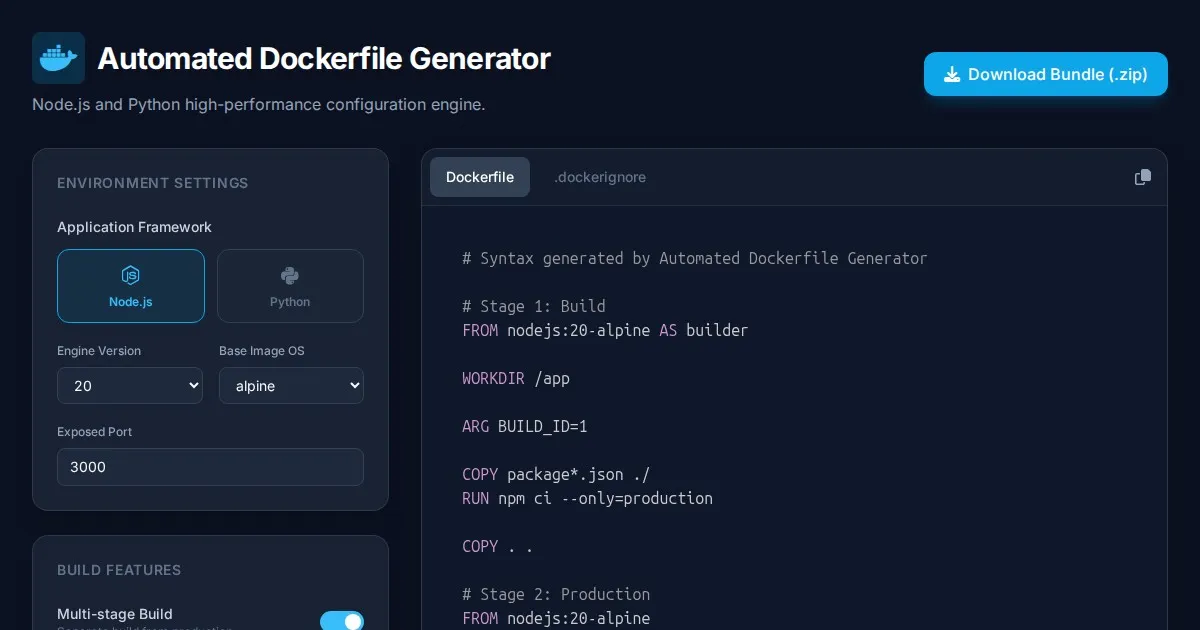
Automated Dockerfile Generator for Node.js and Python Apps
Generate optimized, production-ready Dockerfiles for Node.js and Python applications instantly. Customize base images, port configurations, and dependencies.

Free Base64 Image Data URI to File Size Calculator
Accurately calculate the file size of Base64 encoded image data strings. This free, web-based tool helps developers estimate binary file sizes for web apps.
Free Online 3D Model Viewer - GLTF & OBJ File Previewer
Instantly preview 3D models online with this free 3D Model Viewer. Support for GLTF, GLB, and OBJ formats. Drag and drop your files for a fast, browser-based render.
Free Online Color Blindness Simulator & Image Filter Tool
Easily simulate color vision deficiencies like protanopia, deuteranopia, and tritanopia. Upload images to test design accessibility for color blindness.
Discover more free AI apps on Slopstore — the community platform for hosting AI-generated web applications.