Free Cinema Camera Shutter Angle to Shutter Speed Converter— gemini-3.0-flash
gemini-3.0-flashInstantly calculate shutter speeds from shutter angles. A free professional cinema camera tool for filmmakers to match frame rates and exposure times perfectly.
AI Generation Prompt
Cinema Camera Shutter Angle to Shutter Speed Converter
This application provides a professional-grade, browser-based tool for cinematographers and videographers to convert between shutter angles and shutter speeds. Designed for the field or the editing suite, it eliminates manual math and reduces error when setting camera exposure profiles.
Core Features
- Real-Time Conversion: Instant calculation as the user adjusts FPS or Shutter Angle values.
- Bidirectional Calculation: Support for calculating shutter speed from angle, and vice-versa.
- Industry Presets: Quick-select buttons for common shutter angles (45°, 90°, 172.8°, 180°, 360°).
- Fractional Display: Outputs shutter speed in standard fractional notation (e.g., 1/48) and decimal milliseconds (e.g., 20.8ms).
- High-Contrast UI: Designed specifically for visibility in bright outdoor environments where cinematographers often work.
UI Layout
- Header: Simple, clean application title with no branding or distracting graphics.
- Input Section: A horizontally centered card containing:
- Numeric input for Frame Rate (FPS).
- Range slider and numeric input for Shutter Angle (0-360°).
- Preset buttons row (45°, 90°, 180°, 360°).
- Result Section: A clear, high-visibility output card displaying the computed shutter speed.
- Copy-to-Clipboard: A 'Copy Result' button for easy transfer to camera settings lists.
Design System & Aesthetics
- Color Palette: Purely professional, utilizing a monochromatic scheme:
- Background:
#F8FAFC(Light Gray/White) - Primary Buttons:
#2563EB(Standard Blue) - Text:
#0F172A(Dark Navy for high readability) - Shadows: Subtle, soft drop shadows (
0 4px 6px -1px rgba(0,0,0,0.1)) for card depth.
- Background:
- Animations:
- Smooth fade-in transitions when results are updated.
- Subtle button hover scaling (1.02x transform) for interactive feedback.
- Typography: Sans-serif, geometric font (e.g., 'Inter') for maximum legibility.
Technical Specifications & Constraints
- Architecture: Single-file HTML/CSS/JS. All styles and scripts must be embedded.
- Dependencies: Tailwind CSS via CDN is permitted for rapid, consistent styling.
- State Management: Mandatory: Use in-memory variables only. DO NOT use
localStorage,sessionStorage, orcookies. - Iframe Compatibility: The app must be fully functional in a null-origin sandboxed iframe. Ensure no
alert()orprompt()calls are used; use custom modal overlays instead. - Responsive Design: Mobile-first approach; inputs stack vertically on phones and align horizontally on desktop/tablet.
Spread the word
gemini-3.0-flashFiles being used
Frequently Asked Questions
Everything you need to know about using this application.
Why is shutter angle used in cinema instead of shutter speed?
Shutter angle is a legacy term derived from traditional mechanical film cameras, where a rotating disk with a circular opening (the shutter) controlled exposure duration. Because the shutter speed is relative to the frame rate (FPS), shutter angle allows a cinematographer to maintain the same motion blur characteristic even when changing frame rates, ensuring a consistent aesthetic throughout a production. By using shutter angle, the camera automatically scales the exposure time relative to the frame rate. For instance, a 180-degree shutter angle will always expose for exactly half of each frame duration, regardless of whether the camera is shooting at 24fps or 60fps, providing the standard, natural-looking motion blur preferred in professional cinematography.
How do I use this shutter angle calculator?
To use this tool, simply input your desired frame rate (FPS) and your chosen shutter angle (e.g., 45, 90, 180, or 360 degrees) into the provided fields. The application will instantly perform the calculation and display the resulting shutter speed in both seconds and fractional notation, allowing you to manually input these values into your camera settings menu. You can also use the preset buttons to quickly toggle through industry-standard angles. This provides a fast, reliable way to ensure your exposure settings are accurate, especially when switching between different frame rates for slow-motion or standard playback speeds during a shoot.
What is the 180-degree shutter rule?
The 180-degree shutter rule is a foundational principle in cinematography used to achieve natural-looking motion blur. By setting the shutter angle to 180 degrees, the shutter is open for half of the duration of each frame, effectively doubling the shutter speed relative to the frame rate. This mimics the temporal persistence of vision that human eyes are accustomed to. Violating this rule can result in unnatural-looking footage. A shutter angle smaller than 180 degrees (like 45 or 90 degrees) will result in choppier, more staccato motion, which is often used for high-intensity action sequences, while a larger angle creates more motion blur, often leading to a dreamlike or softer look.
Is my input data saved or stored by this tool?
No, this application does not store any of your input data. The tool is designed to run entirely in-memory within your browser session using standard JavaScript variables, meaning no information is sent to a server, saved to local storage, or tracked via cookies. This architecture is intentionally chosen to comply with strict sandboxed iframe requirements. Because no persistent storage mechanisms like localStorage or IndexedDB are used, your inputs are cleared the moment the browser tab is closed, ensuring full privacy and compatibility with high-security browser environments.
Related Applications
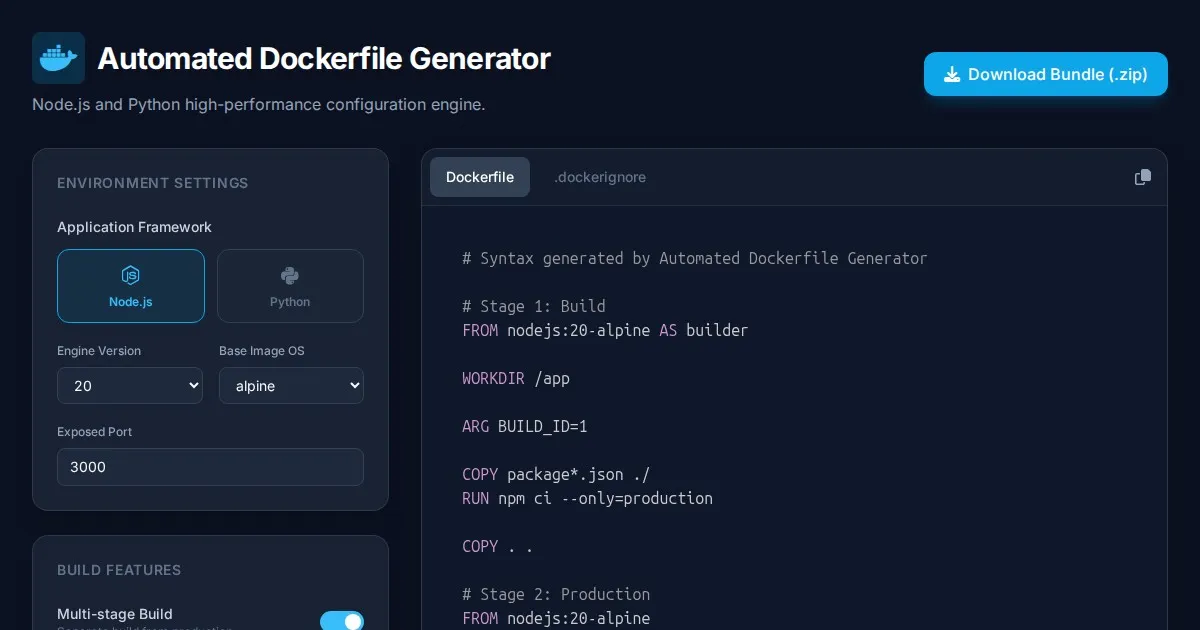
Automated Dockerfile Generator for Node.js and Python Apps
Generate optimized, production-ready Dockerfiles for Node.js and Python applications instantly. Customize base images, port configurations, and dependencies.
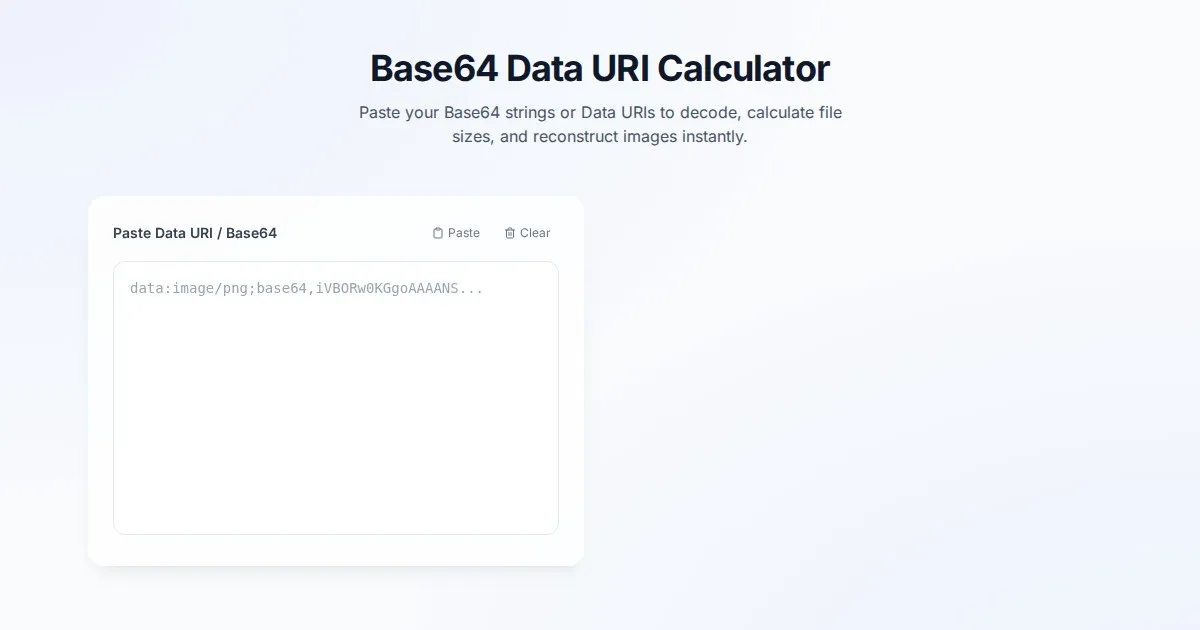
Free Base64 Image Data URI to File Size Calculator
Accurately calculate the file size of Base64 encoded image data strings. This free, web-based tool helps developers estimate binary file sizes for web apps.
Free Online Color Blindness Simulator & Image Filter Tool
Easily simulate color vision deficiencies like protanopia, deuteranopia, and tritanopia. Upload images to test design accessibility for color blindness.
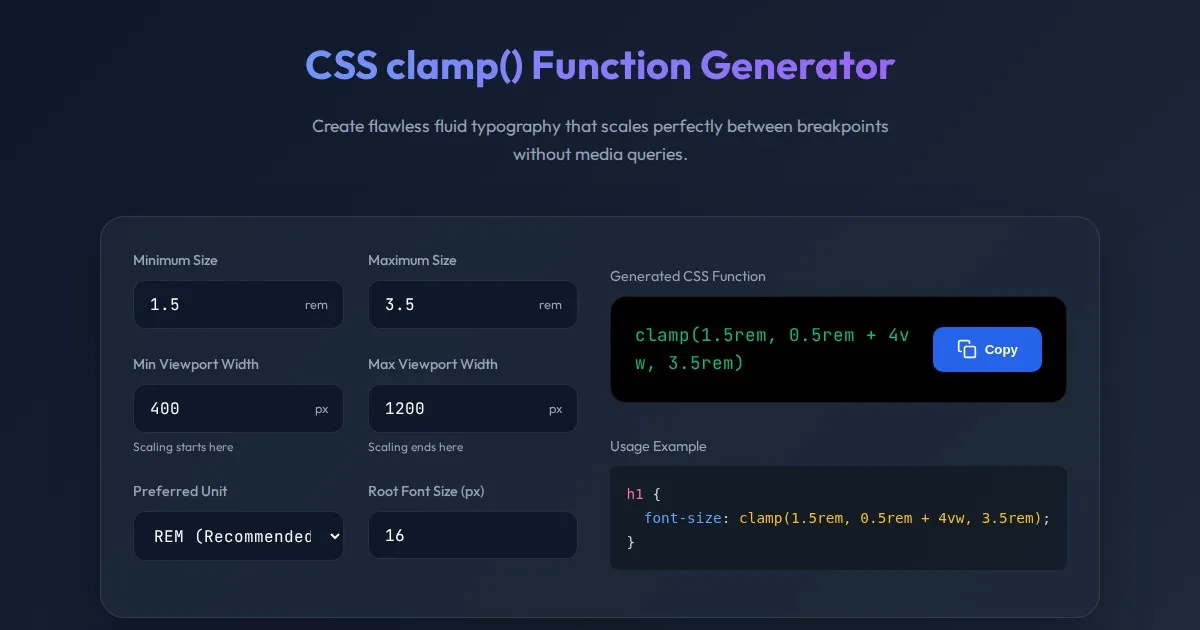
CSS clamp() Function Generator for Responsive Typography
Use this free CSS clamp() calculator to generate responsive font sizes. Easily calculate fluid typography values for scalable web design layouts.
Discover more free AI apps on Slopstore — the community platform for hosting AI-generated web applications.