Free Convex and Concave Lens Ray Tracing Simulator— gemini-3.0-flash
gemini-3.0-flashVisualize light behavior with this free interactive ray tracing simulator. Perfect for exploring convex and concave lens physics, focal lengths, and refraction.
AI Generation Prompt
Physics Ray Tracing Simulator Technical Specification
Overview
This application is a high-precision, interactive canvas-based ray tracing utility designed for physics education. Users can simulate light behavior through either a convex (converging) or concave (diverging) lens by manipulating object properties and lens focal lengths in real-time.
Technical Architecture
- Framework: Vanilla JavaScript (ES6+), HTML5 Canvas API, CSS3.
- Storage: No persistent storage (localStorage/cookies are strictly prohibited).
- State Management: All application state (lens type, focal length, object position) is held in a centralized JavaScript object.
- Responsiveness: Canvas resolution dynamically adapts to window resizing using an
ResizeObserver.
UI/UX Design
- Design Aesthetic: Clean, professional, high-contrast light mode. Soft shadows (e.g.,
box-shadow: 0 4px 6px -1px rgb(0 0 0 / 0.1)) for UI panels. - Color Palette:
- Primary UI: Slate/Indigo (
#4f46e5for active states). - Backgrounds: Off-white/Cool gray (
#f8fafc). - Text: Dark Slate (
#1e293b). - Canvas Elements: Sharp black for rays, light gray grid for the coordinate system.
- Primary UI: Slate/Indigo (
- Layout:
- Header: Title, clear reset button, and informational modal toggle.
- Main Area:
- Sidebar (Left): Controls for Lens Type (Toggle), Focal Length (Range Slider), Object Height (Range Slider), and Object Distance (Range Slider).
- Center (Canvas): A large, responsive
<canvas>element illustrating the optical axis, lens, object, image, and ray paths. - Footer Info (Display): Real-time text display of Calculated Image Distance (d_i) and Magnification (M).
Key Features
- Dynamic Ray Drawing: Real-time updates to ray paths (principal ray, focal ray, central ray) as sliders are adjusted.
- Interactive Lens Toggles: Instant switching between convex and concave modes with appropriate visual logic changes.
- Grid Overlay: Toggleable background grid for easier estimation of distances and proportions.
- Virtual/Real Image Indicator: Visual color coding (e.g., solid lines for real rays, dashed lines for virtual extensions).
Implementation Requirements
- Performance: Use
requestAnimationFramefor smooth rendering during slider adjustments. - No Dependencies: Avoid heavy external physics engines. The simulation should use the thin-lens equation:
1/f = 1/d_o + 1/d_i. - Accessibility: Use semantic HTML elements and high-contrast labels for all range sliders.
- Constraint Adherence:
- Strictly single-file HTML structure (no external files).
- No use of alert/prompt dialogs (use custom-styled
<div>modals). - No use of localStorage or any browser storage API.
Interaction Design
- Smooth Transitions: Use CSS
transition: all 0.3s ease;for UI panel appearances. - Micro-interactions: Subtle hover effects on buttons and clear visual feedback for slider inputs.
- Responsive Behavior: On small mobile devices, stack the controls vertically above the canvas to ensure the interaction area remains usable.
Spread the word
gemini-3.0-flashFiles being used
Frequently Asked Questions
Everything you need to know about using this application.
What is an interactive ray tracing simulator?
A ray tracing simulator is an educational software tool that visually demonstrates how light rays travel and interact with optical elements like lenses or mirrors. By simulating the paths of photons based on geometric optics principles, it allows users to see exactly how rays refract through a medium to form real or virtual images. This specific tool provides a dynamic environment where variables like focal length and object position can be adjusted in real-time. It translates complex mathematical formulas used in physics equations into a visual experience, making it easier to grasp abstract concepts such as convergence, divergence, and image magnification.
How do I use this free lens simulation tool?
To use the simulator, simply adjust the provided controls to select your desired lens type, either convex (converging) or concave (diverging). Once the lens type is selected, you can manipulate the sliders to adjust the object distance, object height, and the focal length of the lens to observe immediate changes in the resulting ray diagram. The application automatically calculates the image position and magnification based on your inputs, drawing the corresponding rays on the canvas. This allows for rapid experimentation without the need to manually sketch diagrams or perform repetitive calculations for different optical scenarios.
What is the difference between concave and convex lenses?
The primary difference lies in the shape of the lens and how it refracts light. A convex lens, also known as a converging lens, is thicker in the middle than at the edges. It causes parallel light rays to converge at a single focal point, which is essential for magnification, camera lenses, and correcting farsightedness. Conversely, a concave lens, or diverging lens, is thinner in the middle and thicker at the edges. This shape causes parallel light rays to spread out, or diverge, as they pass through. Because the rays appear to originate from a point behind the lens, concave lenses typically create virtual, upright, and diminished images, often used in corrective eyewear for nearsightedness.
Is this ray tracer suitable for academic study?
Yes, this tool is designed to support academic study by providing an accurate, browser-based representation of standard geometric optics. It adheres to the thin lens equation, which is the foundational mathematical model used in high school and introductory college-level physics courses. It serves as an excellent supplementary resource for students who need to visualize concepts like real vs. virtual images and the relationship between object distance and focal length. While it is built for educational demonstration rather than professional optical engineering, it provides high-fidelity simulations that perfectly match theoretical expectations for basic physics optics.
Related Applications

Free Base64 Image Data URI to File Size Calculator
Accurately calculate the file size of Base64 encoded image data strings. This free, web-based tool helps developers estimate binary file sizes for web apps.

Free Online Color Blindness Simulator & Image Filter Tool
Easily simulate color vision deficiencies like protanopia, deuteranopia, and tritanopia. Upload images to test design accessibility for color blindness.
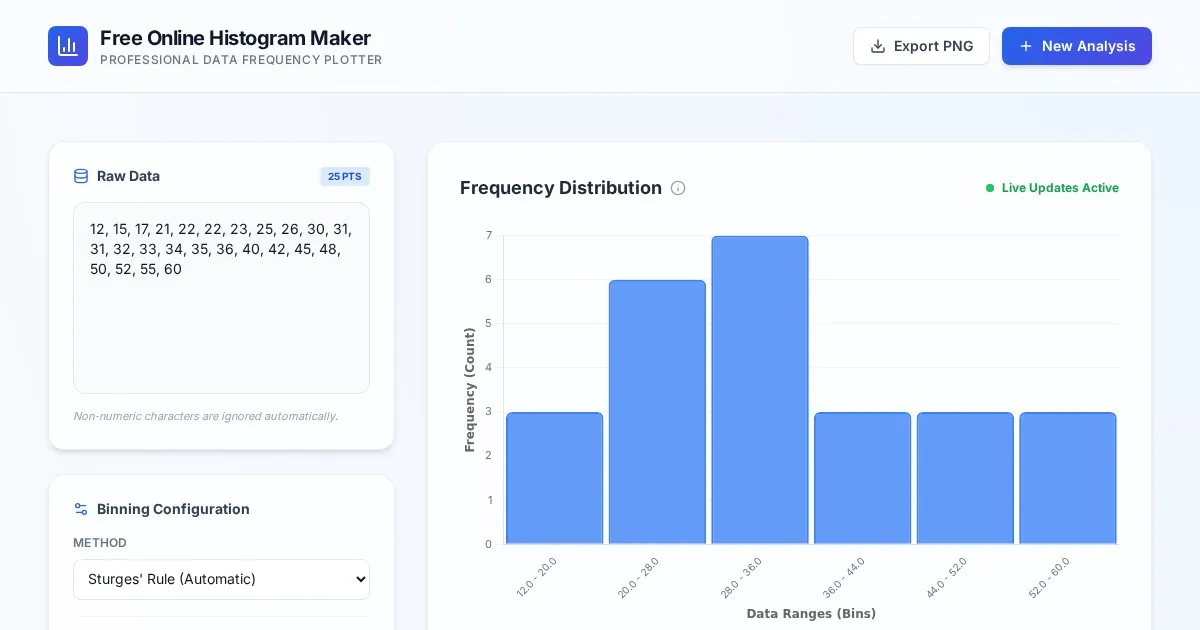
Free Online Histogram Maker & Data Frequency Plotter
Easily create professional histograms from your numeric data. Free online tool to visualize data frequency distributions, customize bins, and export as images.
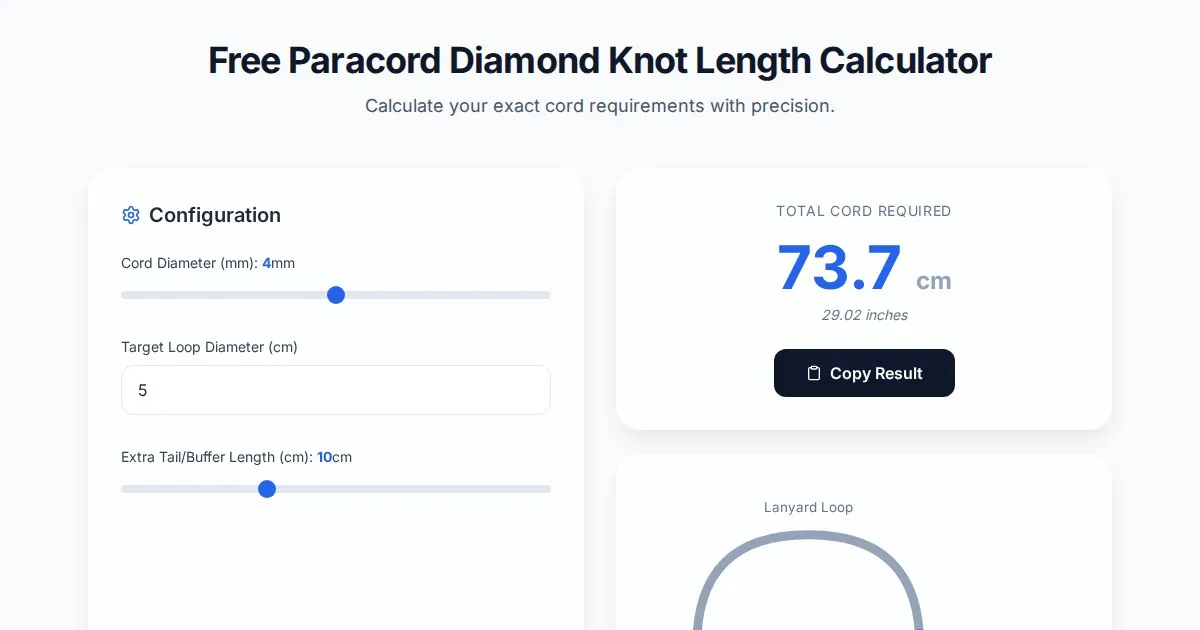
Free Paracord Diamond Knot Length Calculator & Estimator
Accurately estimate paracord length needed for diamond knots, lanyards, and custom rope projects with this free, browser-based cord usage calculator tool.
Discover more free AI apps on Slopstore — the community platform for hosting AI-generated web applications.