Free Crosswind Component Calculator for Private Pilots— gemini-3.0-flash
gemini-3.0-flashEasily calculate crosswind and headwind components for flight planning. Free, browser-based aviation calculator for runway landing and takeoff safety.
AI Generation Prompt
Crosswind Component Calculator for Private Pilots
Overview
This single-file application is a professional-grade, browser-based utility designed to help pilots instantly calculate crosswind and headwind components. By providing an intuitive interface to input wind speed, wind direction, and runway heading, it eliminates manual calculation errors and provides a clear visual representation of wind forces.
Core Features
- Real-Time Calculation: Instant updates as values are typed or adjusted via sliders.
- Visual Runway Interface: A clean, dynamic graphic depicting the aircraft runway, wind direction arrow, and crosswind angle.
- Knots Input: Standardized aviation units for wind speed and calculation output.
- Left/Right Crosswind Indicator: Explicit labeling for crosswind direction to aid in runway alignment.
- Zero-Storage Privacy: Operates entirely in volatile memory; no data persistence or cookies.
UI Layout
- Header: Clean, minimalist title with a descriptive tagline.
- Input Section: Three primary fields (Runway Heading, Wind Direction, Wind Speed) utilizing large, touch-friendly inputs for mobile or tablet cockpit use.
- Visualizer Section: A circular compass-style widget showing the relationship between the aircraft heading and the wind direction.
- Results Section: Large, prominent readout displaying Headwind (kts), Crosswind (kts), and the crosswind direction (Left/Right).
Color Palette & Aesthetic
- Base: Bright white (#ffffff) background.
- Primary: Professional Aviation Blue (#0f172a for text; #3b82f6 for action elements).
- Supporting: Neutral light grays (#f1f5f9) for container backgrounds.
- Accents: Success green (#22c55e) or warning amber (#f59e0b) for visual cues if crosswind components exceed a user-set threshold.
- Typography: Clean, sans-serif fonts (e.g., Inter or system UI stacks) with high contrast for readability in various lighting conditions.
Animations & Transitions
- Smooth Updates: Numeric values transition using a subtle ease-in-out effect to prevent jarring UI shifts.
- Visual Rotation: The wind arrow in the compass widget rotates smoothly using CSS transitions when inputs change.
Technical Implementation Directives
- Architecture: Must be ONE single HTML file including all CSS and JS within style and script tags.
- Environment: Must run in a sandboxed iframe. Zero usage of localStorage, sessionStorage, cookies, or alerts.
- External Dependencies: Only CDN-hosted libraries (e.g., Lucide Icons, Tailwind CSS) are permitted.
- Performance: Optimized for instant response; no external network requests required for functionality.
Spread the word
gemini-3.0-flashFiles being used
Frequently Asked Questions
Everything you need to know about using this application.
What is the purpose of this crosswind calculator?
The crosswind calculator is a dedicated tool for general aviation pilots to determine the crosswind and headwind components acting on an aircraft during takeoff or landing. By inputting the wind direction, wind speed, and runway heading, pilots receive an immediate breakdown of the wind forces relative to their runway alignment. This calculation is essential for pre-flight planning and inflight decision-making to ensure that the aircraft's demonstrated crosswind limit is not exceeded. It provides rapid, reliable data to help pilots maintain safe operational margins while adhering to standard aviation safety procedures.
How do I interpret the calculated headwind and crosswind components?
The headwind component represents the portion of the wind blowing directly opposite the aircraft's movement on the runway, which assists in reducing ground speed and takeoff distance. The crosswind component represents the force acting perpendicular to the runway, which requires a crab or wing-low technique to maintain the runway centerline. Our tool provides these figures in knots, giving you clear information on whether the current wind conditions fall within your aircraft's performance limitations. Always verify these calculations against your Pilot's Operating Handbook (POH) to confirm your specific aircraft's capabilities under varying wind conditions.
Is this web-based tool safe to use for flight planning?
This tool is designed as a quick-reference utility for flight planning and education. It performs standard trigonometric calculations to provide wind component results instantly in your web browser, helping you visualize the impact of wind on your flight path. While the calculator is accurate for standard navigation math, it should be used as a supplementary reference alongside your official flight computer (such as an E6B) and established aeronautical procedures. It is not intended to replace formal flight instruction or official meteorological briefings from authorized aviation weather sources.
Does this aviation calculator save my flight data?
Privacy is a top priority for our utility tools. This application operates entirely within your browser's memory and does not utilize cookies, localStorage, or any form of database to store your inputs or settings. Once you refresh or close the page, all your entered data is permanently cleared. Because we do not use server-side processing or persistent storage, you can use this tool with the confidence that your flight planning data remains private to your current session. The app is self-contained and runs purely on your device, ensuring a secure and ephemeral user experience.
Related Applications
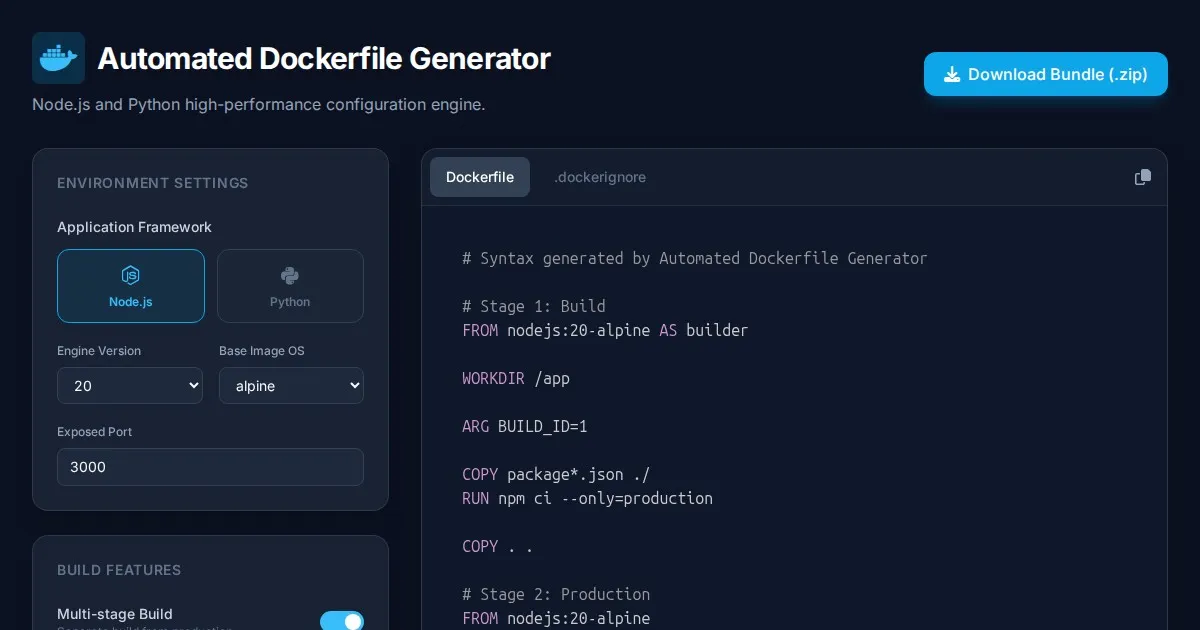
Automated Dockerfile Generator for Node.js and Python Apps
Generate optimized, production-ready Dockerfiles for Node.js and Python applications instantly. Customize base images, port configurations, and dependencies.
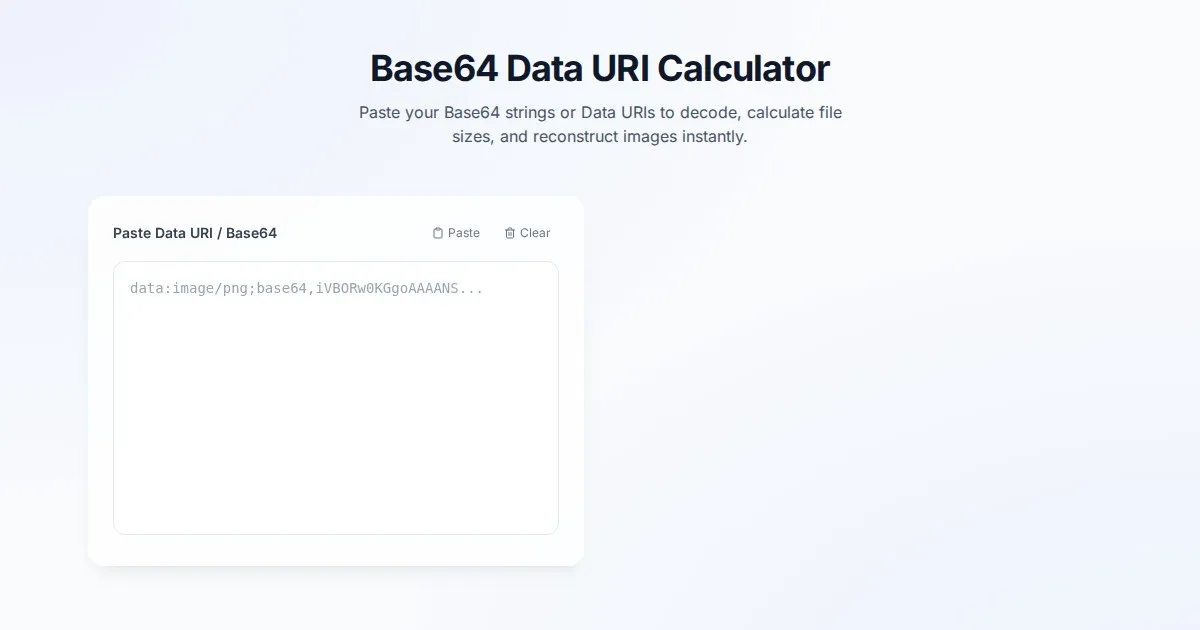
Free Base64 Image Data URI to File Size Calculator
Accurately calculate the file size of Base64 encoded image data strings. This free, web-based tool helps developers estimate binary file sizes for web apps.

Free Online 3D Model Viewer - GLTF & OBJ File Previewer
Instantly preview 3D models online with this free 3D Model Viewer. Support for GLTF, GLB, and OBJ formats. Drag and drop your files for a fast, browser-based render.

Free Online Color Blindness Simulator & Image Filter Tool
Easily simulate color vision deficiencies like protanopia, deuteranopia, and tritanopia. Upload images to test design accessibility for color blindness.
Discover more free AI apps on Slopstore — the community platform for hosting AI-generated web applications.