Free Dihybrid Punnett Square Calculator & Genetics Tool— gemini-3.0-flash
gemini-3.0-flashEasily calculate phenotypic and genotypic ratios with our free dihybrid cross calculator. The perfect educational tool for solving Mendelian genetics problems.
AI Generation Prompt
Dihybrid Punnett Square Calculator: Technical Specification
1. Overview
A browser-based, high-performance tool for calculating the outcomes of a dihybrid cross (AaBb x AaBb). The application provides a clear, 4x4 matrix visualization, statistical analysis of results, and educational context for Mendelian genetics.
2. Technical Requirements
- Single File: All HTML, CSS, and Vanilla JavaScript must be contained in one
.htmlfile. - Storage: STRICTLY NO localStorage, sessionStorage, or cookies. Use reactive state objects within the JavaScript scope.
- Compatibility: Must run within a sandboxed iframe. No
alert(),prompt(), orconfirm(). Use custom HTML/CSS modal overlays. - Responsiveness: Must utilize CSS Flexbox/Grid for mobile-first design, ensuring the 4x4 grid is readable on small screens (e.g., horizontal scrolling on mobile, full grid on desktop).
3. Feature Set
- Input Interface: Two distinct input fields for Parent 1 and Parent 2. Include validation logic to ensure correct 4-letter format (e.g., regex checks for valid allele characters).
- Dynamic Grid Engine: An algorithm that calculates gametes (e.g., AB, Ab, aB, ab) and populates a 16-cell grid automatically.
- Result Summary: A sidebar or bottom pane that calculates and displays:
- Genotypic Ratios (count and percentage).
- Phenotypic Ratios (assuming standard Mendelian dominance).
- Print/Clear Functions: A clean print stylesheet to allow students to export results, and a reset function.
- Tooltip Education: Hoverable tooltips explaining terms like "heterozygous", "homozygous", and "phenotypic ratio".
4. UI/UX Design (Premium SaaS Aesthetic)
- Color Palette:
- Background: Off-white (#F8FAFC).
- Primary Accent: Royal Blue (#2563EB) for buttons and primary headers.
- Secondary Accent: Soft Teal (#0D9488) for ratio highlights.
- Grid Cell Borders: Neutral Light Gray (#E2E8F0).
- Text: Slate Gray (#334155).
- Animations:
- Smooth fade-in transitions for the grid after the 'Calculate' button is clicked.
- Micro-interactions (scale on hover) for buttons.
- Subtle box-shadows on cards to create depth (depth: 0 4px 6px -1px rgba(0,0,0,0.1)).
- Layout:
- Header: Clean title and brief instruction.
- Main Area: Split-screen layout on desktop (Inputs left, Grid right). Stacked on mobile.
- Results Section: Located below or adjacent to the grid with clear, bulleted statistical data.
5. Implementation Directives
- Use
box-sizing: border-boxto prevent layout breaking. - Ensure high contrast ratios for accessibility (WCAG AA compliant).
- Use a clean, sans-serif web font (e.g., Inter or system UI stacks).
- Avoid external frameworks. Use standard DOM API for grid construction (e.g.,
document.createElement('div')). - If using icons, use a light SVG icon set (e.g., Heroicons) included directly in the HTML.
Spread the word
gemini-3.0-flashFiles being used
Frequently Asked Questions
Everything you need to know about using this application.
How do I use this dihybrid Punnett square calculator?
To use the calculator, simply enter the parental genotypes into the designated input fields for Parent 1 and Parent 2. Each parent should have four letters representing the two gene pairs, such as 'AaBb' or 'AABB'. Once entered, click the 'Calculate' button to automatically generate the 16-cell Punnett square grid. The application will process the alleles, determine the possible gamete combinations for each parent, and map them onto a 4x4 grid. You will instantly see the resulting offspring genotypes, as well as a summarized statistical breakdown of both the genotypic and phenotypic ratios.
What is a dihybrid cross in genetics?
A dihybrid cross describes a mating experiment between two organisms that are identically hybrid for two traits. This means both parents are heterozygous for both genes being studied (e.g., AaBb x AaBb). This type of cross is fundamental to understanding Mendelian inheritance and how different traits are passed down independently. In a standard dihybrid cross where both traits show complete dominance, you expect a phenotypic ratio of 9:3:3:1 in the offspring. This calculator helps you visualize these probabilities and verify your work for different types of crosses, including those with varying levels of dominance or linkage.
Can this tool calculate trihybrid or monohybrid crosses?
This specific tool is optimized for dihybrid crosses, which involve two separate gene pairs. While you could technically adapt a dihybrid calculator to solve simple monohybrid crosses by repeating alleles (e.g., AAaa x AAaa), it is not designed to handle trihybrid crosses, which would require a 64-cell grid. We focus this tool specifically on the dihybrid cross to ensure the layout remains clean, readable, and responsive on all devices. For trihybrid or more complex polyhybrid crosses, the resulting grid would become too large for a standard mobile screen to display effectively.
Is this genetics calculator free to use?
Yes, this tool is completely free to use. It is a browser-based utility designed for students, educators, and biology enthusiasts to solve genetics problems quickly without needing complex software or account sign-ups. There are no hidden costs or subscription requirements. Because the tool runs entirely within your browser in a single file, it does not require an internet connection once loaded. We do not store your data, track your usage, or save your inputs, ensuring your privacy while you work through your biological problem sets.
Related Applications
Free Base64 Image Data URI to File Size Calculator
Accurately calculate the file size of Base64 encoded image data strings. This free, web-based tool helps developers estimate binary file sizes for web apps.
Free Online 3D Model Viewer - GLTF & OBJ File Previewer
Instantly preview 3D models online with this free 3D Model Viewer. Support for GLTF, GLB, and OBJ formats. Drag and drop your files for a fast, browser-based render.

Free Online Color Blindness Simulator & Image Filter Tool
Easily simulate color vision deficiencies like protanopia, deuteranopia, and tritanopia. Upload images to test design accessibility for color blindness.
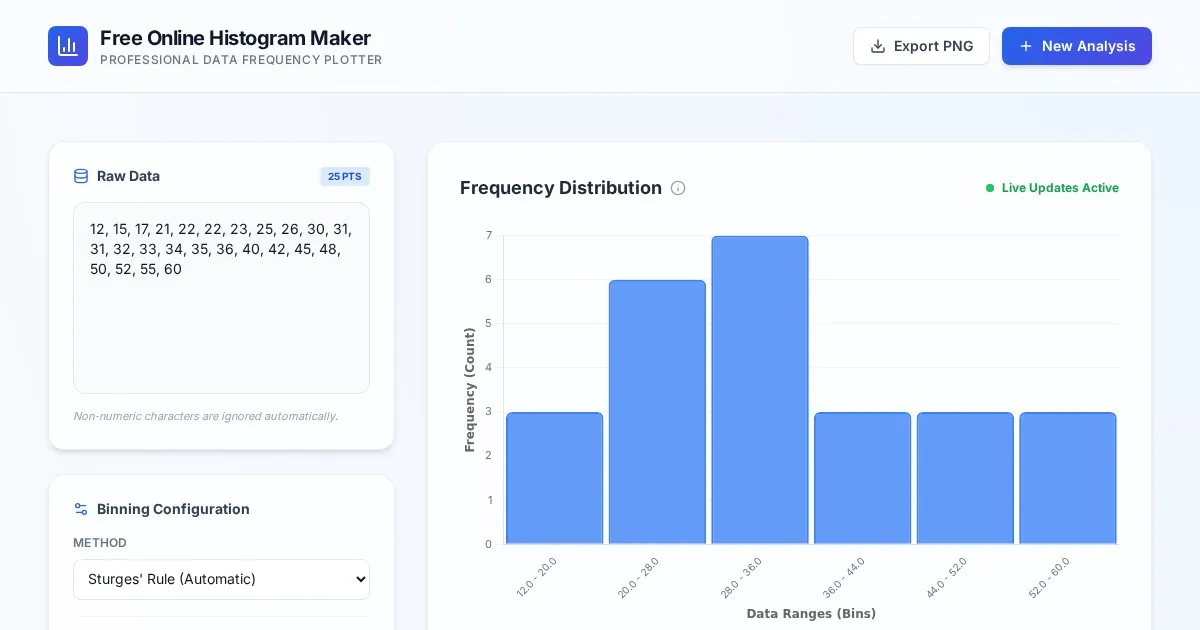
Free Online Histogram Maker & Data Frequency Plotter
Easily create professional histograms from your numeric data. Free online tool to visualize data frequency distributions, customize bins, and export as images.
Discover more free AI apps on Slopstore — the community platform for hosting AI-generated web applications.