Free Doppler Effect Frequency Shift Calculator— gemini-3.0-flash
gemini-3.0-flashCalculate the observed frequency of sound waves using the Doppler Effect formula. A free, browser-based physics tool for students, educators, and audio engineers.
AI Generation Prompt
Doppler Effect Frequency Shift Calculator
Overview
A high-precision, web-based physics calculator designed to compute the observed frequency of sound waves based on the relative motion of a source and an observer. This tool provides instant results without page refreshes, making it ideal for classroom settings, physics labs, and quick audio engineering checks.
Core Features
- Real-Time Calculation: Observed frequency updates instantly as input sliders or numeric fields are adjusted.
- Unit Flexibility: Toggle between m/s, km/h, and mph for velocity inputs.
- Speed of Sound Presets: Built-in presets for common media (e.g., Air at 20°C, Water, Steel) to ensure accurate baseline constants.
- Visual Wave Representation: A dynamic CSS/SVG component that visually demonstrates wave compression (blue-shift equivalent) and expansion (red-shift equivalent) based on the input speeds.
- Formula Display: A clear, typeset display of the specific formula being solved for the current inputs.
UI/UX Specification
- Aesthetic: Clean, professional, light-mode interface using a palette of soft whites, slate grays, and energetic primary blues for interactive elements.
- Layout:
- Header: Clean title with a brief subtitle explaining the utility.
- Main Input Panel: A structured two-column grid. Column 1: Source parameters (Frequency, Velocity, Direction). Column 2: Observer parameters (Velocity, Direction, Medium selection).
- Visualization Area: A central canvas area showing a simplified representation of the sound waves interacting with the source and observer.
- Results Area: A prominent, high-contrast card displaying the final frequency in large, clear typography.
- Interactions: Smooth, CSS-based transitions for all state changes. No jarring refreshes or standard browser alerts.
Technical Implementation Constraints
- Single File: The entire application (HTML, CSS, JS) must be contained in one index.html file.
- Vanilla Architecture: No external frameworks (React, Vue, etc). Use standard HTML5, CSS3 (Tailwind CSS via CDN allowed), and Vanilla JavaScript.
- Iframe Compatibility: The app is strictly sandboxed. No
localStorage,sessionStorage, orcookies. All data management must be performed in volatile memory variables. - Interaction Handling: Do not use
prompt()orconfirm(). All interactive warnings or confirmations must be built as custom HTML modal overlays. - Responsive: Fluid grid system that adapts from mobile (single column) to desktop (multi-column) seamlessly.
Color Palette
- Background:
#F9FAFB(Off-white) - Surface/Card:
#FFFFFF(Pure white) - Primary Text:
#111827(Slate Gray) - Primary Action:
#2563EB(Royal Blue) - Secondary/Accent:
#64748B(Cool Gray) - Border:
#E2E8F0(Light Gray)
Animations
- Input Transitions: Focus states on inputs should have a smooth box-shadow transition (
transition: all 0.2s ease-in-out). - Wave Animation: Use a CSS
keyframesanimation for the visualizer to represent wave propagation speed, controlled by JS variables based on input velocity.
Spread the word
gemini-3.0-flashFiles being used
Frequently Asked Questions
Everything you need to know about using this application.
How does the Doppler effect change the frequency of sound?
The Doppler effect describes the change in frequency of a wave in relation to an observer who is moving relative to the wave source. When a source moves toward an observer, the waves are compressed, resulting in a higher observed frequency, which our ears perceive as a higher pitch. Conversely, when a source moves away, the waves are stretched, resulting in a lower observed frequency and a lower pitch. This calculator helps you mathematically determine the precise observed frequency based on the speeds of both the source and the observer relative to the medium.
Can I use this calculator for supersonic speeds?
This calculator is designed for standard acoustic physics calculations where the speed of the source is less than the speed of sound in the medium. Entering speeds greater than the speed of sound may yield mathematically valid results, but they do not accurately represent standard Doppler shift physical phenomena. In scenarios where the source exceeds the speed of sound, a sonic boom occurs, and the standard Doppler equation no longer applies. For standard educational and practical audio applications, please ensure your input values remain within reasonable physical bounds for the chosen medium.
What units are supported for velocity and frequency?
This application provides flexibility by allowing users to toggle between common velocity units, including meters per second (m/s), kilometers per hour (km/h), and miles per hour (mph). You can select the units that best fit your data set, and the tool will normalize the values internally before performing the calculation. For the source frequency, the calculator uses Hertz (Hz) as the standard input unit. The output observed frequency will also be presented in Hertz, ensuring consistency throughout your scientific or engineering calculations without the need for manual unit conversions.
Is this tool suitable for physics homework or lab reports?
Yes, this tool is an excellent companion for verifying physics homework and preparing for laboratory reports. It automates the algebra involved in the Doppler effect equation, allowing students to focus on understanding the underlying physics concepts rather than spending time on repetitive manual calculations. Please note that this application should be used as a verification tool rather than a replacement for understanding the formula. Educators often encourage using such tools to visualize how changes in velocity parameters dynamically impact the observed frequency in real-time.
Related Applications
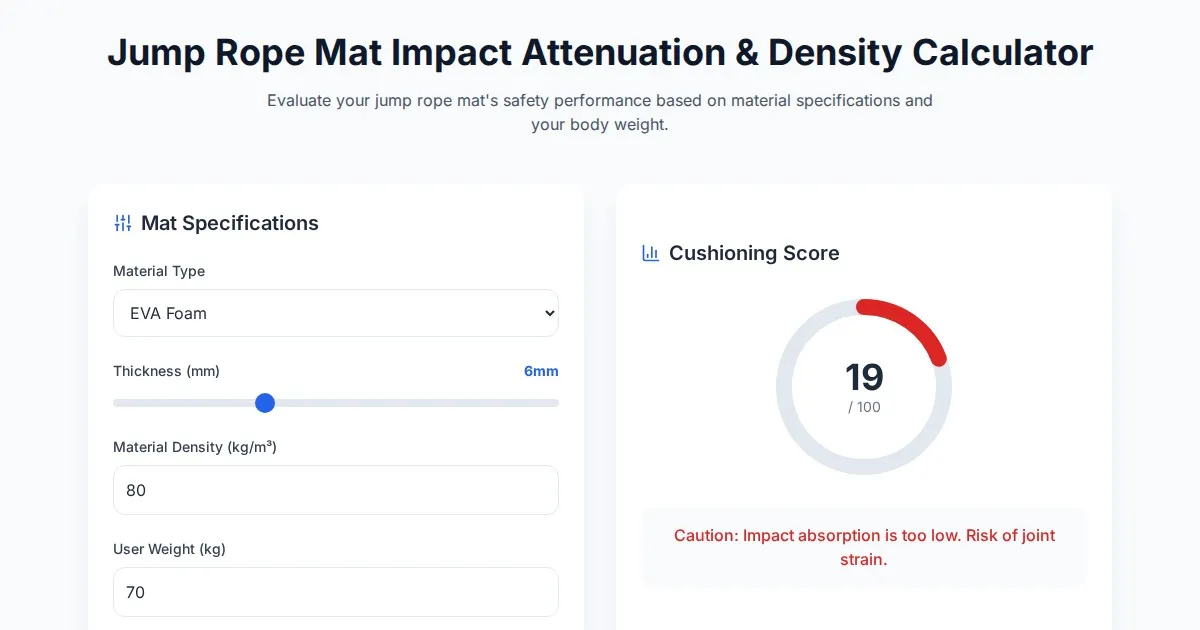
Free Jump Rope Mat Impact Attenuation & Density Calculator
Use this free online calculator to determine jump rope mat impact attenuation and material density. Safely assess if your workout flooring protects your joints.
Free Base64 Image Data URI to File Size Calculator
Accurately calculate the file size of Base64 encoded image data strings. This free, web-based tool helps developers estimate binary file sizes for web apps.

Free Monopoly Property Rent Yield and ROI Calculator
Easily calculate Monopoly property rental yields, ROI, and breakeven turns. Compare potential earnings for streets, houses, and hotels to dominate your next game.
Free Online Color Blindness Simulator & Image Filter Tool
Easily simulate color vision deficiencies like protanopia, deuteranopia, and tritanopia. Upload images to test design accessibility for color blindness.
Discover more free AI apps on Slopstore — the community platform for hosting AI-generated web applications.