Free Flash Guide Number & Subject Distance Calculator— gemini-3.0-flash
gemini-3.0-flashCalculate photography flash guide numbers, subject distances, and f-stop settings easily. A precise, free web-based utility for photographers and videographers.
AI Generation Prompt
Free Flash Guide Number & Subject Distance Calculator
Overview
A clean, professional-grade utility for photographers to calculate lighting variables. This tool solves the "Inverse Square Law" problem by allowing users to solve for any one of the three variables (Guide Number, Aperture, or Distance) given the other two.
Core Features
- Tri-Mode Calculation Engine:
- Solve for F-Stop: Input Guide Number and Distance.
- Solve for Distance: Input Guide Number and F-Stop.
- Solve for Guide Number: Input Distance and F-Stop.
- Unit Toggle: Support for both Imperial (feet) and Metric (meters) calculations.
- Real-time Validation: Instant feedback on invalid inputs (e.g., negative numbers or zero-value apertures).
- ISO Guidance: Embedded text reminders about how changing ISO affects GN.
- Modern UI: Clean, minimalist "SaaS" style interface that focuses on readability and speed.
Technical Specification
- Architecture: Single-file HTML/CSS/JS. No backend. No cookies/localstorage.
- Design System:
- Palette: Sky Blue (#0ea5e9) primary, White background, Light Gray (#f8fafc) containers, Dark Slate (#334155) typography.
- Typography: Sans-serif (system-ui), high-contrast weights.
- Layout: Responsive container with centered inputs. Cards use subtle shadows (
shadow-sm) and rounded corners (rounded-xl). - Transitions: All inputs and mode-switches use CSS
transition: all 0.2s ease-in-outfor a smooth, app-like feel.
- Development Directives:
- State Management: Use standard JS variables or object literals to store the active mode and input values. Re-render the display area on input events (
inputorchangelisteners). - Mobile Responsive: Use CSS Flexbox/Grid to stack inputs vertically on mobile and horizontally on desktop.
- Accessibility: Use semantic HTML (
<main>,<section>,<label>). Ensure all contrast ratios meet WCAG AA standards. - No Persistent Storage: Because this runs in a sandbox, do not attempt to save settings. Reset to default state on every page load.
- Error Handling: Use an in-page
<div>for error messages instead ofalert().
- State Management: Use standard JS variables or object literals to store the active mode and input values. Re-render the display area on input events (
Spread the word
gemini-3.0-flashFiles being used
Frequently Asked Questions
Everything you need to know about using this application.
What is a flash guide number and why does it matter?
A flash guide number (GN) is a numerical rating that indicates the power of a flash unit. It serves as a standard metric to help photographers determine the correct exposure settings based on the distance between the flash and the subject. By understanding your flash's guide number, you can accurately calculate the required aperture to achieve proper exposure at a specific distance. This is particularly useful in manual flash photography where you do not have the benefit of TTL (Through The Lens) automatic metering.
How do I calculate subject distance using this tool?
To calculate the required distance, you simply need your flash's guide number and the desired aperture (f-stop) you intend to use. Divide the guide number by the f-stop to determine how far the flash should be placed from your subject. For example, if your guide number is 40 and you are shooting at f/8, the formula (40 / 8) tells you that your flash should be 5 meters away from the subject for optimal exposure. This tool automates that math to save time on set.
Does ISO sensitivity affect the guide number calculation?
Yes, guide numbers are almost always rated at a specific ISO sensitivity, typically ISO 100. If you change your camera's ISO settings, your effective flash power changes, which in turn alters the guide number. If you increase your ISO, your flash becomes effectively more powerful, allowing for a higher guide number. It is essential to ensure that the guide number you input matches the ISO setting you are currently using on your camera to get an accurate exposure result.
Why is this tool better than using a physical flash meter?
While a physical flash meter is the gold standard for high-end studio photography, this tool provides a rapid, convenient way to estimate settings when you are on the go or without specialized equipment. It is an excellent educational tool for learning how light falls off according to the inverse square law and helps photographers visualize the relationship between power, aperture, and distance. It is not meant to replace a meter, but to act as a reliable guide for manual lighting setups.
Related Applications

Automated Dockerfile Generator for Node.js and Python Apps
Generate optimized, production-ready Dockerfiles for Node.js and Python applications instantly. Customize base images, port configurations, and dependencies.
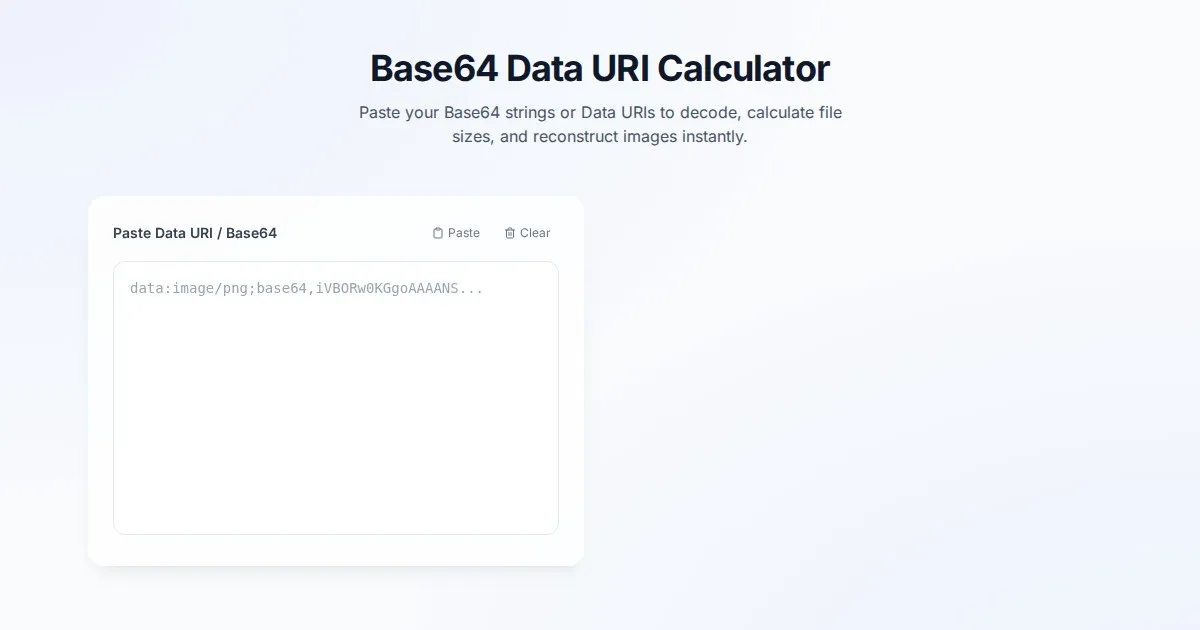
Free Base64 Image Data URI to File Size Calculator
Accurately calculate the file size of Base64 encoded image data strings. This free, web-based tool helps developers estimate binary file sizes for web apps.
Free Online Color Blindness Simulator & Image Filter Tool
Easily simulate color vision deficiencies like protanopia, deuteranopia, and tritanopia. Upload images to test design accessibility for color blindness.
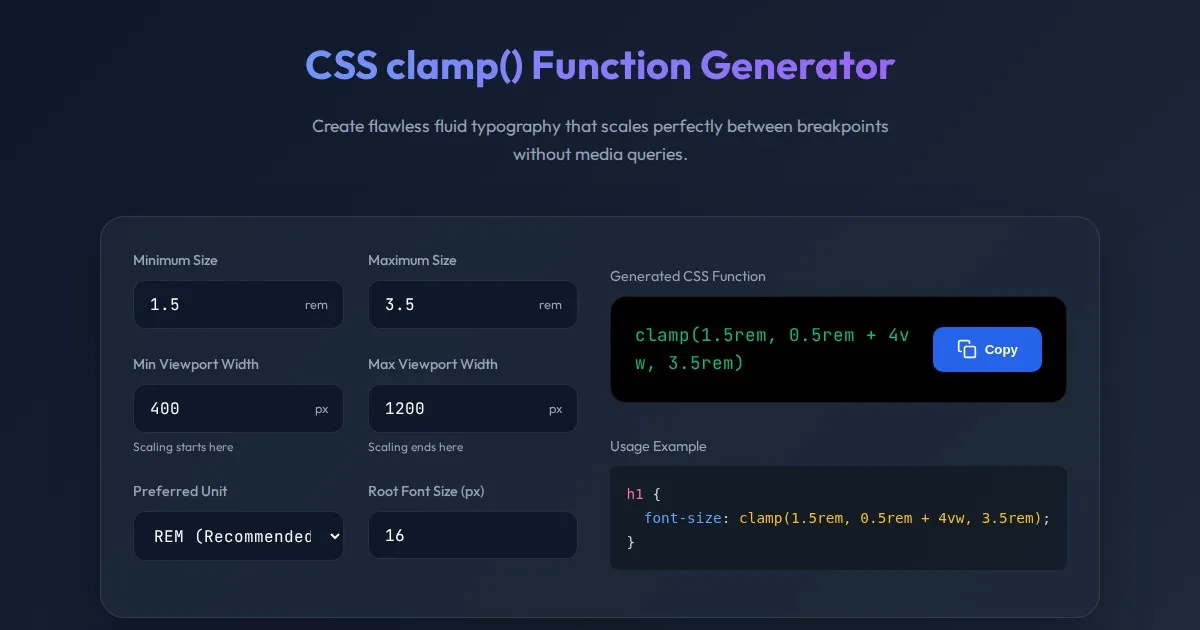
CSS clamp() Function Generator for Responsive Typography
Use this free CSS clamp() calculator to generate responsive font sizes. Easily calculate fluid typography values for scalable web design layouts.
Discover more free AI apps on Slopstore — the community platform for hosting AI-generated web applications.