Free GitHub Actions Workflow YAML Validator & Linter— gemini-3.0-flash
gemini-3.0-flashValidate and lint your GitHub Actions YAML workflows instantly. Detect syntax errors, schema issues, and formatting problems with this free, client-side, browser-based tool.
AI Generation Prompt
Technical Specification: GitHub Actions Workflow YAML Validator
Overview
A high-performance, client-side browser application designed to lint, validate, and troubleshoot GitHub Actions YAML configuration files. The tool focuses on syntax integrity and structural compliance without external API dependencies, ensuring maximum privacy.
Core Features
- Real-time Parsing: Instant feedback upon code pasting or modification.
- Error Highlighting: Clear identification of syntax errors, including line numbers and potential causes.
- Schema-Aware Checks: Basic validation for common GitHub Actions structural requirements (jobs, steps, runs-on).
- Copy/Paste/Download: Built-in utilities to manage workflow files easily.
- Privacy-First Processing: Zero server-side interaction; all processing is handled in the browser memory.
User Interface Design
- Layout: A clean, "SaaS-style" interface with a side-by-side or stacked view.
- Header: Simple, descriptive title with a clean utility bar.
- Input Section: A large, monospace text editor component (e.g.,
<textarea>with line numbering overlays) for YAML input. - Report Section: An "Issues" sidebar or bottom panel that displays identified errors in a clean, red-tinted alert box when invalid, or a green success checkmark when valid.
- Aesthetic:
- Palette: White backgrounds (#FFFFFF), soft gray borders (#E5E7EB), Slate/Blue accents (#2563EB) for primary actions, and semantic red (#DC2626) for errors.
- Typography: Sans-serif fonts (Inter or System UI) for UI elements; Monospace (Fira Code/Courier) for code editor.
- Responsiveness: Fluid layout that transitions from side-by-side on desktop to a stacked vertical layout on tablets and mobile devices.
Animations & Transitions
- Micro-interactions: Buttons use subtle scaling animations on hover (1.02x scale).
- Validation States: The results panel slides in or changes opacity smoothly when a new validation result is generated, avoiding harsh, abrupt style changes.
Developer Directives & Constraints
- Architecture: Strictly one single HTML file. CSS must be embedded in
<style>blocks, and JS in<script>blocks. - Storage: ABSOLUTELY NO usage of
localStorage,sessionStorage,IndexedDB, or cookies. Maintain state solely in volatile JS variables. - Frameworks: Vanilla JavaScript only. Use CDNs for lightweight libraries like
js-yaml(for parsing) if necessary, but keep dependencies minimal. - Security: Ensure all external documentation links include
target="_blank" rel="noopener noreferrer". - Environment: Must function within a sandboxed
<iframe>withnullorigin, meaning no popups, no alerts, and no cross-origin requests.
Spread the word
gemini-3.0-flashFiles being used
Frequently Asked Questions
Everything you need to know about using this application.
Why is a GitHub Actions YAML linter important for development?
A GitHub Actions YAML linter is critical because even minor syntax errors—such as incorrect indentation, missing keys, or invalid character usage—can cause your entire CI/CD pipeline to fail. By validating your workflow file before you push it to your repository, you save significant time that would otherwise be spent triggering failed runs and waiting for runners to initialize. Furthermore, using a linter ensures that your YAML adheres to the standard schema requirements defined by GitHub. This prevents common pitfalls, such as misspelled trigger events or misconfigured environment variables, ensuring that your automation processes run smoothly and reliably every single time.
How does this browser-based validator process my workflow code?
This application operates entirely on the client side, meaning all processing happens within your web browser. When you paste your YAML configuration into the input area, the application's engine parses the text, checks it against standard YAML syntax rules, and flags potential issues without ever sending your sensitive configuration data to an external server. Because no data is transmitted or stored, your workflows remain private and secure. This approach provides a fast, responsive user experience while maintaining the strict privacy standards required when handling potentially sensitive DevOps configuration files.
Is this tool suitable for checking complex multi-step workflows?
Yes, this tool is specifically designed to handle complex, multi-step GitHub Actions workflows. Whether you have a single-job workflow or an intricate pipeline involving matrices, reusable workflows, and secrets, the validation logic is built to identify syntax errors regardless of the file length or complexity of the structure. For larger files, the interface provides a clear, categorized view of any errors found, allowing you to jump straight to the offending line. This makes debugging complex CI/CD logic much faster, helping you keep your automation pipelines clean, maintainable, and error-free throughout the development lifecycle.
What happens if my workflow contains secrets or environment variables?
Since this tool runs locally in your browser memory and does not upload your content to any database or server, it is safe to use with files that reference secrets or environment variables. The validator treats these values as standard string inputs, focusing strictly on the YAML structure and syntax rather than the content itself. However, as a general best practice for security, you should always ensure that you are not exposing actual sensitive tokens or production secrets in your workflow files when using online tools. While this tool does not store your input, you should always handle production-grade sensitive data with extreme caution.
Related Applications
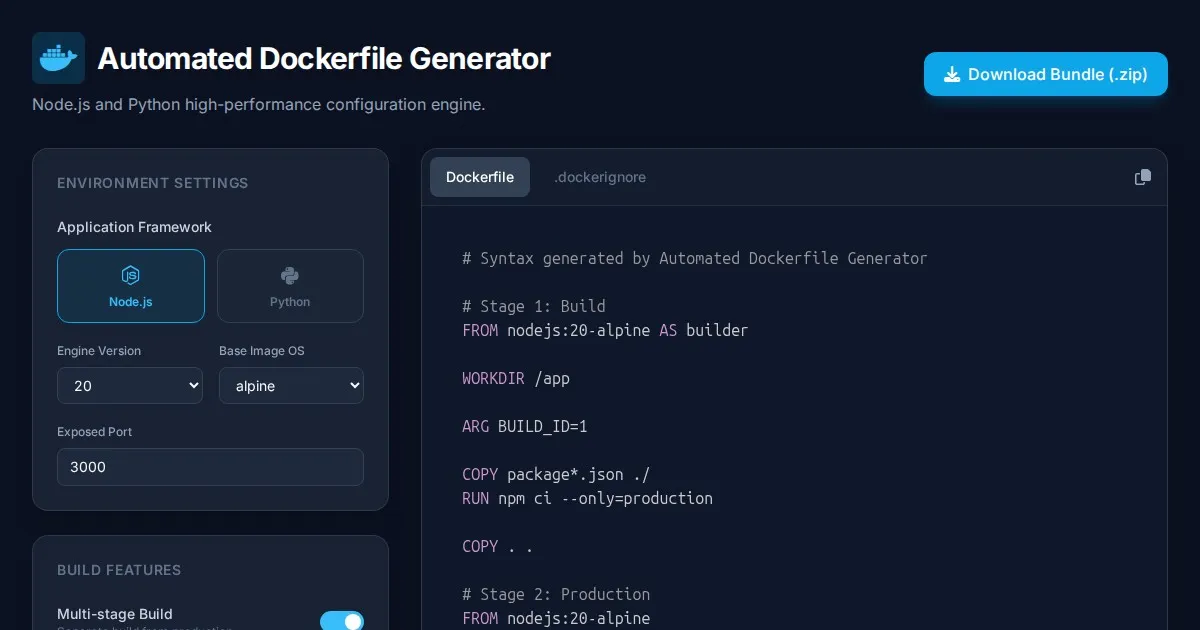
Automated Dockerfile Generator for Node.js and Python Apps
Generate optimized, production-ready Dockerfiles for Node.js and Python applications instantly. Customize base images, port configurations, and dependencies.

Free Base64 Image Data URI to File Size Calculator
Accurately calculate the file size of Base64 encoded image data strings. This free, web-based tool helps developers estimate binary file sizes for web apps.

Free Online 3D Model Viewer - GLTF & OBJ File Previewer
Instantly preview 3D models online with this free 3D Model Viewer. Support for GLTF, GLB, and OBJ formats. Drag and drop your files for a fast, browser-based render.

Free Online Color Blindness Simulator & Image Filter Tool
Easily simulate color vision deficiencies like protanopia, deuteranopia, and tritanopia. Upload images to test design accessibility for color blindness.
Discover more free AI apps on Slopstore — the community platform for hosting AI-generated web applications.