Free Interactive SATB Vocal Range Visualizer on Piano— gemini-3.0-flash
gemini-3.0-flashInstantly visualize standard SATB choir ranges on an interactive piano keyboard. A free, easy-to-use tool for singers, choir directors, and music students.
AI Generation Prompt
Technical Specification: Interactive SATB Vocal Range Visualizer
Overview
A clean, professional, and interactive web-based tool for visualizing Soprano, Alto, Tenor, and Bass (SATB) vocal ranges on a virtual piano keyboard. This tool is designed for choir directors, music students, and arrangers.
Core Features
- Interactive Piano Keyboard: A full-octave scrollable/responsive piano layout.
- Voice Part Toggles: Independent color-coded toggle buttons for Soprano, Alto, Tenor, and Bass.
- Range Overlays: Highlighting of the standard range for each voice part directly on the piano keys.
- Note Inspection: Clicking a key displays the note name (e.g., C4, F#3) in a dedicated status display.
- Responsive Design: Fluid layout that shifts from a full-keyboard view on desktop to a condensed, scrollable view on mobile.
UI Layout
- Header: Simple, text-based title with a brief instruction subtitle. No navigation menu or external links.
- Control Panel: A central row of pill-shaped toggle buttons, each colored to represent its voice part (Soprano: Rose; Alto: Sage; Tenor: Sunset Orange; Bass: Sky Blue).
- Visualization Area: The primary interactive piano component. Keys that are part of an active range are highlighted with a translucent layer matching the toggle button color.
- Status/Information Bar: Displays the specific note currently selected and a brief legend clarifying the active voice part ranges.
Color Palette & Aesthetics
- Base Theme: Pure white background with soft, neutral gray UI accents (no dark mode).
- Typography: Clean, sans-serif fonts (e.g., Inter or Geist Sans) for high legibility.
- Interactions: Smooth CSS transitions (0.2s ease-in-out) when keys are clicked or toggled. Active keys feature a slight drop-shadow to emphasize the visual "depth."
Technical Directives
- Single-File Architecture: All CSS, HTML, and Vanilla JavaScript must be contained within a single
index.htmlfile. - No Persistent Storage: Do not use
localStorage,sessionStorage, or cookies. The app state (which voice parts are active) must be managed purely in-memory using JavaScript variables. - Iframe Compatibility: The tool must work within a sandboxed iframe. Ensure no
alert(),confirm(), orprompt()usage. All interactions must happen via internal DOM elements. - Dependencies: Use CDN links for any necessary lightweight libraries (e.g., Tailwind CSS for styling, Tone.js for optional audio synthesis if desired, though not required).
- Performance: Ensure the piano rendering is hardware-accelerated using CSS transforms rather than heavy canvas operations to ensure smooth mobile performance.
Spread the word
gemini-3.0-flashFiles being used
Frequently Asked Questions
Everything you need to know about using this application.
What are the standard SATB vocal ranges in choir?
The standard SATB ranges are defined by the specific capabilities of each voice part within a mixed choir. Sopranos generally cover C4 to A5, Altos cover F3 to E5, Tenors cover C3 to A4, and Basses cover E2 to C4. These ranges vary based on the specific repertoire and the maturity of the singers involved. Understanding these ranges is essential for choral arrangement and vocal health. Our interactive visualizer provides a standardized representation of these ranges on a virtual piano, allowing users to see exactly where specific notes fall within the broader musical spectrum of a four-part harmony.
How does this vocal range visualizer work?
This tool utilizes an interactive, high-resolution virtual piano keyboard to map out vocal ranges. When a user selects a voice part—Soprano, Alto, Tenor, or Bass—the tool highlights the corresponding keys on the piano to provide an immediate visual representation of their standard range. The interface is designed for real-time interaction, allowing users to toggle multiple parts on or off simultaneously. This is particularly useful for conductors and arrangers looking to check for range overlaps or specific intervals between sections while drafting or analyzing choral scores.
Is this tool suitable for music theory students?
Yes, this tool serves as an excellent resource for music theory students learning about voice leading and choral arranging. By visualizing where each voice part sits relative to others, students can better understand how SATB harmony works and how to avoid crossing voices or writing outside of functional vocal ranges. The application is strictly browser-based and requires no installation, making it perfect for classroom environments. It provides a clean, distraction-free environment that helps students focus purely on the relationship between note pitch and vocal section capacity.
Can I use this SATB visualizer on my mobile phone?
This application is fully responsive and optimized for mobile devices, tablets, and desktop computers. The piano interface adjusts its layout automatically based on your screen size, ensuring that you can interact with the keyboard even on smaller touchscreens without losing functionality or precision. Because the tool is built as a single-file, lightweight web application, it loads quickly even on mobile data connections. Whether you are in a rehearsal room or a classroom, you can access the full range visualizer instantly through your mobile browser without any complex setup or configuration.
Related Applications
Free Base64 Image Data URI to File Size Calculator
Accurately calculate the file size of Base64 encoded image data strings. This free, web-based tool helps developers estimate binary file sizes for web apps.
Free Online 3D Model Viewer - GLTF & OBJ File Previewer
Instantly preview 3D models online with this free 3D Model Viewer. Support for GLTF, GLB, and OBJ formats. Drag and drop your files for a fast, browser-based render.
Free Online Color Blindness Simulator & Image Filter Tool
Easily simulate color vision deficiencies like protanopia, deuteranopia, and tritanopia. Upload images to test design accessibility for color blindness.
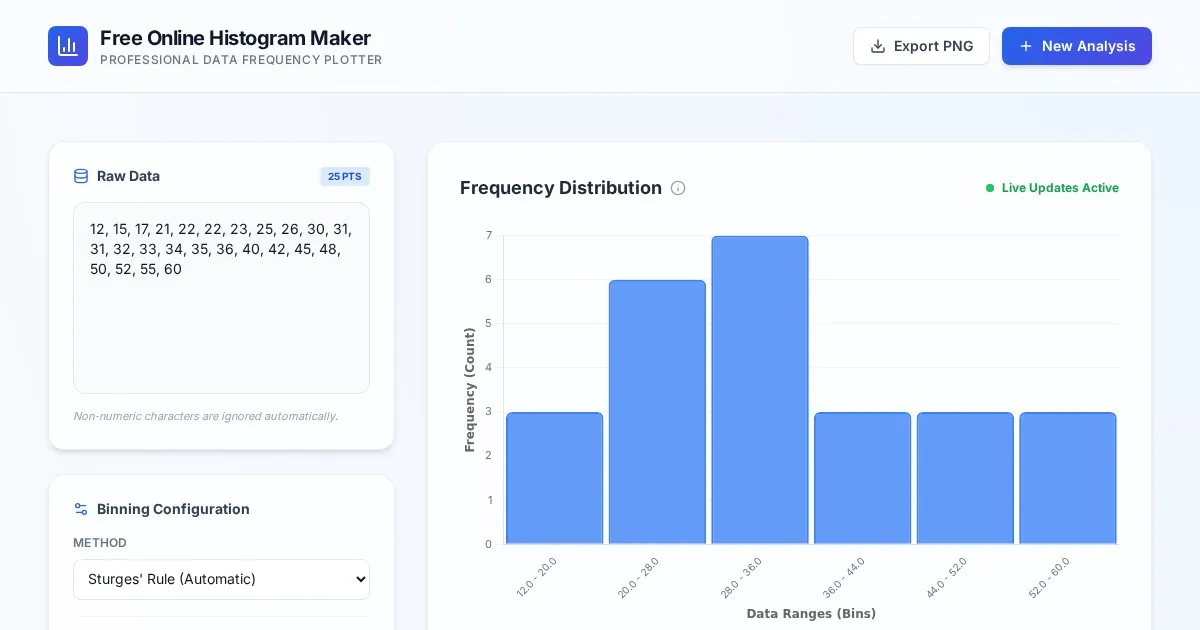
Free Online Histogram Maker & Data Frequency Plotter
Easily create professional histograms from your numeric data. Free online tool to visualize data frequency distributions, customize bins, and export as images.
Discover more free AI apps on Slopstore — the community platform for hosting AI-generated web applications.