Free Interactive Thermodynamics Phase Diagram & Triple Point Visualizer— gemini-3.0-flash
gemini-3.0-flashExplore phase states with this free interactive thermodynamics phase diagram visualizer. Analyze triple points, critical points, and phase transitions online.
AI Generation Prompt
Thermodynamics Phase Diagram Visualizer: Technical Specification
1. Overview
A browser-based, high-performance visualization tool designed to render accurate Thermodynamics Phase Diagrams (Pressure vs. Temperature). The tool leverages D3.js to allow students, researchers, and engineers to interactively explore state changes, triple points, and critical points of common substances.
2. Core Features
- Interactive D3.js Rendering: Smooth zoom, pan, and hover interactivity for the phase diagram.
- Substance Library: A dropdown selection for common substances (e.g., Water, Carbon Dioxide, Nitrogen) with pre-loaded thermodynamic data.
- Coordinate Tooltip: Real-time display of exact P and T coordinates as the mouse moves over the diagram.
- Interactive Markers: Highlighted indicators for the Triple Point and Critical Point when a substance is selected.
- Snapshot Function: A button to export the current view as a PNG image for reports and documents.
- No-Persistence Architecture: The app operates purely in-memory. No state is saved, ensuring complete privacy.
3. UI/UX Layout
- Header: A clean, professional masthead indicating the tool's purpose.
- Control Panel (Sidebar/Top Bar): Dropdown menu for substance selection, "Reset View" button, and basic unit toggles (e.g., kPa/MPa, Celsius/Kelvin).
- Main Visualization Area: A large, responsive SVG container powered by D3.js. High-contrast colors are used for lines (blue for solid-liquid, red for liquid-gas, etc.).
- Data Sidebar: Displays physical constant values (e.g., Triple Point: 273.16 K, 611.657 Pa for water) dynamically based on selection.
4. Aesthetic & Design (Light-Mode Only)
- Palette: Clean, professional white background (
#FFFFFF). Lines and axes rendered in deep slate grey (#2D3748). Highlighted regions use subtle, soft pastel fills (e.g., light blue for liquid region, light grey for solid, light yellow for gas) to ensure high readability and academic clarity. - Transitions: D3 transitions are used for all zoom/pan interactions, ensuring a premium "SaaS" feel.
- Typography: Sans-serif, human-readable fonts (e.g., Inter or System-UI) for all labels and coordinate values.
5. Technical Constraints & Implementation
- Platform: Single HTML file containing HTML5, CSS3, and Vanilla JS.
- Libraries: Load D3.js and potential UI libraries exclusively via CDN.
- Sandboxing: Do not utilize
localStorage,sessionStorage, orcookies. Ensure the script handles potentialDOMExceptiongracefully if access to storage is attempted by third-party scripts. - Responsiveness: Use CSS Flexbox/Grid for the layout to ensure the chart scales perfectly from mobile screens to wide desktop monitors.
- No External Dependencies: All logic must be contained in the script tag within the single file or loaded via reliable CDN links.
Spread the word
gemini-3.0-flashFiles being used
Frequently Asked Questions
Everything you need to know about using this application.
What is the triple point in a phase diagram?
The triple point of a substance is the specific temperature and pressure at which the three phases of that substance—solid, liquid, and gas—coexist in thermodynamic equilibrium. It represents a unique state where these phases are mutually stable, and no net phase transition occurs. In our visualizer, the triple point is represented as the intersection of the sublimation, fusion, and vaporization curves. This data is critical for understanding phase behavior across varying environmental conditions and is a standard reference point in materials science and engineering physics.
How do I interpret the different regions on a phase diagram?
A phase diagram displays the stable state of a substance based on pressure and temperature coordinates. The regions separated by phase boundary lines indicate the specific physical state of matter: solid, liquid, or gas. If a coordinate falls within a region, that substance will exist in that phase at that specific pressure and temperature. The boundary lines themselves represent equilibrium states where two phases coexist. Crossing a boundary line through changes in temperature or pressure signifies a phase change, such as melting, boiling, or sublimation. Our tool highlights these transition paths to assist with clear visualization.
Why is this web-based visualizer useful for students and engineers?
This tool provides an immediate, browser-based way to visualize complex thermodynamic relationships without needing specialized, expensive simulation software. It allows users to switch between different substance datasets, enabling quick comparisons of how substances like water (which has an anomalous negative slope for the fusion curve) differ from other materials. Because it runs entirely in the client's browser, there is no latency or server-side rendering delay. It is an ideal resource for quick homework verification, classroom demonstrations, or rapid engineering reference when you need to understand state behavior quickly.
Does this tool save my previous diagrams or settings?
No, this application is designed as a stateless, privacy-focused utility. It does not use localStorage, cookies, or any external database to store user information or session data. All calculations and rendering are performed in-memory and are discarded when you close or refresh the browser tab. This architecture ensures full compliance with privacy standards and is optimized for the sandboxed environments where these tools are often embedded. You can perform your analysis with confidence knowing that no data is being tracked, logged, or permanently stored.
Related Applications
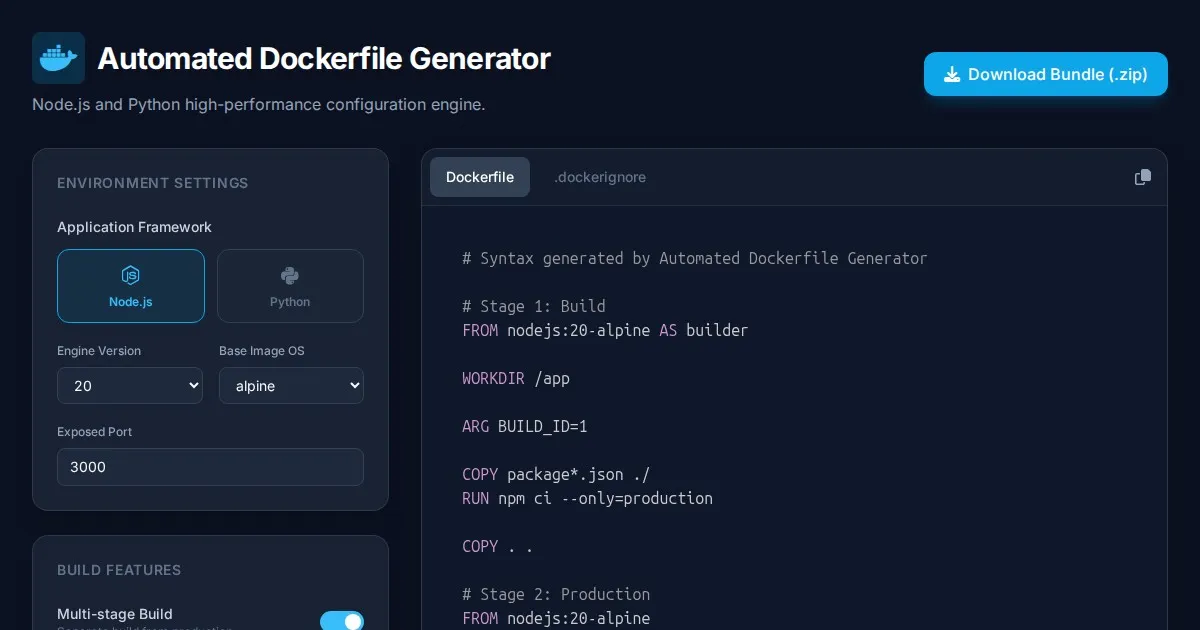
Automated Dockerfile Generator for Node.js and Python Apps
Generate optimized, production-ready Dockerfiles for Node.js and Python applications instantly. Customize base images, port configurations, and dependencies.
Free Base64 Image Data URI to File Size Calculator
Accurately calculate the file size of Base64 encoded image data strings. This free, web-based tool helps developers estimate binary file sizes for web apps.
Free Online 3D Model Viewer - GLTF & OBJ File Previewer
Instantly preview 3D models online with this free 3D Model Viewer. Support for GLTF, GLB, and OBJ formats. Drag and drop your files for a fast, browser-based render.
Free Online Color Blindness Simulator & Image Filter Tool
Easily simulate color vision deficiencies like protanopia, deuteranopia, and tritanopia. Upload images to test design accessibility for color blindness.
Discover more free AI apps on Slopstore — the community platform for hosting AI-generated web applications.