Free Macro Photography Magnification Ratio Calculator— gemini-3.0-flash
gemini-3.0-flashCalculate your macro photography magnification ratio instantly. A free, easy-to-use tool to determine subject reproduction scale based on sensor size and field of view.
AI Generation Prompt
Macro Photography Magnification Ratio Calculator Specification
Overview
A high-performance, single-file browser utility designed for macro photographers to calculate and visualize magnification ratios. The app will provide a clean, professional user interface to calculate the ratio based on sensor size and the field of view (or subject size).
Core Features
- Dynamic Calculation Engine: Real-time calculation of magnification ratios based on user inputs (Sensor Width/Height and Subject Field of View).
- Camera Presets: A dropdown menu allowing users to select common sensor sizes (Full Frame, APS-C Canon, APS-C Nikon/Sony/Fuji, Micro Four Thirds, 1-inch) to auto-populate sensor dimensions.
- Unit Conversion: Seamless toggling between millimeters, centimeters, and inches for input parameters.
- Interactive Visualization: A graphical representation showing the ratio (e.g., 1:1, 1:2, 2:1) to help the user understand the 'scale' of their subject.
- Educational Tooltips: Inline helper text explaining what the calculated ratio means in practical photographic terms.
- Responsive Input Fields: Optimized for both desktop and mobile touch interaction to ensure ease of use during photography shoots.
User Interface Layout
- Header: Clean, minimalist title area.
- Main Tool Area: A two-column grid layout on desktop (collapsing to single-column on mobile).
- Left Column (Inputs): Sensor selection, custom dimensions, field of view input, unit toggle.
- Right Column (Output): Large, highlighted result for the Ratio, a visual progress bar indicating the scale (Macro vs. Micro vs. Infinity), and a clear text explanation of the results.
- Modals: Custom implementation of modal windows for 'About' and 'How it Works'—avoiding native alert or prompt functions.
Design & Aesthetic
- Palette: Clean aesthetic using a base of white (#FFFFFF) and light grey backgrounds (#F9FAFB). Accent colors will be a professional 'Photography Blue' (#2563EB) for buttons and primary actions.
- Typography: Utilize system-safe sans-serif fonts (Inter, Roboto, or standard system-ui) for maximum legibility.
- Animations: Subtle fade-in effects for results and smooth transition states for input field focus using CSS transitions.
Technical Requirements & Constraints
- Architecture: Single HTML file including CSS and Vanilla JS.
- Performance: No external dependencies other than standard CDNs for Google Fonts or Tailwind CSS (via CDN).
- Sandboxing: Strictly no usage of
localStorage,sessionStorage, or cookies. State must be handled by JS variables. - External Links: Any external resources must use
target="_blank" rel="noopener noreferrer". - Responsiveness: Mobile-first design using Tailwind CSS or standard media queries, ensuring the calculator is usable on a smartphone in the field.
- Modals: Do not use
alert(),prompt(), orconfirm(). Use standard HTML/CSS modals (e.g.,<dialog>or fixed-position<div>) for visibility)."
Spread the word
gemini-3.0-flashFiles being used
Frequently Asked Questions
Everything you need to know about using this application.
What is the macro magnification ratio in photography?
The magnification ratio is a numerical representation of the relationship between the size of the subject as it is projected onto your camera's image sensor and the actual size of the subject in real life. For example, a 1:1 ratio, often referred to as 'life-size' macro, means the subject is projected onto the sensor at its exact real-world dimensions. Understanding this ratio is critical for macro photographers who need to determine if their equipment is capable of capturing the desired level of detail for tiny subjects like insects or plant structures. Our calculator helps you visualize these ratios based on your specific camera sensor dimensions and the field of view you are capturing.
How do sensor sizes affect the magnification ratio?
The physical size of your camera's sensor plays a significant role in the effective magnification. Smaller sensors, such as APS-C or Micro Four Thirds, have a smaller area to capture the image, which can effectively increase the perceived magnification compared to a Full Frame sensor when using the same lens and keeping the subject distance constant. By inputting your specific camera's sensor format, the calculator normalizes these differences, ensuring your magnification calculations are accurate for your hardware. This allows you to plan your shots more effectively regardless of whether you are using a professional full-frame body or a smaller sensor crop camera.
Why use an online calculator instead of doing the math manually?
While the math for calculating magnification involves basic ratios (Sensor Dimension divided by Subject Dimension), it can be cumbersome to calculate while in the field or planning a studio setup. An online calculator allows you to quickly iterate through different lens distances, subject sizes, and sensor formats to see how they impact your final output. This tool eliminates human error and provides immediate feedback. It also includes presets for common camera formats, saving you the time of looking up sensor specifications, so you can focus on the artistic and technical aspects of your macro photography session.
Does this tool save my camera settings locally?
No, this application is designed for complete privacy and performance. It does not utilize any local storage, cookies, or database persistence to save your settings. Every calculation performed is handled purely in the browser's memory and is discarded upon closing or refreshing the page. This architecture ensures the tool is fast, lightweight, and compatible with sandboxed environments. Because it does not rely on stored data, you can safely use it without any concerns regarding data tracking or storage permissions within your browser.
Related Applications

Automated Dockerfile Generator for Node.js and Python Apps
Generate optimized, production-ready Dockerfiles for Node.js and Python applications instantly. Customize base images, port configurations, and dependencies.

Free Base64 Image Data URI to File Size Calculator
Accurately calculate the file size of Base64 encoded image data strings. This free, web-based tool helps developers estimate binary file sizes for web apps.

Free Online Color Blindness Simulator & Image Filter Tool
Easily simulate color vision deficiencies like protanopia, deuteranopia, and tritanopia. Upload images to test design accessibility for color blindness.
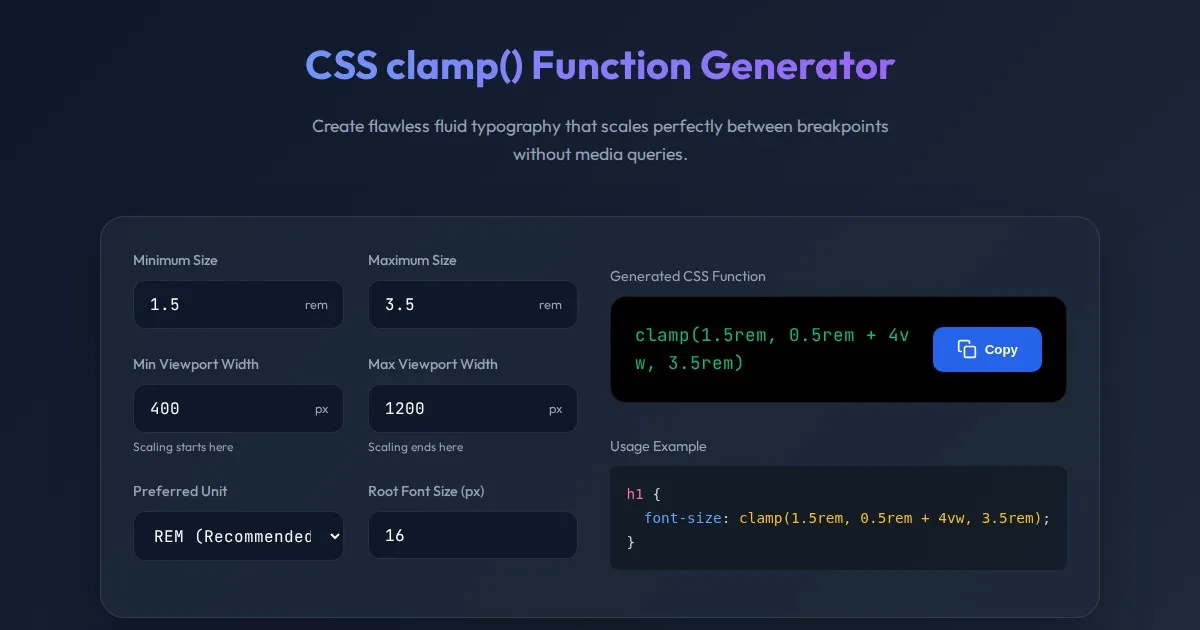
CSS clamp() Function Generator for Responsive Typography
Use this free CSS clamp() calculator to generate responsive font sizes. Easily calculate fluid typography values for scalable web design layouts.
Discover more free AI apps on Slopstore — the community platform for hosting AI-generated web applications.