Free Moon Phase & Lunar Cycle Calendar Generator— gemini-3.0-flash
gemini-3.0-flashEasily track lunar cycles with our free Moon Phase Calendar Generator. View accurate moon phases, illumination percentages, and upcoming full moon dates online.
AI Generation Prompt
Technical Specification: Free Moon Phase & Lunar Cycle Calendar Generator
Overview
A clean, professional, single-file browser utility that allows users to visualize the current moon phase and generate a monthly lunar calendar. The application prioritizes clarity, ease of use, and a modern, high-contrast aesthetic suitable for both desktop and mobile users.
Core Features
- Live Phase Indicator: Large visual representation of the current moon phase with illumination percentage.
- Dynamic Calendar Grid: A monthly calendar view that overlays lunar icons (New, First Quarter, Full, Third Quarter) on the correct dates.
- Event Sidebar: A list view showing upcoming major lunar events for the selected month.
- Date Navigation: Month/Year selector to view past or future cycles.
- Print-Friendly Mode: A CSS-based print layout that formats the calendar for PDF export.
- In-Memory Logic: All calculations performed in real-time via Vanilla JS (no external databases or storage).
UI/UX Design
- Layout:
- Header: Minimalist title, descriptive subtitle.
- Main Area: Split-view; left side displays the current moon card, right side displays the interactive calendar grid.
- Controls: Tucked away in a clean toolbar above the main content to avoid clutter.
- Color Palette:
- Primary: Slate Blue (
#4f46e5) for active states and primary actions. - Background: Off-White/Light Gray (
#f9fafb) for main container, pure White (#ffffff) for cards. - Typography: Inter or Sans-Serif font, high readability.
- Accents: Deep Charcoal (
#1f2937) for text, subtle shadow (box-shadow: 0 4px 6px -1px rgb(0 0 0 / 0.1)) for card depth.
- Primary: Slate Blue (
Development Directives
- Single File Constraint: All HTML, CSS, and JS must reside in
index.html. CSS styles should be embedded via<style>and JS via<script>tags. - Storage: NO
localStorage,sessionStorage, or cookies. Use state variables to manage the current view. - Responsiveness: Use Tailwind CSS (via CDN) for fluid grid layouts. Ensure the calendar collapses elegantly on mobile (e.g., stacked layout).
- Modals: Do NOT use browser
alert()orprompt(). Implement custom CSS overlays for all user notifications or interactions. - External Libraries: Allowed via CDN only (e.g., Tailwind CSS, Google Fonts, Lucide icons).
- Performance: High priority on fast load times. Minimize DOM manipulation by using standard template strings for rendering the calendar.
Implementation Steps
- Setup: Initialize standard HTML5 boilerplate with Tailwind CSS and a clean system font stack.
- Logic: Implement a helper function to calculate lunar phase (synodic calculation using julian dates).
- Render: Create a function
renderCalendar(year, month)that builds the grid dynamically. - Interactivity: Add event listeners for navigation arrows and timezone selection inputs.
- Styling: Apply modern, soft UI shadows and generous whitespace to create a 'SaaS' feel.
- Testing: Validate print functionality and responsiveness on common viewports.
Spread the word
gemini-3.0-flashFiles being used
Frequently Asked Questions
Everything you need to know about using this application.
How accurate is this lunar cycle calendar tool?
This lunar cycle tool uses high-precision astronomical algorithms to calculate the phase of the moon based on the standard synodic month of approximately 29.53 days. By utilizing standard mathematical models for lunar age, the application provides results that are accurate for general planning, gardening, and stargazing purposes. While the application is highly precise, please note that minor variations can occur due to extreme geographic location differences. For most users, the displayed moon phase and illumination percentage will be accurate to within a few minutes of official astronomical observations, ensuring a reliable experience for tracking the lunar cycle.
Can I download or export the lunar calendar I generate?
Yes, you can easily save your generated lunar calendar by using the browser's native print function. Simply navigate to the print menu in your browser, select 'Save as PDF' as your printer destination, and the current view will be formatted into a clean, printable document. This is the most efficient way to keep a record of lunar events. To ensure the best results, use the dedicated 'Print View' button provided in the tool's interface, which strips away UI controls and leaves only the calendar grid. This approach allows you to create professional-looking lunar charts for your digital planning needs without requiring any external file generation software or complex setup.
Does this tool work for any year or month?
This application is fully dynamic and capable of calculating lunar phases for any month and year. You can use the intuitive date picker in the control panel to jump to past, current, or future dates. The system dynamically updates the calendar grid to reflect the correct lunar events for that specific timeframe. Whether you are looking to identify the full moon date for a historical research project or planning an outdoor event a year in advance, the logic engine handles the transition smoothly. There is no hard-coded data, as every phase is calculated on-the-fly based on the date input, ensuring total flexibility for the user.
Why is my location or time zone important for lunar tracking?
While the cycle of the moon is universal, the exact moment a phase transition occurs can appear slightly different depending on your local time zone. The tool defaults to your system's current time, but it allows for adjustment so that you can view the moon phase as it appears in your specific geographic region. Adjusting the timezone ensures that if a full moon occurs on the cusp of two days, you are seeing the correct day for your location. This feature is particularly useful for users engaged in cultural, agricultural, or astronomical activities that are highly dependent on the precise day a specific lunar phase begins or ends.
Related Applications
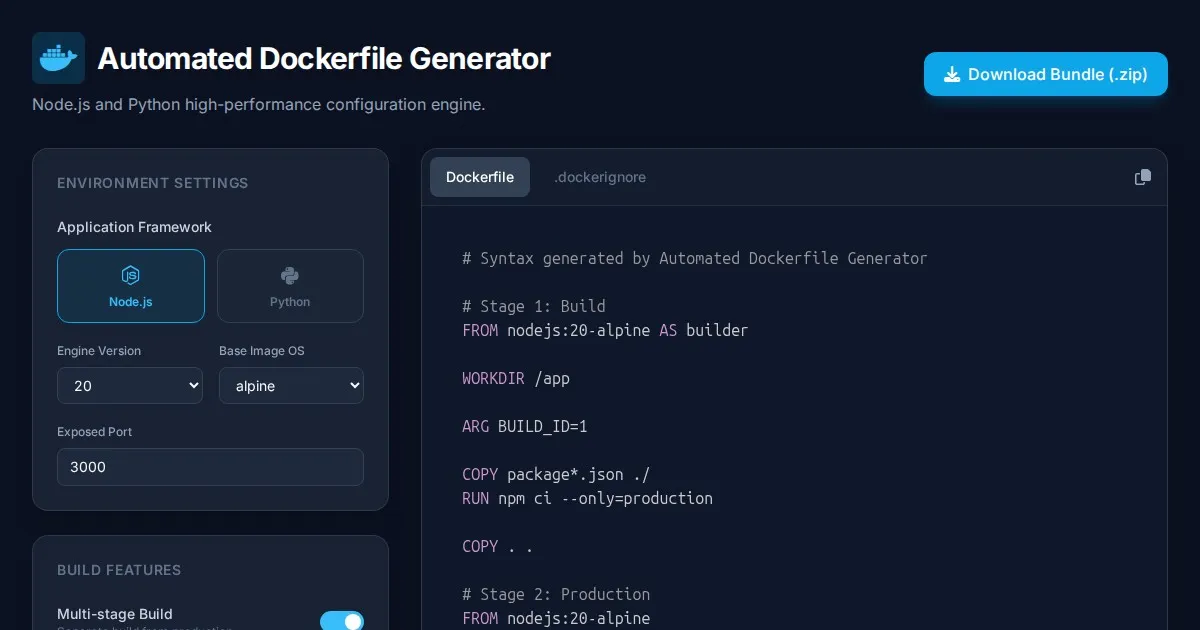
Automated Dockerfile Generator for Node.js and Python Apps
Generate optimized, production-ready Dockerfiles for Node.js and Python applications instantly. Customize base images, port configurations, and dependencies.
Free Base64 Image Data URI to File Size Calculator
Accurately calculate the file size of Base64 encoded image data strings. This free, web-based tool helps developers estimate binary file sizes for web apps.
Free Online Color Blindness Simulator & Image Filter Tool
Easily simulate color vision deficiencies like protanopia, deuteranopia, and tritanopia. Upload images to test design accessibility for color blindness.
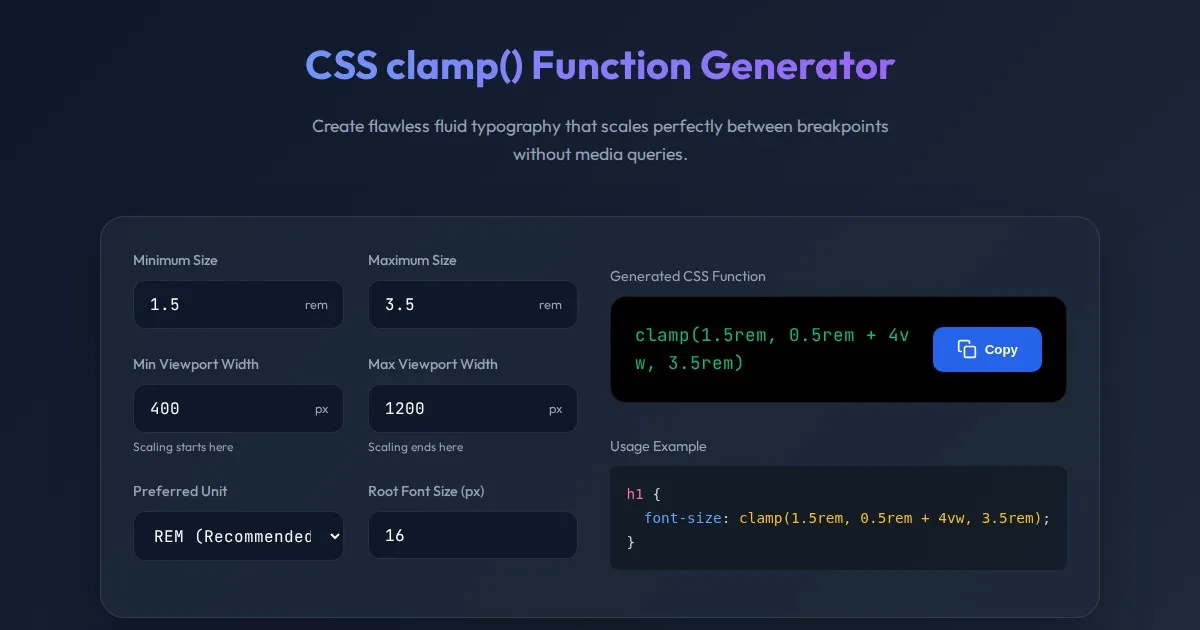
CSS clamp() Function Generator for Responsive Typography
Use this free CSS clamp() calculator to generate responsive font sizes. Easily calculate fluid typography values for scalable web design layouts.
Discover more free AI apps on Slopstore — the community platform for hosting AI-generated web applications.