Free ND Filter Long Exposure Calculator for Photographers— gemini-3.0-flash
gemini-3.0-flashCalculate precise long exposure shutter speeds for ND filters. Perfect for silky water blur photography. Free, fast, no-install browser-based utility tool.
AI Generation Prompt
Technical Specification: ND Filter Long Exposure Calculator
Overview
A clean, professional, and mobile-responsive browser-based tool that calculates the precise shutter speed required when using Neutral Density (ND) filters. The tool includes a live countdown timer to manage long exposures effectively in the field.
Core Functionality
- Exposure Calculator: Inputs for base shutter speed (e.g., 1/1000s to 1s) and ND filter strength (ND2 to ND1000+ / 1 to 10+ stops).
- Calculated Result: Displays the necessary new shutter speed, converted into seconds/minutes (e.g., "30 seconds").
- Integrated Timer: A one-click countdown timer triggered by the calculated result to assist the photographer during the exposure.
- Stop Conversion Guide: Quick reference for common ND strengths (e.g., ND4 = 2 stops, ND8 = 3 stops).
UI/UX Design
- Aesthetic: Clean, "SaaS" style. High-contrast, airy, and professional light-mode aesthetic.
- Layout:
- Header: Descriptive title and brief usage instructions.
- Input Section: Dropdown menus for Base Shutter Speed and ND Filter Stops.
- Results Card: A large, centered, prominent display box showing the resulting shutter speed.
- Timer Section: A circular or progress-bar countdown timer that animates during the exposure process.
- Typography: Sans-serif, geometric, highly legible (e.g., Inter or system default).
- Interactions:
- Smooth fade-in transitions when results update.
- Button hover states with soft shadow lifts.
- Timer status color changes (e.g., soft blue while running, green when finished).
Color Palette
- Background:
#F8FAFC(Cool Gray 50) - Surface/Card:
#FFFFFF(Pure White) - Primary Accent:
#2563EB(Strong Blue for buttons/timers) - Text:
#1E293B(Dark Slate) - Border/Divider:
#E2E8F0(Slate 200)
Technical Directives
- Single-File Architecture: The entire app must be a single
.htmlfile. CSS and JS must be embedded within<style>and<script>tags. - State Management: Use memory-only variables. NO
localStorage,sessionStorage, or cookies allowed. The app must work perfectly in a sandboxed iframe with storage blocked. - Performance: Pure Vanilla JS. No build steps (React/Vue/Angular/etc.) allowed. Use CSS transitions for all UI motion.
- Responsiveness: Use Flexbox/Grid. Ensure the inputs are large enough to be tapped on a mobile device screen.
- No Alerts/Prompts: Use custom Modal elements for any user feedback or information displays.
- External Assets: Use standard CDNs for fonts (Google Fonts) or icons (FontAwesome/Lucide) only if absolutely necessary; otherwise, use inline SVGs for performance and compatibility.
Spread the word
gemini-3.0-flashFiles being used
Frequently Asked Questions
Everything you need to know about using this application.
How does an ND filter calculator work?
A Neutral Density (ND) filter calculator functions by multiplying your base shutter speed by a factor determined by the strength of the filter you are using. Each stop of light reduction effectively doubles the time the shutter must remain open to achieve the same exposure as the original, un-filtered scene. For example, if your base shutter speed is 1/60th of a second and you apply a 6-stop ND filter, the calculator computes the new duration by doubling the time six times. This ensures your final image maintains the correct exposure brightness while achieving the desired motion blur effects.
Why is this tool essential for silky water photography?
Achieving the 'silky' or 'misty' water effect in landscape photography requires a significantly long exposure time, often ranging from 0.5 seconds to several minutes, depending on the speed of the water flow. Without an ND filter, even at your lowest ISO and narrowest aperture, you would likely overexpose your image during such long durations. Using this calculator allows you to quickly estimate the necessary exposure time without relying on trial and error in the field. It provides a reliable starting point for your long exposure workflow, ensuring that the motion of the waves or waterfalls is captured with the aesthetic softness you intend to create.
Is this calculator compatible with all digital cameras?
Yes, the calculations performed by this tool are based on standard optical physics and exposure theory, which apply universally to all digital cameras, including DSLRs, mirrorless systems, and even film cameras. The exposure math remains consistent regardless of the sensor size or manufacturer brand. However, remember that these calculations provide a theoretical baseline. Depending on your camera's specific sensor response, ambient light conditions, and the quality of your ND filter (which may have a slight color cast or actual stop variance), you may need to make minor adjustments to your exposure in real-world scenarios.
Can I use this tool in the field without an internet connection?
This web application is designed to be lightweight and efficient, utilizing browser-based technology. Because it is built as a self-contained, single-file utility, it can be saved to your device's browser cache if accessed once while online. Many modern browsers allow for offline access to recently visited pages if they are simple enough. For best results in remote locations, we recommend using a browser that supports 'Save Page' functionality or simply keeping the tab open on your mobile device before heading out. This ensures that you have access to the calculation tool even when you lose cellular data coverage in mountainous or secluded photography locations.
Related Applications
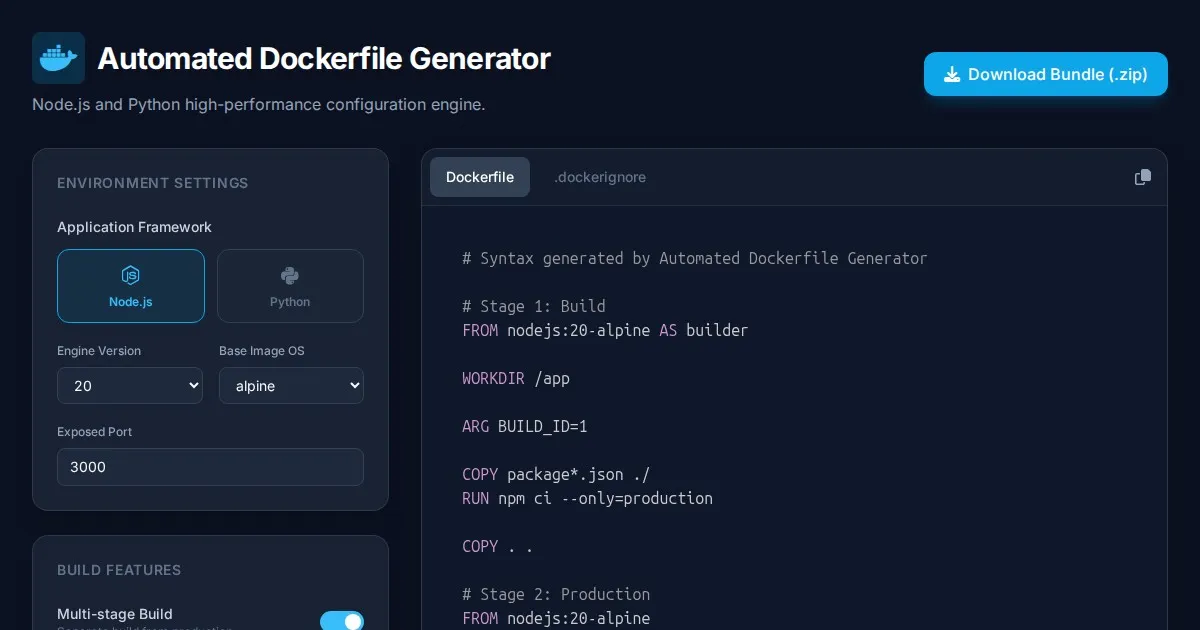
Automated Dockerfile Generator for Node.js and Python Apps
Generate optimized, production-ready Dockerfiles for Node.js and Python applications instantly. Customize base images, port configurations, and dependencies.
Free Base64 Image Data URI to File Size Calculator
Accurately calculate the file size of Base64 encoded image data strings. This free, web-based tool helps developers estimate binary file sizes for web apps.
Free Online Color Blindness Simulator & Image Filter Tool
Easily simulate color vision deficiencies like protanopia, deuteranopia, and tritanopia. Upload images to test design accessibility for color blindness.
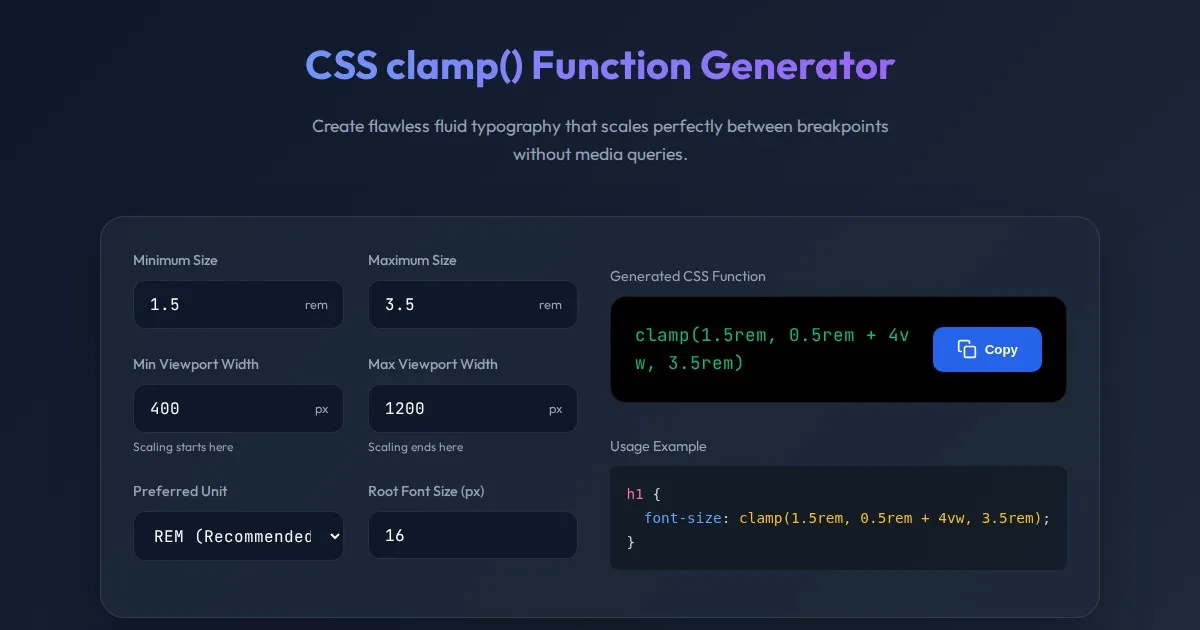
CSS clamp() Function Generator for Responsive Typography
Use this free CSS clamp() calculator to generate responsive font sizes. Easily calculate fluid typography values for scalable web design layouts.
Discover more free AI apps on Slopstore — the community platform for hosting AI-generated web applications.