Free Online Z-Index Debugger & Stacking Context Visualizer— gemini-3.0-flash
gemini-3.0-flashVisualize and debug complex CSS z-index stacking contexts with this free online tool. Perfect for web developers and designers troubleshooting UI layering issues.
AI Generation Prompt
Free Online Z-Index Debugger & Stacking Context Visualizer
Overview
A browser-based interactive laboratory for developers to construct nested HTML layouts and visually debug CSS stacking contexts. This tool simplifies the complex "z-index hell" by providing a visual hierarchy of elements, identifying parent/child stacking relationships, and explaining why specific elements are layered above or below others.
Core Features
- Interactive Canvas: A drag-and-drop or click-to-add interface to create nested
<div>blocks. - Property Editor: A sidebar panel to modify CSS properties that influence stacking (position, z-index, opacity, transform, filter, perspective).
- Stacking Tree Visualization: An automated, real-time tree view that highlights which elements create new stacking contexts (e.g., elements with
opacity < 1ortransform: scale()). - Live Z-Index Explanation: A "Why am I here?" module that provides a human-readable explanation of why a selected element is visible or hidden behind others.
- Code Snippet Generator: Generates the corresponding HTML and CSS for the created layout.
- Responsive Preview: Adjust the size of the container to test how stacking reacts to layout changes.
UI Layout
- Header: Clean, minimalist navigation with the app title and a "Reset" button.
- Main Content Area:
- Left Sidebar: Property controls (Inputs for
z-index, dropdowns forposition, toggle switches fortransform,opacity, etc.). - Center Canvas: The visual playground where rectangles are rendered dynamically. Includes a visual indicator (colored borders) for stacking context boundaries.
- Right Sidebar: The "Context Inspector" tree, displaying the parent-child relationship of the current stacking hierarchy.
- Left Sidebar: Property controls (Inputs for
Design & Aesthetics
- Palette: High-key light aesthetic. Background:
#F8FAFC. Primary accents:#2563EB(Blue). Success states:#059669(Green). Danger states:#DC2626(Red). Neutrals:#E2E8F0to#64748B. - Typography: Inter or System UI fonts, bold weights for labels, monospaced fonts for property values.
- Transitions: Smooth layout shifts using CSS
transition: all 0.3s ease-in-outwhen elements are moved or properties are updated. Micro-interactions when hovering over elements to highlight their stacking boundary.
Technical Constraints & Requirements
- Single-File Architecture: All HTML, CSS, and JS must be embedded in one file. No build steps.
- Sandbox Compatibility: Do NOT use
localStorage,sessionStorage, or cookies. The state must be maintained in a standard JavaScript object/array in memory. - Vanilla JS Only: No external frameworks (React/Vue/Angular). Use native DOM manipulation (
document.createElement,classList, etc.). - No External Alerts: Use custom modal components (hidden by default, toggled via CSS classes) instead of
alert(),confirm(), orprompt(). - Responsive Design: Use CSS Flexbox/Grid to ensure the three-column layout collapses gracefully on mobile devices (e.g., vertical stack on small screens).
- Safety: All external links must include
target="_blank"andrel="noopener noreferrer".
Spread the word
gemini-3.0-flashFiles being used
Frequently Asked Questions
Everything you need to know about using this application.
How does z-index work in CSS?
The z-index property specifies the stack order of an element. An element with greater stack order is always in front of an element with a lower stack order. Note that z-index only works on positioned elements (relative, absolute, fixed, or sticky) and flex/grid items.
What is a stacking context?
A stacking context is a three-dimensional conceptualization of HTML elements along an imaginary z-axis. Elements form a stacking context when they have specific properties applied, such as a z-index other than 'auto', opacity less than 1, or transform properties.
Why is my z-index not working as expected?
Usually, z-index issues occur because elements belong to different stacking contexts. Even if an element has a high z-index, it will stay behind an element in a different parent context if that parent is ranked lower than the target element's parent.
Related Applications
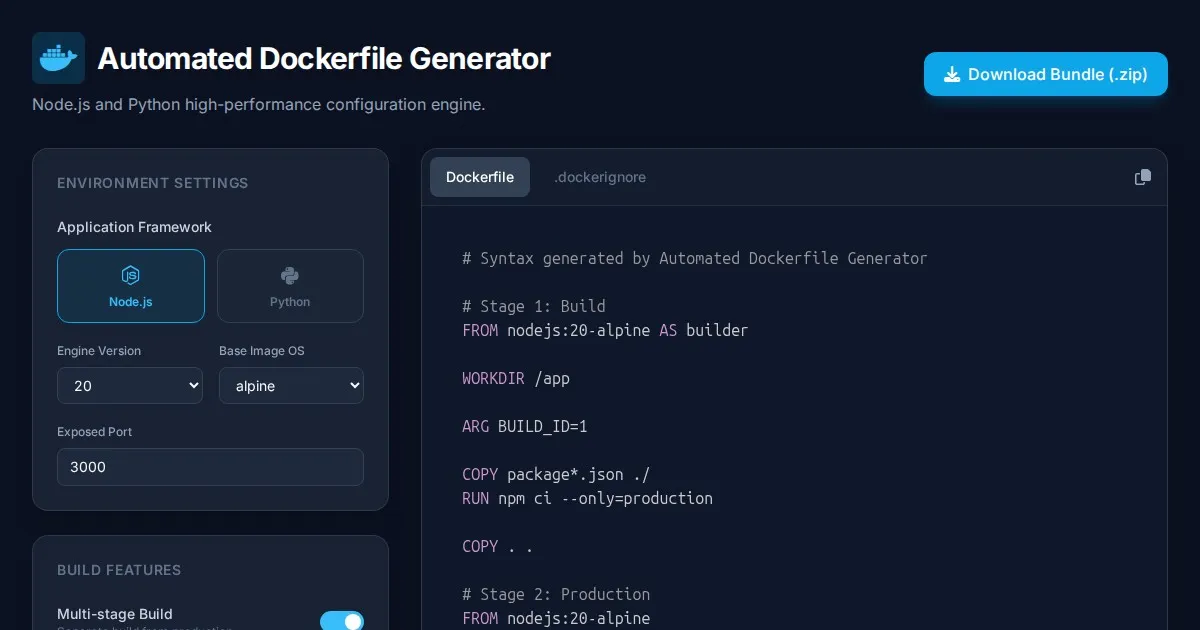
Automated Dockerfile Generator for Node.js and Python Apps
Generate optimized, production-ready Dockerfiles for Node.js and Python applications instantly. Customize base images, port configurations, and dependencies.
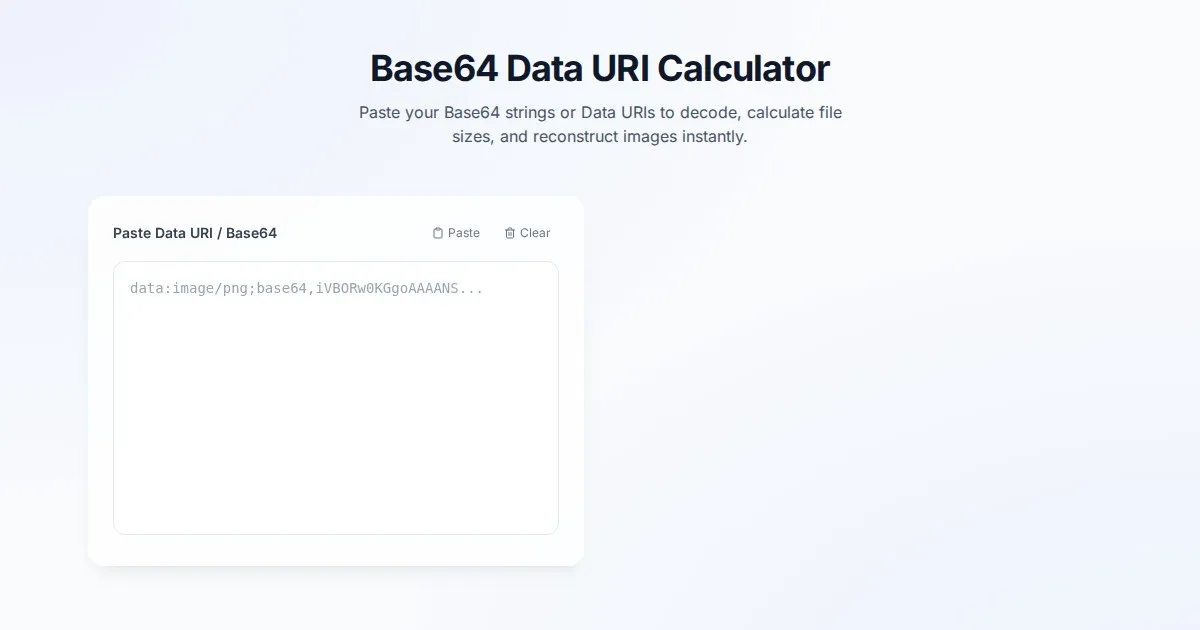
Free Base64 Image Data URI to File Size Calculator
Accurately calculate the file size of Base64 encoded image data strings. This free, web-based tool helps developers estimate binary file sizes for web apps.
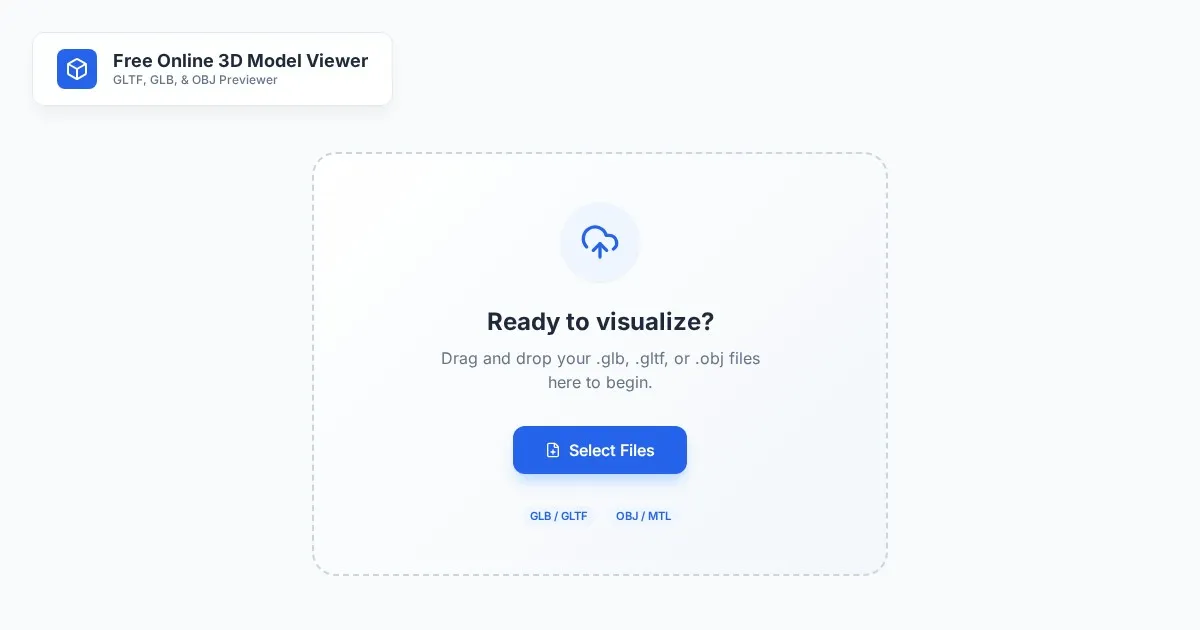
Free Online 3D Model Viewer - GLTF & OBJ File Previewer
Instantly preview 3D models online with this free 3D Model Viewer. Support for GLTF, GLB, and OBJ formats. Drag and drop your files for a fast, browser-based render.

Free Online Color Blindness Simulator & Image Filter Tool
Easily simulate color vision deficiencies like protanopia, deuteranopia, and tritanopia. Upload images to test design accessibility for color blindness.
Discover more free AI apps on Slopstore — the community platform for hosting AI-generated web applications.