Free OSU! Approach Rate (AR) to Millisecond Converter— gemini-3.0-flash
gemini-3.0-flashConvert OSU! Approach Rate (AR) values to precise millisecond timings instantly. A free tool for beatmap creators and rhythm game players to calculate note preempt.
AI Generation Prompt
Technical Specification: Approach Rate (AR) to Millisecond Converter
1. Overview
A single-file, browser-based utility tool designed to convert OSU! Approach Rate (AR) values (ranging from 0 to 11) into their precise millisecond equivalents (Preempt and Fade-in). The application targets rhythm game mappers and enthusiasts who require instant, reliable conversion without leaving the browser.
2. Core Functional Requirements
- AR Input: Users can input an AR value (0.0 to 11.0) via a slider and a numeric input field. Both must be synced in real-time.
- Real-time Conversion: As the user adjusts the AR value, the application must immediately update the calculated Milliseconds for Preempt and Fade-in.
- Precision: Use the standard community-accepted formulas:
- AR < 5:
1200ms + (5 - AR) * 120ms - AR = 5:
1200ms - AR > 5:
1200ms - (AR - 5) * 150ms - Fade-in logic:
400ms(standard for AR 5, scales linearly).
- AR < 5:
3. UI/UX Design
- Layout:
- Header: Simple, clean centered title: "AR to Millisecond Converter".
- Main Interaction: A large, centralized input area featuring a high-contrast slider and a prominent display box for the AR number.
- Results Section: A card-based layout displaying two large, clearly labeled results: "Preempt Time (ms)" and "Fade-in Time (ms)".
- Visual Aids: A small bar chart or graphic element that visually changes width to represent the duration difference as the AR value changes.
- Aesthetic:
- Style: Clean, "SaaS" minimalism. High whitespace, rounded corners (8px-12px), soft drop shadows (
shadow-smorshadow-md). - Colors: Light mode focus. Background:
#F8FAFC. Card background:#FFFFFF. Primary accent color (for inputs/sliders):#4F46E5(Indigo). Text:#1E293B(Dark slate). - Typography: Sans-serif font (Inter or system-ui).
- Style: Clean, "SaaS" minimalism. High whitespace, rounded corners (8px-12px), soft drop shadows (
4. Technical Constraints (Strict Compliance)
- Architecture: One single HTML file including
<style>and<script>tags. - Dependencies: Use only CDN-based links for Tailwind CSS and Inter Font. No local build steps.
- Sandbox/Security:
- NO localStorage, sessionStorage, or cookies.
- NO synchronous
alert()orprompt(). All UI interactions must be DOM-based. - State: Use a simple JavaScript object or variable to hold the current AR state. The app must function statelessly.
- Responsive: The UI must stack elements vertically on mobile and horizontally on desktop.
- Animations: Use CSS transitions (
transition-all duration-200 ease-in-out) on result numbers so they fade or slide between values when calculated.
5. Development Directive
The final deliverable must be a copy-pasteable HTML file that, when opened in any modern browser, functions immediately as a fast, high-performance tool. Ensure all input fields have autocomplete="off" and utilize clean, semantic HTML5 tags (e.g., <main>, <section>, <article>).
Spread the word
gemini-3.0-flashFiles being used
Frequently Asked Questions
Everything you need to know about using this application.
What is the Approach Rate (AR) in the OSU! rhythm game?
The Approach Rate (AR) is a setting in the OSU! rhythm game that determines how quickly hit circles appear and fade in before a player is expected to click them. It effectively controls the 'preempt' time—the duration between the object appearing and the moment it must be hit—and the 'fade-in' duration. Higher AR values result in a shorter preempt time, making the hit circles appear and disappear much faster. Lower AR values provide a longer, more relaxed preempt time, often preferred by newer players or for reading maps with complex rhythm patterns that require more time to process visually.
Why should beatmap creators use an AR to millisecond converter?
Beatmap creators often need to understand the precise millisecond timing of their map to ensure the gameplay feels natural and consistent with the music. Calculating the exact preempt time manually using the game's formula can be prone to human error, leading to potential issues with map playability or synchronization. Using a digital converter ensures that the chosen AR value maps perfectly to the desired millisecond preempt, allowing creators to balance difficulty and readability accurately. This precision is essential when designing high-level competitive maps where milliseconds can drastically change the reaction requirements for the player.
How are Approach Rate values converted into milliseconds?
The conversion between AR and milliseconds is governed by a linear formula based on specific anchor points within the game engine. At AR 5, the preempt time is exactly 1200 milliseconds. For values below 5, the preempt time increases by 120 milliseconds for every 1 unit decrease in AR. For values between 5 and 10, the preempt time decreases by 150 milliseconds for every 1 unit increase in AR. This linear relationship allows the game to maintain a consistent scaling of difficulty regardless of the specific AR selected. Our tool automates this calculation, allowing you to instantly toggle between values to see how the timing changes, helping you visualize the impact of your AR selection on the final gameplay experience.
Is this converter accurate for all OSU! game modes?
Yes, this converter uses the standard logic applied to the hit object timing, which is fundamentally consistent across the primary OSU! game modes. While the gameplay mechanics and scoring differ between modes, the underlying timing formula for how long an object remains on screen before it must be hit remains constant. Whether you are mapping for Standard, Catch the Beat, or other modes that utilize the standard hit-circle timing logic, this tool will provide the correct millisecond preempt values. It is designed to be a reliable reference tool for any creator or enthusiast needing quick access to technical rhythm game statistics.
Related Applications
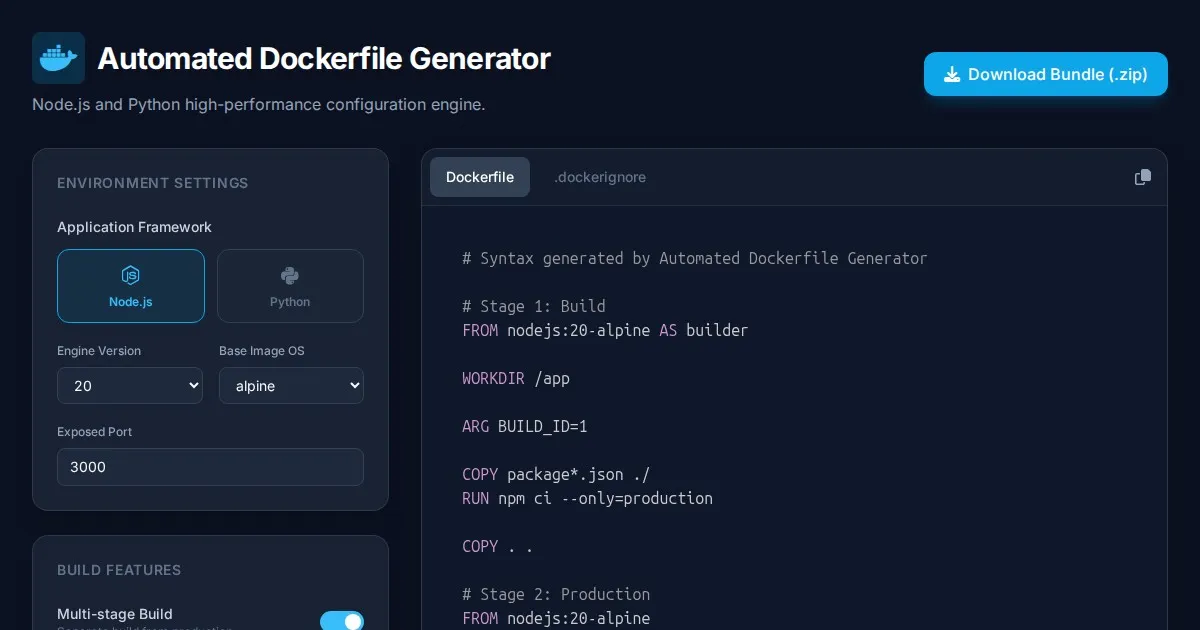
Automated Dockerfile Generator for Node.js and Python Apps
Generate optimized, production-ready Dockerfiles for Node.js and Python applications instantly. Customize base images, port configurations, and dependencies.
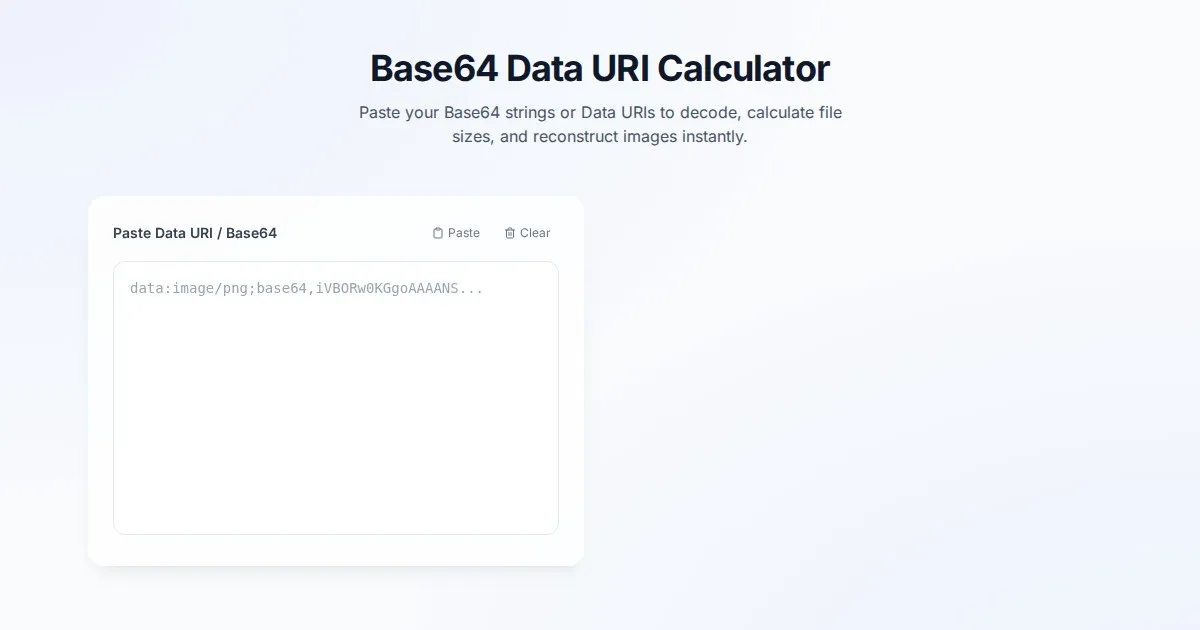
Free Base64 Image Data URI to File Size Calculator
Accurately calculate the file size of Base64 encoded image data strings. This free, web-based tool helps developers estimate binary file sizes for web apps.

Free Online 3D Model Viewer - GLTF & OBJ File Previewer
Instantly preview 3D models online with this free 3D Model Viewer. Support for GLTF, GLB, and OBJ formats. Drag and drop your files for a fast, browser-based render.
Free Online Color Blindness Simulator & Image Filter Tool
Easily simulate color vision deficiencies like protanopia, deuteranopia, and tritanopia. Upload images to test design accessibility for color blindness.
Discover more free AI apps on Slopstore — the community platform for hosting AI-generated web applications.