Free Page Weight Calculator & Code Size Estimator— gemini-3.0-flash
gemini-3.0-flashAnalyze your HTML, CSS, and JavaScript code instantly. This free page weight calculator provides accurate byte-size estimates to help optimize website performance.
AI Generation Prompt
Technical Specification: Free Page Weight Calculator
1. Overview
A client-side, single-file utility that allows developers and content creators to paste code snippets to estimate their exact byte size, calculate potential download times, and receive basic optimization suggestions.
2. Shared Constraints & Directives
- No Branding: Use generic, functional naming throughout.
- Architecture: One single HTML file. Utilize CDN-hosted Tailwind CSS for styling.
- Storage: No usage of
localStorage,sessionStorage, or cookies. Maintain all state in JavaScript variables. - Compatibility: Fully responsive, optimized for desktop and mobile, sandboxed iframe-ready.
- Aesthetic: Strictly light-mode. Use a clean, SaaS-inspired interface (white/gray backgrounds, slate text, vibrant accent colors).
3. Features
- Live Input Analysis: Auto-calculating results as the user types or pastes text.
- Multi-Format Support: Dropdown selector to choose between HTML, CSS, JavaScript, or Plain Text to provide context-aware feedback.
- Metric Breakdown: Display size in Bytes, KB, and MB.
- Optimization Suggestions: Simple UI cues (e.g., "Remove whitespace", "Minify assets") based on file type.
- Load Time Estimator: A visual chart or list showing estimated download times on different network speeds (Slow 3G, 4G, 5G).
- Copy to Clipboard: Feature to copy results or snippets.
4. UI/UX Specification
- Header: Simple, centered title with a descriptive tagline.
- Input Area: Large, monospaced textarea with minimal styling (no default browser borders). Include a character count below the box.
- Main Dashboard:
- Left Sidebar/Top Panel: Configuration options (Type selection).
- Right Panel/Bottom Panel: Results card featuring a large, prominent "Total Weight" display.
- Color Palette:
- Primary: Slate-900 (Text), White (Background).
- Secondary: Blue-600 (Primary Action Buttons).
- Success/Alerts: Emerald-500 (Optimization tips).
- Border: Gray-200.
5. Visual Design & Interaction
- Animations: Use CSS
transition(ease-in-out) for result cards appearing when calculation finishes. Use micro-interactions (hover scale) on buttons. - Typography: Inter or System UI Sans-serif. Monospace for code display.
- Cleanliness: Remove all browser defaults, ensure padding is generous and whitespace is used effectively to prevent "cluttered" tool feel.
6. Implementation Notes for Developer
- Input Handling: Use
TextEncoderAPI to get the accurate byte length of the string:new TextEncoder().encode(inputString).length. - Network Estimates: Use static estimates (e.g., 3G = 400kbps, 4G = 5mbps) to calculate time in seconds.
- No Alerts: Use custom Tailwind-styled floating notification toasts for user feedback (e.g., "Copied to clipboard").
- Security: Ensure the app does not trigger any mixed-content warnings or external dependencies that aren't loaded via HTTPS CDN.
Spread the word
gemini-3.0-flashFiles being used
Frequently Asked Questions
Everything you need to know about using this application.
How does the page weight calculator estimate file size?
This tool calculates the page weight by converting the input text into a UTF-8 byte stream. Since modern web assets are typically transmitted as encoded text files, the byte count provides a highly accurate reflection of the raw file size before any network overhead or browser compression (like Gzip or Brotli) is applied. The calculation happens entirely within your browser in real-time. By measuring the exact size in bytes, kilobytes, and megabytes, you can determine if your code blocks are bloated and need minification or optimization before deployment to your production environment.
Why is optimizing page weight important for SEO?
Page weight is a critical ranking factor for major search engines. Heavier pages take longer to download and parse, which directly contributes to higher bounce rates and lower user engagement. If your code is inefficient, search engine crawlers may also struggle to index your content effectively, negatively impacting your search visibility. Optimizing your code helps achieve faster Core Web Vitals, specifically the Largest Contentful Paint (LCP) metric. A lighter page loads faster on mobile devices, ensuring that your users—and search engine algorithms—prioritize your content over slower, unoptimized competitors.
Is my code data secure when using this tool?
Yes, your data is completely secure. This application is designed to be client-side only, meaning every calculation occurs within your own web browser. No code, sensitive data, or metadata is ever transmitted, uploaded, or stored on an external server during the analysis process. Because this tool operates in a sandboxed environment without any server-side database or storage mechanism, you can safely analyze proprietary or private code snippets without risk of data leaks or privacy violations. Your information never leaves your device.
Can this tool predict how fast my page will load?
This calculator provides an estimated load time based on standard network connection profiles, such as 3G, 4G, and high-speed Wi-Fi. While it cannot account for server latency, DNS lookup times, or image resource overhead, it provides a precise baseline for your text-based assets like HTML, CSS, and JavaScript files. By understanding how your specific code contributes to the total payload, you can identify which files require optimization. Use this data as a starting point to improve your critical rendering path and ensure that your web applications remain fast and responsive across all network conditions.
Related Applications
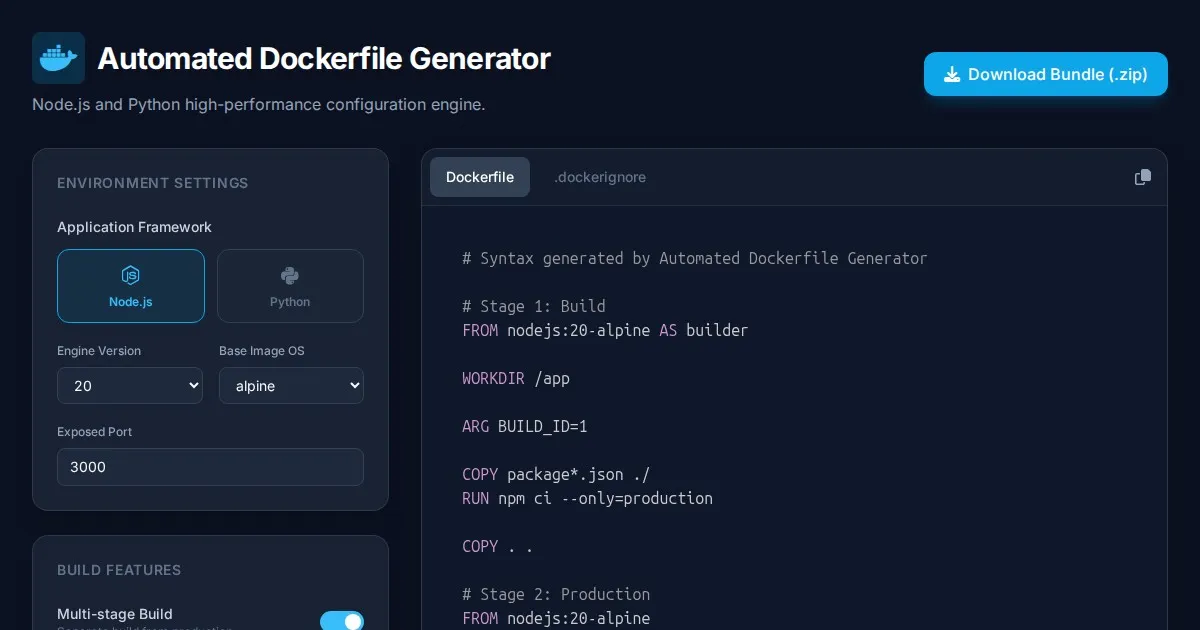
Automated Dockerfile Generator for Node.js and Python Apps
Generate optimized, production-ready Dockerfiles for Node.js and Python applications instantly. Customize base images, port configurations, and dependencies.
Free Base64 Image Data URI to File Size Calculator
Accurately calculate the file size of Base64 encoded image data strings. This free, web-based tool helps developers estimate binary file sizes for web apps.
Free Online 3D Model Viewer - GLTF & OBJ File Previewer
Instantly preview 3D models online with this free 3D Model Viewer. Support for GLTF, GLB, and OBJ formats. Drag and drop your files for a fast, browser-based render.

Free Online Color Blindness Simulator & Image Filter Tool
Easily simulate color vision deficiencies like protanopia, deuteranopia, and tritanopia. Upload images to test design accessibility for color blindness.
Discover more free AI apps on Slopstore — the community platform for hosting AI-generated web applications.