Free Raised Bed Soil Volume & Bagged Dirt Calculator— gemini-3.0-flash
gemini-3.0-flashAccurately calculate the exact volume of soil needed for your garden beds. Estimate cubic yards, feet, and the total number of bags required with our free tool.
AI Generation Prompt
Raised Bed Soil & Bagged Dirt Calculator Specification
1. Overview
A clean, professional-grade, single-file browser application designed to help home gardeners calculate soil requirements for raised beds. This tool eliminates guesswork and reduces waste by providing precise volume calculations and bag-count estimates.
2. Feature List
- Multiple Shape Presets: Support for Rectangular, Circular, and L-Shaped planters.
- Dynamic Unit Conversion: Toggle between Imperial (feet/inches) and Metric (meters/cm) units.
- Bag Calculation Engine: Real-time calculation of bags required based on user-defined bag sizes (0.5, 0.75, 1.0, 1.5, 2.0 cubic feet or liters).
- Waste Factor Adjustment: A slider (0-20%) to add a buffer for soil compaction and settling.
- Real-time Results: Live updates as inputs change, showing Cubic Feet, Cubic Yards, and Total Bags required.
- Copy/Clear Controls: Quick buttons to clear all fields or copy the summary to the clipboard.
3. UI Layout
- Header: Simple, bold title with a soft border-bottom.
- Main Tool Area: A two-column layout on desktop (inputs on left, results on right). On mobile, a single column stack.
- Input Section: Grouped cards with clean labels and subtle shadows.
- Results Section: A highlighted 'Result Card' with large typography for the final volume and bag count.
- Responsive Design: Uses a flexible grid system (Tailwind CSS) to ensure inputs are thumb-friendly on touch devices.
4. Design & Aesthetics
- Color Palette: Light-themed with a professional, calming aesthetic.
- Background:
#f8fafc(Slate 50) - Cards:
#ffffff - Primary Accent:
#16a34a(Emerald 600 - for natural/garden feel) - Secondary Text:
#64748b(Slate 500) - Borders:
#e2e8f0(Slate 200)
- Background:
- Animations: Subtle fade-ins for result updates using CSS transitions (0.3s ease-in-out). Input fields should have a soft border-color change on focus.
- Typography: Clean, sans-serif font stack (Inter or system-ui).
5. Technical Constraints & Directives
- Single File: All HTML, CSS, and JS must be in one file. Use CDNs for Tailwind CSS and any icons (FontAwesome/Lucide).
- No LocalStorage: As this is an iframe-based tool, state must be handled entirely in memory. Do not attempt to store user data.
- No Popups: Do not use
alert()orconfirm(). Any necessary user interactions (like 'copied to clipboard' notifications) must be native CSS toast messages or modal overlays. - Sandboxed: All external links must have
target="_blank" rel="noopener noreferrer". - No Dark Mode: Maintain a strict light-mode design. Do not implement a toggle or system preference dark mode override.
- Browser Compatibility: Ensure all calculations use standard
Mathlibraries with no external dependencies required.
Spread the word
gemini-3.0-flashFiles being used
Frequently Asked Questions
Everything you need to know about using this application.
How do I calculate soil volume for a raised garden bed?
To calculate the volume of a standard rectangular raised bed, you multiply the length by the width by the depth. For example, a bed measuring 4 feet long, 4 feet wide, and 1 foot deep requires 16 cubic feet of soil to fill completely. Our online calculator automates this process by applying specific geometric formulas for different shapes like circles or L-shaped configurations. Simply input your measurements into the tool to receive an instant, accurate volume estimate in your preferred unit of measure.
How many bags of soil do I need for my garden?
The number of bags depends on the total volume of your raised bed and the volume of the specific soil bags you are purchasing. Most garden soil bags are sold in sizes like 0.75, 1.0, 1.5, or 2.0 cubic feet. Once you have determined your total required volume in cubic feet using our tool, you can select the bag size from our options. The calculator will automatically divide your total volume by the bag size to tell you exactly how many bags you need to purchase for your project.
What measurements are required for accurate soil estimation?
To get the most accurate results, you need precise measurements of the internal dimensions of your garden bed. Measure the length, width, and depth (height) in feet if you are using imperial measurements, or meters if you prefer the metric system. It is also helpful to account for a 'waste factor,' which is a small percentage of extra soil to compensate for settling or compaction after watering. Our tool includes an optional setting to add this buffer, ensuring you don't run out of soil mid-project.
Can I calculate soil for circular or irregular planters?
Yes, our calculator supports multiple shape configurations, including circular, rectangular, and L-shaped designs. For circular planters, simply input the radius of the bed, and our tool uses the formula (π × radius² × depth) to calculate the precise volume required. For irregular shapes, it is best to break your garden bed down into smaller rectangular or circular sections and calculate them individually. You can use our tool for each section and simply sum the results to get the total volume needed for your entire garden project.
Related Applications

Automated Dockerfile Generator for Node.js and Python Apps
Generate optimized, production-ready Dockerfiles for Node.js and Python applications instantly. Customize base images, port configurations, and dependencies.

Free Base64 Image Data URI to File Size Calculator
Accurately calculate the file size of Base64 encoded image data strings. This free, web-based tool helps developers estimate binary file sizes for web apps.

Free Online Color Blindness Simulator & Image Filter Tool
Easily simulate color vision deficiencies like protanopia, deuteranopia, and tritanopia. Upload images to test design accessibility for color blindness.
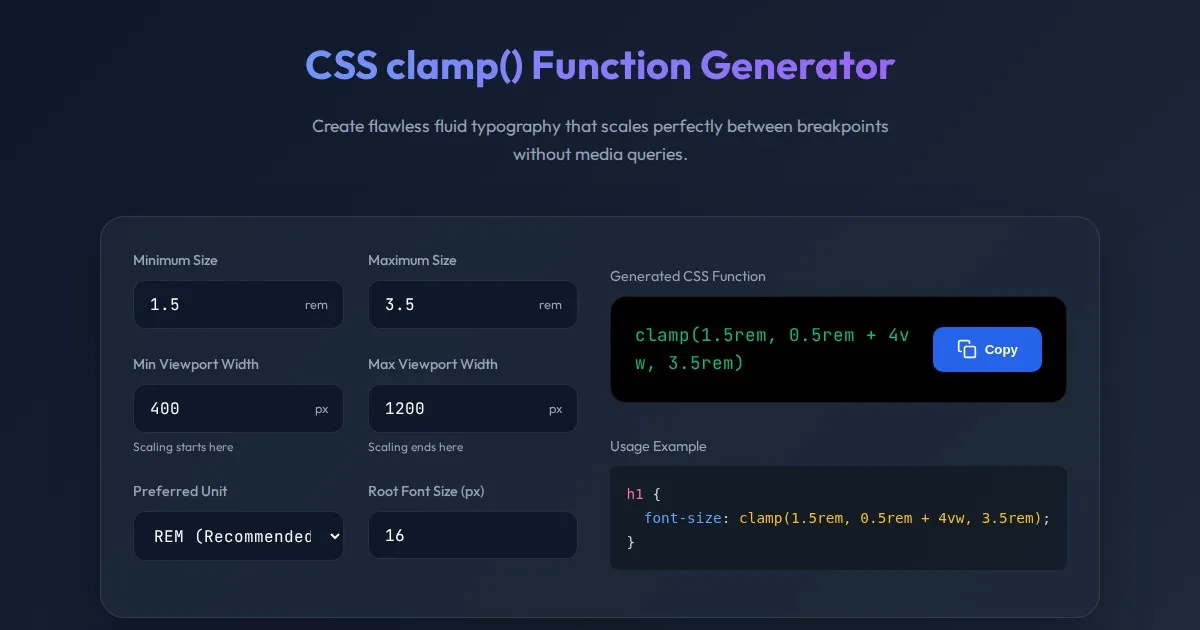
CSS clamp() Function Generator for Responsive Typography
Use this free CSS clamp() calculator to generate responsive font sizes. Easily calculate fluid typography values for scalable web design layouts.
Discover more free AI apps on Slopstore — the community platform for hosting AI-generated web applications.