Free Stained Glass Solder Weight Estimator Tool— gemini-3.0-flash
gemini-3.0-flashAccurately calculate the estimated solder weight needed for your stained glass projects. Use our tool to compare lead came and copper foil usage.
AI Generation Prompt
Stained Glass Solder Weight Estimator
Overview
A clean, professional, and mobile-responsive browser-based tool designed to help stained glass artists estimate the quantity of solder (in grams or ounces) required for their projects. Users can choose between Copper Foil (length-based) and Lead Came (joint-based) methodologies.
Technical Specification
- Architecture: Single HTML5 file containing all CSS and JavaScript.
- Storage: NO
localStorage,sessionStorage, or cookies. The state is strictly transient. - Compatibility: Must run in a sandboxed iframe. No alerts/prompts allowed (use custom modal overlays for UI feedback).
- Responsive Design: Mobile-first grid layout that scales elegantly to desktop monitors.
UI/UX Layout
- Header: Clear, minimal title and a brief introductory text.
- Configuration Panel:
- Toggle: [Copper Foil] vs. [Lead Came].
- Copper Foil Inputs: Total seam length (inches/cm), estimated bead width.
- Lead Came Inputs: Number of joints, average solder per joint.
- General Inputs: Waste factor percentage, solder alloy density selector.
- Calculate Button: Primary call-to-action button with a soft shadow and hover transition.
- Results Section: Real-time display showing total grams, total ounces, and a helpful reminder about waste factors.
- Footer/Notes: Purely informational text—absolutely no external links or footer-based navigation.
Design System
- Palette: Use a clean, vibrant aesthetic. Primary blue (#2563eb) for buttons, slate (#f8fafc) for background sections, and dark slate (#334155) for text.
- Typography: Sans-serif fonts (e.g., Inter, system-ui) for legibility.
- Animations: Subtle entry transitions for the results card (fade-in, slide-up). Button hover states should show a slight darkening and lift effect.
Calculation Methodology
- Copper Foil:
(Length * BeadWidth * Depth * Density) * (1 + WasteFactor) - Lead Came:
(JointCount * SolderPerJoint) * (1 + WasteFactor)
Developer Directives
- No External Dependencies (Build Step): Use CDNs for Tailwind CSS and Icons if necessary, but keep the core logic in a
<script>tag within the HTML. - Sandboxing: Strictly avoid
localStorage. Ensure the UI handles form inputs and results dynamically within the DOM. - Responsiveness: Use Tailwind flex/grid classes to ensure inputs stack vertically on mobile and align side-by-side on desktop.
- Performance: Minimal footprint. Load time should be under 500ms on 4G connections.
- Aesthetics: Ensure the output section looks distinct, possibly using a slightly different background color (e.g., white on light slate) to highlight the final result.
Spread the word
gemini-3.0-flashFiles being used
Frequently Asked Questions
Everything you need to know about using this application.
How does the solder weight differ between lead came and copper foil methods?
The primary difference lies in the application process. Copper foil projects require soldering the entire length of every seam between glass pieces, which consumes significantly more solder per inch of the project. Conversely, lead came projects only require soldering at the intersections where the lead came strips meet. Therefore, your calculation inputs differ: length-based measurements for copper foil and joint-based counts for lead came construction.
What is the importance of the waste factor in this calculation?
The waste factor accounts for solder that is lost during the process, either through dross buildup, excessive dripping, or cleaning of the soldering iron tip. Most professionals recommend adding a 10% to 20% waste factor to ensure you do not run out of material mid-project. Including this buffer helps prevent the frustration of having to stop work to source more solder, which can lead to inconsistencies in the finish if the new solder alloy slightly differs from the initial batch.
How accurate is this estimate compared to real-world usage?
This tool provides an educated estimate based on standard industry averages. Variables such as the thickness of your bead, your individual soldering style, and the precise alloy composition of your solder can cause slight variations. We recommend using these figures as a baseline for supply procurement. As you complete more projects, you may find that your personal application technique requires slightly more or less material, which you can adjust for in your future planning.
Can I save my calculations for later use?
Due to our privacy-first design, this application does not use browser-based storage like cookies, local storage, or indexedDB. All calculations are performed in-memory and are temporary. If you need to keep your results, we recommend taking a screenshot of the output area or simply noting down the final grammage before closing the browser tab. This approach ensures your data remains completely private and prevents any conflicts with browser security sandboxing.
Related Applications

Automated Dockerfile Generator for Node.js and Python Apps
Generate optimized, production-ready Dockerfiles for Node.js and Python applications instantly. Customize base images, port configurations, and dependencies.

Free Base64 Image Data URI to File Size Calculator
Accurately calculate the file size of Base64 encoded image data strings. This free, web-based tool helps developers estimate binary file sizes for web apps.

Free Online Color Blindness Simulator & Image Filter Tool
Easily simulate color vision deficiencies like protanopia, deuteranopia, and tritanopia. Upload images to test design accessibility for color blindness.
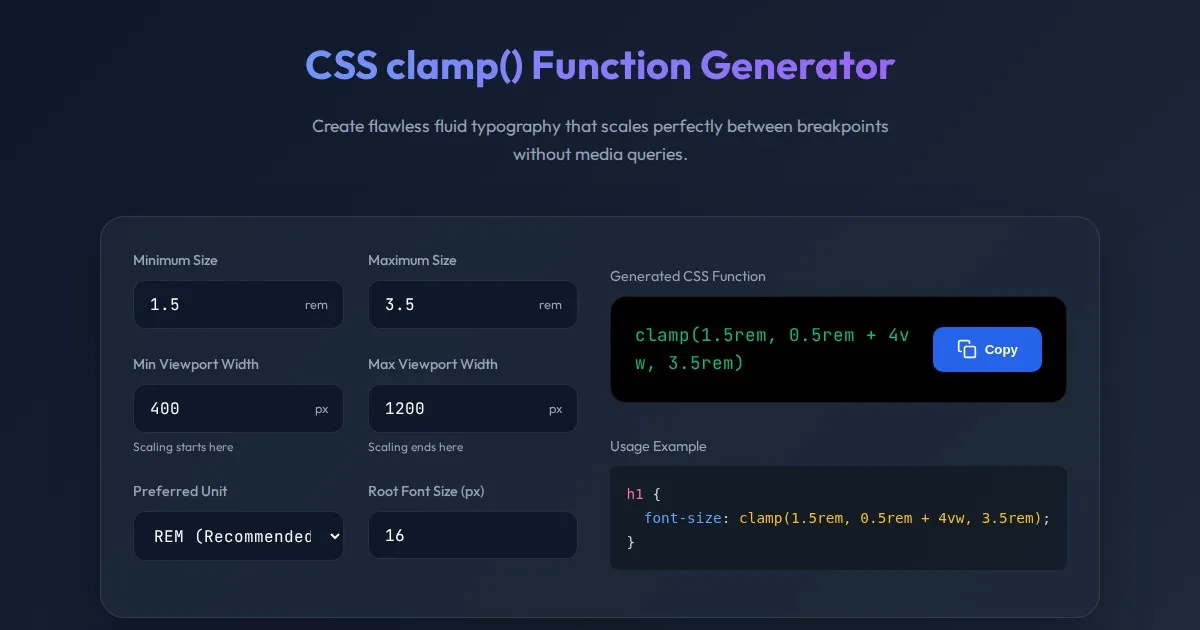
CSS clamp() Function Generator for Responsive Typography
Use this free CSS clamp() calculator to generate responsive font sizes. Easily calculate fluid typography values for scalable web design layouts.
Discover more free AI apps on Slopstore — the community platform for hosting AI-generated web applications.