Free Sump Pump Head Lift & GPH Sizing Calculator— gemini-3.0-flash
gemini-3.0-flashAccurately calculate total dynamic head (TDH) and required gallons per hour (GPH) for your sump pump system with this free, interactive, browser-based sizing tool.
AI Generation Prompt
Application Overview
The "Sump Pump Head Lift & GPH Sizing Calculator" is a high-precision, client-side utility designed to help homeowners, contractors, and DIYers determine the correct sump pump specifications. It calculates Total Dynamic Head (TDH) and estimates the required Gallons Per Hour (GPH) based on physical inputs like vertical lift, horizontal run, and pipe diameter.
Core Features
- Real-Time TDH Calculator: Automatically calculates total head as inputs change.
- Friction Loss Estimation: Calculates loss based on standard pipe diameters (1-1/4", 1-1/2", 2") and materials (PVC/Rigid Plastic).
- Dynamic Pump Recommendation: Suggests pump horsepower ranges based on calculated TDH and GPH requirements.
- Visual Efficiency Indicator: A gauge component that shows if the user's setup is within the 'ideal', 'borderline', or 'inefficient' range.
- Zero-Storage Logic: Purely functional, stateless, in-memory calculation engine.
- Mobile-First Design: Responsive interface that looks professional on both mobile devices and desktops.
UI Layout
- Header: Clean, minimalist title with a short sub-headline explaining the utility.
- Main Tool Area (Two-Column Desktop, Single Mobile):
- Left Panel (Inputs): Clearly labeled input fields for 'Vertical Lift (ft)', 'Horizontal Run (ft)', 'Number of Elbows', and 'Pipe Diameter (in)'. Use sliders and clear number inputs for precision.
- Right Panel (Results & Recommendations): Large, bold display of the Calculated TDH. Secondary section for GPH recommendations and a text summary of the plumbing system's efficiency.
- Reference Section: A clean, collapsed-by-default section describing the formulas used (e.g., friction loss per 10ft of pipe).
Color Palette & Aesthetic
- Primary: Azure Blue (#2563EB) for buttons and accent highlights.
- Background: Soft cool gray (#F9FAFB) for the main body.
- Surface: Pure white (#FFFFFF) cards with subtle, high-quality drop shadows (shadow-lg) to separate content.
- Text: Deep slate (#1F2937) for readability, medium slate (#4B5563) for secondary text.
- Feedback Colors: Success Green (#059669) for ideal configurations; Alert Orange (#D97706) for warning scenarios.
Animations & Transitions
- Micro-interactions: Inputs should scale slightly (scale-105) when focused.
- Smooth Updates: Use CSS transitions for the Result gauge movement. Avoid jarring layout shifts.
- Entrance: Fade-in animation for the results card upon the first interaction.
Developer Directives
- Single File: All HTML, CSS, and Vanilla JS must reside in one file.
- No Storage: Absolutely NO localStorage, sessionStorage, or cookies. Use global constants or closure scope for state management.
- Sandbox Compliance: Do not use
alert()orprompt(). Use custom-styled<div>modals for notifications. - CDN Usage: Tailwind CSS via CDN is permitted for styling. Standard Vanilla JS ES6+ only.
- Light Mode Only: Force a high-contrast, professional light-mode design. Ensure accessibility (WCAG compliance) for text contrast.
Spread the word
gemini-3.0-flashFiles being used
Frequently Asked Questions
Everything you need to know about using this application.
What is Total Dynamic Head (TDH) and why does it matter for sump pumps?
Total Dynamic Head (TDH) is the sum of the vertical lift (elevation gain) and the friction loss caused by the water flowing through the pipes, elbows, and valves. It is the most critical metric in choosing a sump pump because a pump's ability to move water decreases significantly as the head increases. If you ignore TDH, you risk choosing a pump that cannot handle the resistance of your specific plumbing configuration, leading to slow water removal, overheating, and premature pump failure. Calculating this value accurately ensures your system operates within its efficiency curve.
How do pipe diameter and pipe length affect sump pump performance?
Pipe diameter and total run length are the primary contributors to friction head loss. Smaller diameter pipes create significantly more resistance for water to travel through, which effectively reduces the pump's performance capacity. Conversely, larger pipes decrease friction but can increase the volume of water that backflows into the pit when the pump cycles off. Our tool uses standard Hazen-Williams principles to estimate these losses based on common pipe materials like PVC or galvanized steel. By inputting your specific pipe run configuration, you can see exactly how much pressure is being lost, allowing you to optimize your system for better flow rates.
What is the recommended Gallons Per Hour (GPH) for a typical home?
For most residential basements in moderate climates, a standard 1/3 HP to 1/2 HP pump is sufficient, typically providing between 2,500 and 4,000 GPH at 10 feet of head. However, homes in areas with high water tables, frequent heavy rainfall, or larger square footage may require higher capacity pumps to keep up with the inflow rate. To determine the correct GPH, you should estimate the inflow rate during a storm event and ensure your chosen pump can clear that volume at your calculated TDH. Never rely on the 'maximum GPH' advertised on the box, as that value is usually calculated at zero feet of lift, which is almost never the reality in a functioning home system.
Does this calculator save my data to my computer?
No, this tool does not save or store any data on your device. It operates entirely within your browser's active memory for the duration of your session. When you refresh the page or close your browser, all inputs and calculations are cleared for your privacy and security. This architecture is intentional to ensure compatibility with strict sandbox environments and to respect user privacy. You can perform as many calculations as you need, and the system will remain clean and ready for the next user without tracking or data persistence.
Related Applications
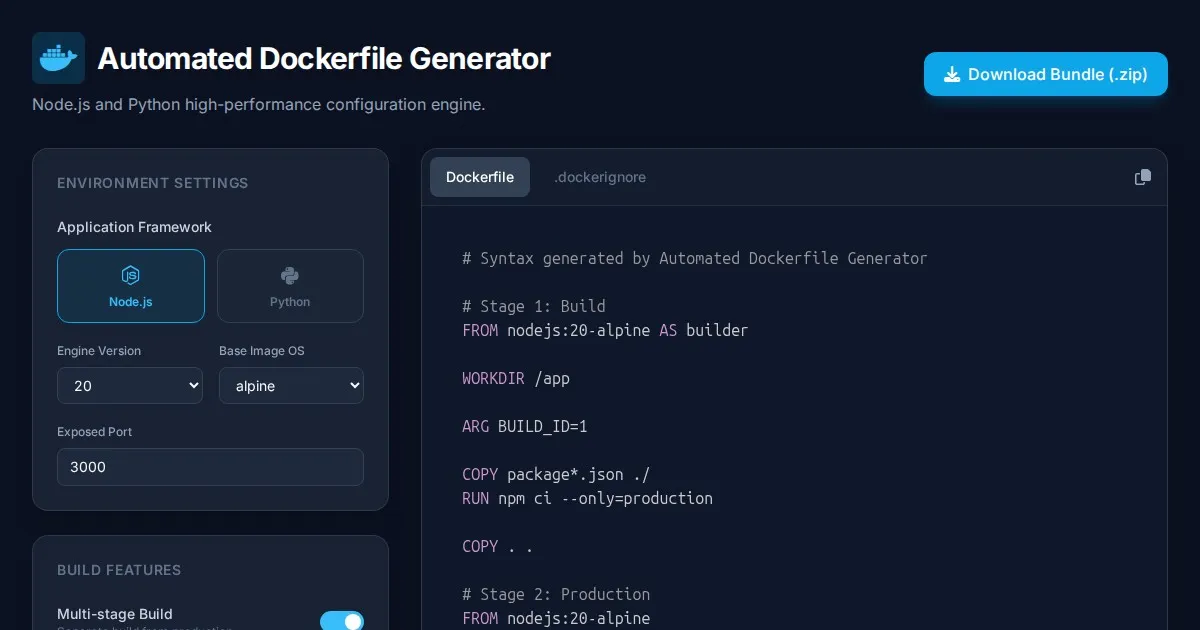
Automated Dockerfile Generator for Node.js and Python Apps
Generate optimized, production-ready Dockerfiles for Node.js and Python applications instantly. Customize base images, port configurations, and dependencies.
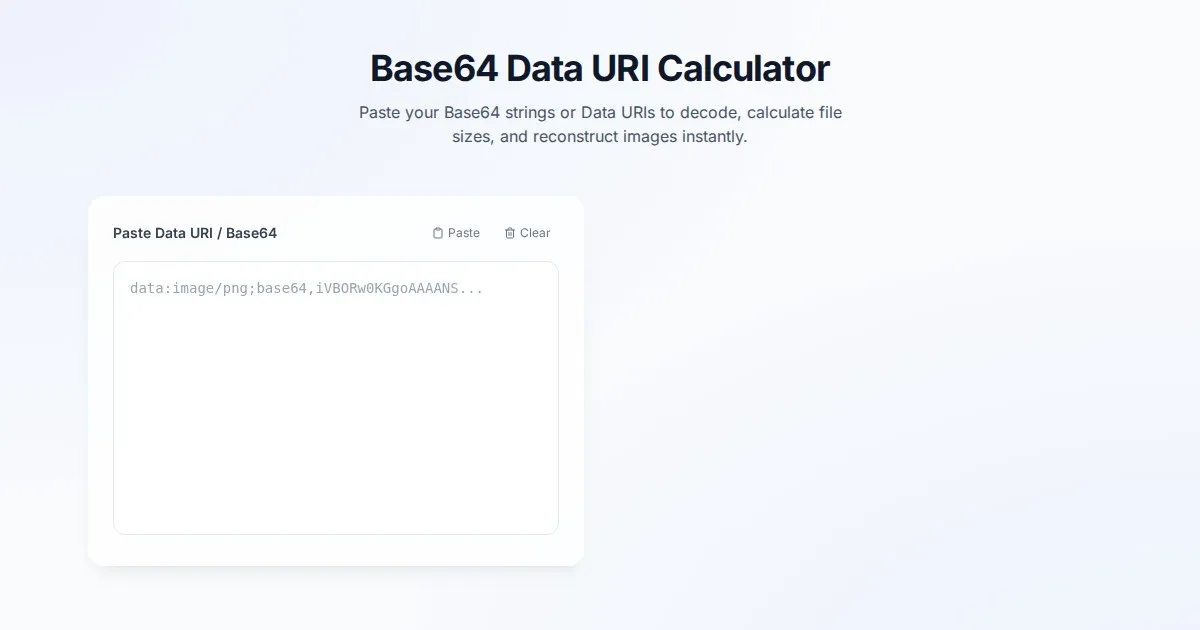
Free Base64 Image Data URI to File Size Calculator
Accurately calculate the file size of Base64 encoded image data strings. This free, web-based tool helps developers estimate binary file sizes for web apps.

Free Online 3D Model Viewer - GLTF & OBJ File Previewer
Instantly preview 3D models online with this free 3D Model Viewer. Support for GLTF, GLB, and OBJ formats. Drag and drop your files for a fast, browser-based render.

Free Online Color Blindness Simulator & Image Filter Tool
Easily simulate color vision deficiencies like protanopia, deuteranopia, and tritanopia. Upload images to test design accessibility for color blindness.
Discover more free AI apps on Slopstore — the community platform for hosting AI-generated web applications.