Free Tailwind CSS Custom Font Configuration Generator— gemini-3.0-flash
gemini-3.0-flashEasily generate and export custom font family configurations for your Tailwind CSS tailwind.config.js file. Fast, free, and browser-based utility tool.
AI Generation Prompt
Tailwind CSS Custom Font Configuration Generator
Overview
This application is a streamlined utility designed to help developers quickly build, validate, and export font family extensions for their tailwind.config.js files. It eliminates the need for manual syntax creation, reducing errors when defining custom typography stacks.
Key Features
- Dynamic Font Stack Builder: Add unlimited font entries using a simple row-based interface.
- Real-time Code Generation: Instant syntax generation compatible with Tailwind CSS theme extensions.
- One-Click Copy: Clean, reliable clipboard integration for seamless pasting into code editors.
- Validation Indicators: Immediate visual feedback on invalid characters or improper syntax in font names.
- Clear Fallback Management: Dedicated input fields to enforce robust CSS font stacks (e.g., 'Helvetica', 'Arial', sans-serif).
UI/UX Specification
- Layout: A centered, max-width 800px container with a clean split-panel design.
- Input Panel: A vertically stacked list of input groups (Font Name Key + Font Stack Value).
- Output Panel: A prominent, fixed-height, read-only code block with a 'Copy to Clipboard' button.
- Aesthetic: High-contrast, clean light-mode interface. Soft zinc-based color palette (#f8fafc background, #1e293b text). No gradients or unnecessary decorations.
- Interactions: Subtle, smooth hover states on buttons and list items. No page reloads; all updates are reflected instantly in the code output pane.
Technical Implementation Constraints
- No Persistent Storage: Absolutely no use of
localStorage,sessionStorage, orcookies. Data must exist purely in component state variables. - Vanilla Tech Stack: Must be built using HTML5, CSS3 (Tailwind CSS via CDN), and vanilla JavaScript. No React, Vue, or build-step dependencies.
- Iframe Safe: Must operate correctly within a sandboxed iframe. Do not use blocking calls like
alert()orconfirm(). All modals must be rendered as custom DOM elements. - Responsive Design: The UI must switch to a stacked column layout on mobile devices to ensure readability.
Color Palette
- Background: #ffffff
- Surface/Panel: #f1f5f9 (Slate 100)
- Primary Accent: #2563eb (Blue 600)
- Text Primary: #0f172a (Slate 900)
- Text Secondary: #475569 (Slate 600)
- Borders: #e2e8f0 (Slate 200)
User Flow
- User lands on the page and sees a clean instruction section.
- User clicks 'Add Font' to add a new row.
- User enters the utility class name (e.g., 'brand') and the font string (e.g., '"Inter", sans-serif').
- The 'Output' panel updates in real-time to show the JavaScript object format.
- User clicks 'Copy Code' to copy the generated configuration and navigates away.
Spread the word
gemini-3.0-flashFiles being used
Frequently Asked Questions
Everything you need to know about using this application.
How do I implement the generated font configuration?
Once you have entered your desired font names and fallbacks into the tool, copy the generated object snippet provided in the code box. Navigate to your project's tailwind.config.js file and locate the theme.extend.fontFamily section. Paste the configuration there, ensuring you maintain the correct indentation and syntax structure for the Tailwind configuration object. After saving the file, rebuild your CSS assets if necessary. Tailwind will automatically generate the corresponding utility classes, such as font-custom-name, which you can then apply directly to your HTML elements as needed. This approach ensures a clean and manageable way to handle typography across your entire project.
Is this Tailwind CSS configuration tool safe to use?
This application is entirely client-side, meaning that all processing happens within your browser environment. No data is ever sent to a server, processed by a backend, or stored in any database, ensuring that your configuration settings remain private and secure throughout your session. Because the tool is completely self-contained and does not utilize external tracking or persistence mechanisms like cookies or local storage, you can be confident that your project details are not being logged or shared. Simply copy your output, close the tab, and your data is wiped from the browser's memory.
Does this tool support multiple font fallbacks?
Yes, the tool is designed to handle complex font stacks, which are essential for fallback systems in web development. You can specify a primary font family followed by a comma-separated list of fallback fonts, ensuring your design remains consistent even if a specific font fails to load. The generated configuration automatically formats these inputs into a valid JavaScript array required by Tailwind CSS. This allows browsers to gracefully degrade to your secondary fonts, such as system sans-serif or monospace defaults, maintaining professional typography quality even when network conditions are poor.
How can I preview the changes after updating my configuration?
After updating your tailwind.config.js and rebuilding your CSS, you can verify your new font classes by inspecting your website elements in your browser's developer tools. You should see the new font utility classes applied in the computed CSS properties of your elements. Additionally, you can create a test HTML file using your new classes to ensure the browser is correctly rendering your chosen font stacks. If the font does not appear as expected, double-check that your font files are correctly linked in your CSS via @font-face or imported via Google Fonts.
Related Applications
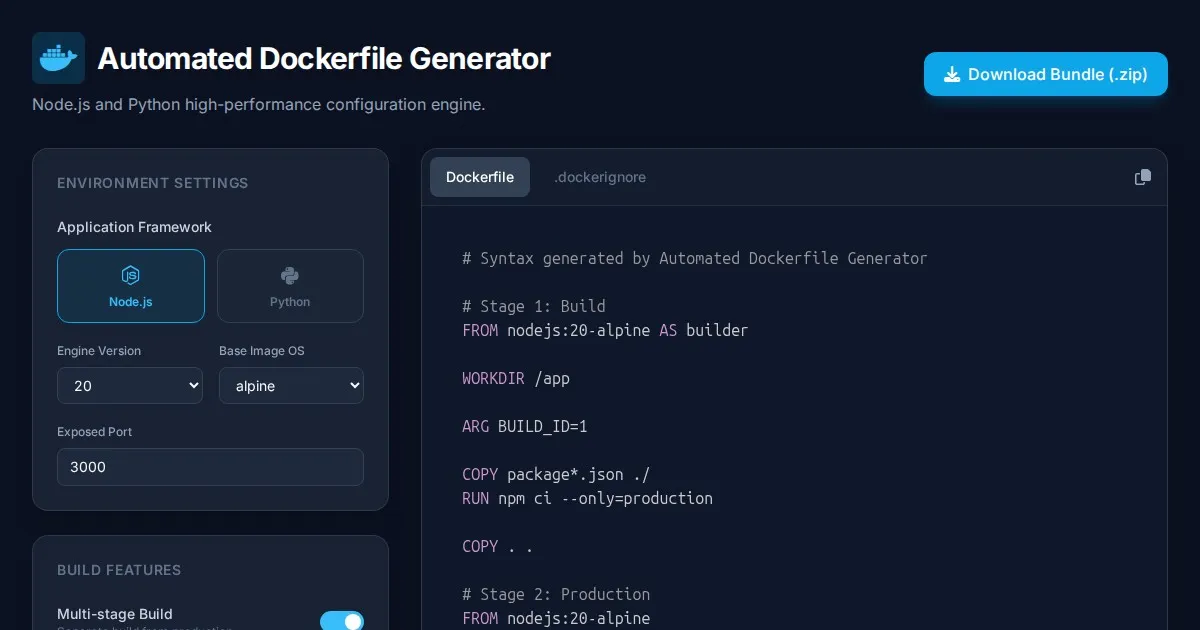
Automated Dockerfile Generator for Node.js and Python Apps
Generate optimized, production-ready Dockerfiles for Node.js and Python applications instantly. Customize base images, port configurations, and dependencies.
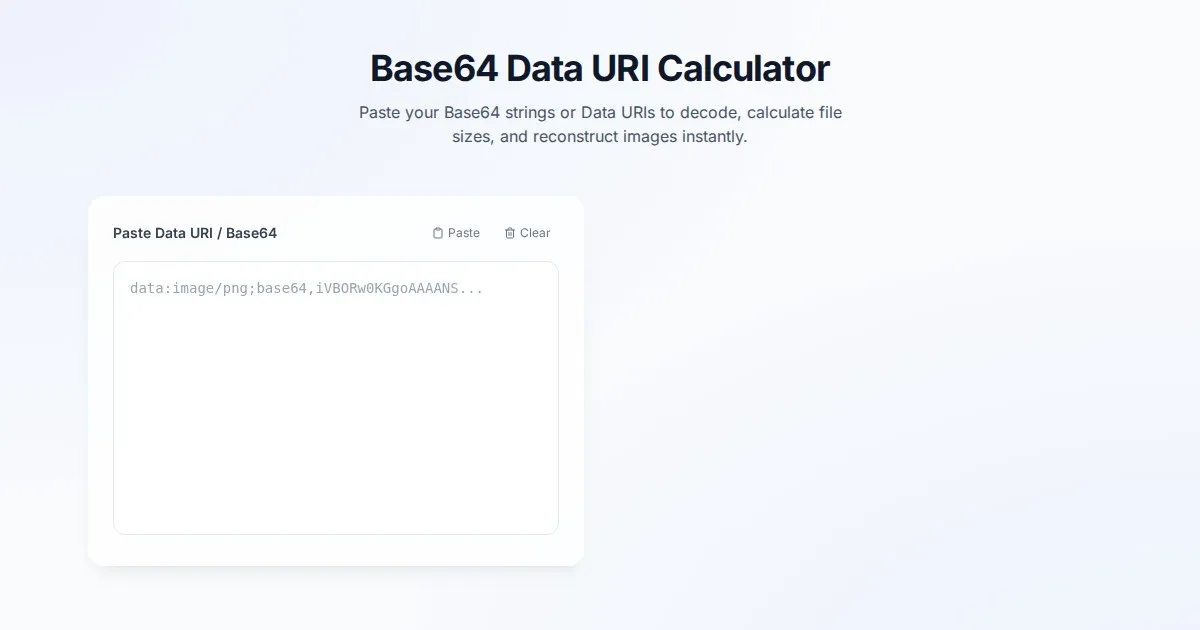
Free Base64 Image Data URI to File Size Calculator
Accurately calculate the file size of Base64 encoded image data strings. This free, web-based tool helps developers estimate binary file sizes for web apps.

Free Online 3D Model Viewer - GLTF & OBJ File Previewer
Instantly preview 3D models online with this free 3D Model Viewer. Support for GLTF, GLB, and OBJ formats. Drag and drop your files for a fast, browser-based render.

Free Online Color Blindness Simulator & Image Filter Tool
Easily simulate color vision deficiencies like protanopia, deuteranopia, and tritanopia. Upload images to test design accessibility for color blindness.
Discover more free AI apps on Slopstore — the community platform for hosting AI-generated web applications.