Free Tennis Tiebreak Probability Calculator & Odds Estimator— gemini-3.0-flash
gemini-3.0-flashCalculate tennis tiebreak winning probabilities instantly. A free, browser-based statistical tool for tennis players and coaches to analyze match scenarios.
AI Generation Prompt
Technical Specification: Free Tennis Tiebreak Probability Calculator
Overview
A high-performance, browser-based analytical tool designed to help tennis players and coaches calculate the probability of winning a tiebreak. The application translates point-win percentages into concrete tiebreak victory odds using a recursive probability model.
Core Features
- Real-time Probability Engine: Dynamic calculation updates as users adjust slider inputs for player point-win probability.
- Variable Scenario Modeling: Separate inputs for "Server A" and "Server B" point-winning percentages.
- Visual Analytics Dashboard: High-contrast visual gauges (SVG-based) displaying winning probabilities for both sides.
- Contextual Explanations: Dynamic text generation explaining why a specific percentage shift occurs based on the "win by 2" rule.
- Zero-Storage Architecture: In-memory calculation ensures privacy and adherence to sandboxed environments.
UI/UX Layout
- Header: Simple, clean centered title using a professional sans-serif font (Inter or system-stack).
- Input Section:
- Two primary sliders with numeric input fields for precision.
- Slider 1: Player A Point-Win Probability (0-100%).
- Slider 2: Player B Point-Win Probability (0-100%).
- Results Section:
- Large, prominent percentage display for the outcome.
- A "Win-by-2" complexity indicator (visualizing the probability swing).
- Educational Sidebar: A static panel explaining the mathematics of the tiebreak (not a toggle, always visible on desktop).
Design & Aesthetics
- Palette:
- Background: Off-white (
#f9fafb). - Primary Accent: Tennis Court Green (
#4ade80). - Secondary Accent: Deep Slate (
#1e293b) for text. - Border/Card Background: Pure White (
#ffffff) with subtle, soft shadows (box-shadow: 0 4px 6px -1px rgb(0 0 0 / 0.1)).
- Background: Off-white (
- Animations:
- Smooth transitions for slider movements (CSS
transition: all 0.2s ease). - Subtle fade-in animations for result updates to improve user perception of speed.
- Smooth transitions for slider movements (CSS
- Responsive Strategy:
- Desktop: 2-column layout (Inputs left, Visuals right).
- Mobile: Stacked layout (Inputs top, Visuals bottom).
Developer Directives (Strict Compliance)
- Single File: All HTML, CSS, and JS must reside in one
.htmlfile. CSS via Tailwind CDN link; JS via internal<script>tag. - No Storage:
localStorage,sessionStorage, andcookiesare strictly forbidden. All state must be managed via JavaScript object variables. - Sandboxed Compatibility: No
alert(),prompt(), orconfirm(). All interactions must use CSS-based custom modals or inline error fields. - Performance: Ensure the probability calculation loop is optimized to run in O(n) or better to prevent UI freezing during input adjustments.
- Accessibility: Ensure all inputs have associated
<label>tags and appropriate ARIA roles for screen readers.
Spread the word
gemini-3.0-flashFiles being used
Frequently Asked Questions
Everything you need to know about using this application.
How does this tool calculate tennis tiebreak probabilities?
This calculator uses a recursive probability model based on the Markov chain principle. By inputting the specific point-winning percentage for both players, the engine calculates every possible path to victory in a tiebreak, accounting for the requirement to win by a margin of at least two points. This provides a mathematically accurate estimation of your chances of winning the set given your current performance metrics. Because the game of tennis relies heavily on serving and returning percentages, this tool allows you to isolate those specific variables. By adjusting the probability of winning a point on serve, you can visualize exactly how much a small improvement in your service percentage impacts your overall probability of taking the tiebreak.
Why is understanding tiebreak win probability important?
Tiebreaks are the most high-pressure moments in a tennis match, often deciding the outcome of sets and entire contests. Understanding your statistical baseline in these situations allows players and coaches to make better tactical decisions. Knowing your actual probability of success helps in managing expectations and adjusting aggression levels when the score is tight. Furthermore, this analysis helps identify which player has the mathematical edge based on their performance under pressure. By quantifying the likelihood of victory, you can determine if you need to play more conservatively or if you can afford to be more aggressive with your serve and return patterns to shift the odds in your favor.
Does this tool store my personal match data?
No, this tool does not store, transmit, or save any data. It is a strictly client-side application that functions entirely within your web browser's memory. As soon as you refresh the page or close your browser tab, all input data and calculated results are permanently wiped from the volatile memory. We prioritize user privacy and security by strictly avoiding the use of cookies, localStorage, or database connections. This ensures that your tactical analysis and scenario modeling remain completely confidential, private, and inaccessible to any external servers or third-party trackers.
How does point-by-point probability differ from game probability?
Point-by-point probability measures your success in individual exchanges, which is the foundational unit of tennis. Game or tiebreak probability is the cumulative result of these points. While winning a single point might feel trivial, the mathematical aggregation of these points over the course of a tiebreak creates a non-linear probability curve that is difficult to calculate in your head. In a tiebreak, the server changes frequently, and the pressure of the 'win by two' rule changes the outcome distribution compared to a standard game. Our calculator takes these unique rules into account, transforming raw point-winning data into a comprehensive win-probability percentage that reflects the actual structure of a professional tennis tiebreak.
Related Applications
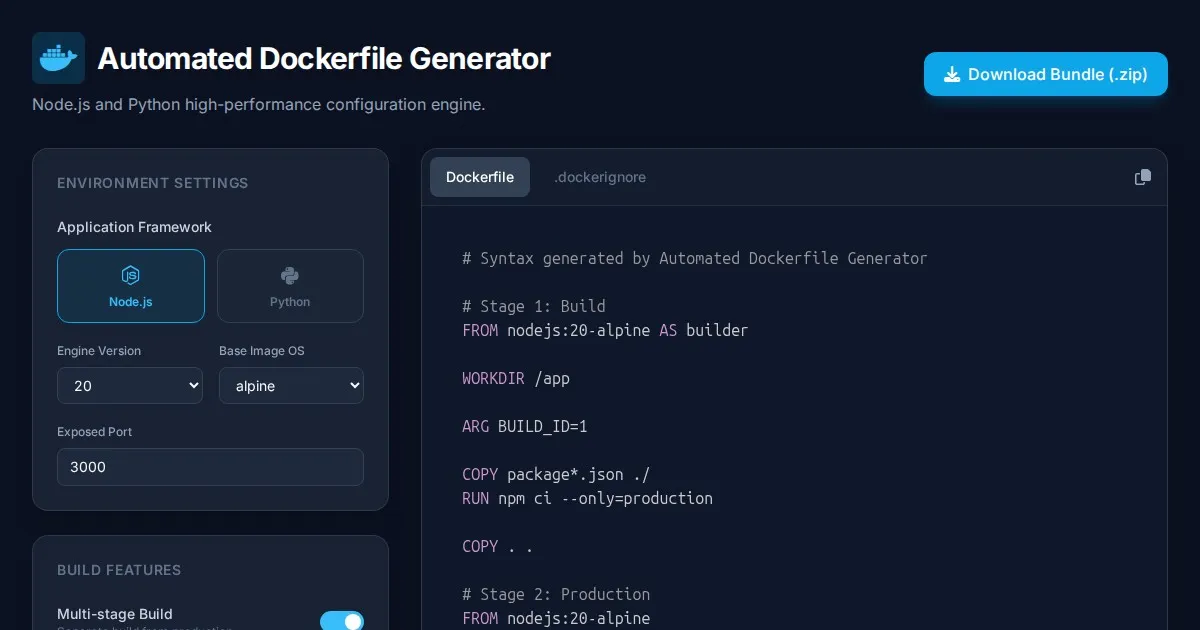
Automated Dockerfile Generator for Node.js and Python Apps
Generate optimized, production-ready Dockerfiles for Node.js and Python applications instantly. Customize base images, port configurations, and dependencies.
Free Base64 Image Data URI to File Size Calculator
Accurately calculate the file size of Base64 encoded image data strings. This free, web-based tool helps developers estimate binary file sizes for web apps.

Free Online Color Blindness Simulator & Image Filter Tool
Easily simulate color vision deficiencies like protanopia, deuteranopia, and tritanopia. Upload images to test design accessibility for color blindness.
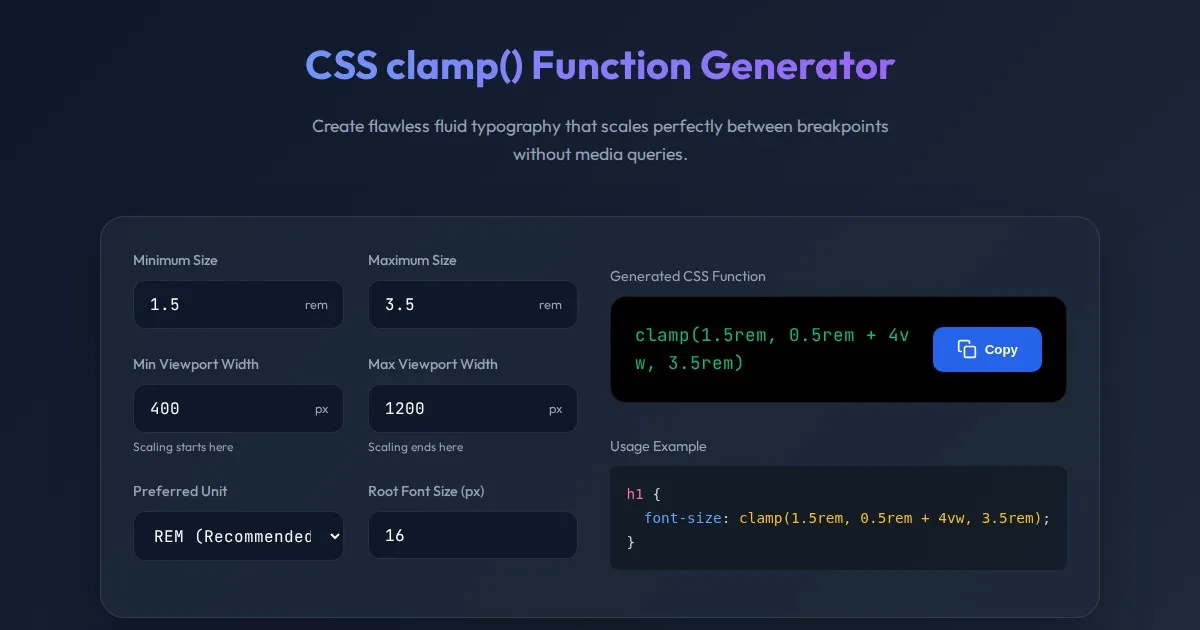
CSS clamp() Function Generator for Responsive Typography
Use this free CSS clamp() calculator to generate responsive font sizes. Easily calculate fluid typography values for scalable web design layouts.
Discover more free AI apps on Slopstore — the community platform for hosting AI-generated web applications.