Free Tire Plus Sizing & Speedometer Error Calculator— gemini-3.0-flash
gemini-3.0-flashCalculate speedometer error and tire dimension changes when upgrading your vehicle's tires. Compare tire diameter, circumference, and speed accuracy for free.
AI Generation Prompt
Technical Specification: Tire Plus Sizing & Speedometer Error Calculator
1. Application Overview
A client-side, single-page utility that calculates the physical and performance differences between two sets of vehicle tires. The user inputs their current tire specs (Width, Aspect Ratio, Rim Diameter) and the target tire specs to receive an immediate analysis of diameter, circumference, and speedometer variance.
2. Functional Requirements
- Input Section:
- Two distinct panels: "Current Tire" and "New Tire".
- Three numeric inputs per panel: Tire Width (mm), Aspect Ratio (%), and Rim Diameter (inches).
- Real-time input validation: Ensure values are within logical ranges for automotive tires.
- Calculations:
- Sidewall Height: (Width * (Ratio / 100))
- Overall Diameter: (Sidewall Height * 2) + (Rim Diameter * 25.4)
- Circumference: (Diameter * PI)
- Revolutions per Mile.
- Speedometer Error: Percent difference calculation based on diameter ratio.
- Output/Results:
- Comparison card displaying raw numbers.
- "Speedometer Difference Table": Shows actual speeds (e.g., 20, 40, 60, 80 mph) based on the new configuration.
- Recommendation badge: "Safe Upgrade" (within +/- 3%) or "Caution" (outside +/- 3%).
3. UI/UX Design
- Aesthetic: Clean, "SaaS" interface. Use a light background (#FFFFFF), subtle shadows, and a blue/gray color scheme.
- Layout:
- Responsive grid: Two-column layout for input panels on desktop, stacking vertically on mobile.
- Sticky Header: Minimalist application title.
- Results Area: Centered, prominent call-out box for the percentage error.
- Animations:
- Smooth transitions for input focus states.
- Fade-in animation for calculation results when the user updates a value.
4. Developer Constraints
- Architecture: Strictly one single HTML file containing CSS and Vanilla JavaScript.
- Persistence: NO
localStorage,sessionStorage, or cookies. The state must be entirely in-memory. - Sandboxing: Do not use
alert(),confirm(), orprompt(). Create custom modal components within the DOM if user interactions are needed. - Compatibility: Use mobile-first responsive design. All external assets (Google Fonts, Tailwind CSS) must be loaded via CDNs.
- Styling: Forced light-mode design. Use high-contrast accessible text colors. Avoid dark mode toggles or dark-themed defaults.
5. Interaction Flow
- User enters data in "Current Tire" fields.
- User enters data in "New Tire" fields.
- As the user types (or on blur), the tool performs the calculation.
- Result updates dynamically without page reload.
- Comparison data is rendered below the inputs in a clear, readable table format.
Spread the word
gemini-3.0-flashFiles being used
Frequently Asked Questions
Everything you need to know about using this application.
Why does changing tire size affect my speedometer accuracy?
Your vehicle's speedometer is calibrated based on the number of revolutions your tires make per mile, which is directly determined by the tire's overall diameter. When you install tires with a different overall diameter than the factory specification, the tire completes a different number of rotations over the same distance, causing the speedometer to report incorrect speeds. If the new tire has a larger diameter, it covers more distance per rotation, causing your speedometer to read lower than your actual speed. Conversely, a smaller diameter tire covers less distance, resulting in a speedometer reading higher than your actual speed, which can lead to inadvertent speeding or mechanical odometer discrepancies.
How do I interpret the speedometer error percentage?
The speedometer error percentage indicates how far off your dashboard reading is compared to your actual ground speed. For example, a +3% error at 60 mph means that while your speedometer reads 60 mph, you are actually traveling at 61.8 mph. This is crucial for avoiding traffic tickets and understanding the true performance of your vehicle. In most jurisdictions, a slight speedometer deviation is common, but significant changes—typically greater than 3%—are often discouraged by automotive engineers. Staying within a 3% variance ensures that your vehicle's anti-lock braking systems (ABS), traction control, and electronic stability programs continue to function within their designed parameters.
Is it dangerous to install tires that don't match factory specs?
Installing tires that significantly differ from factory dimensions can lead to several safety and mechanical issues. Beyond speedometer inaccuracies, drastically changing the tire size can interfere with the physical clearance of the wheel well, potentially causing the tire to rub against the suspension components or bodywork during tight turns or over bumps. Furthermore, modern vehicle computers are calibrated for specific tire rotational speeds. Significant deviations can confuse electronic safety systems, such as stability control and emergency braking, leading to unexpected system behavior. Always consult your vehicle's manual or a certified mechanic to ensure that your tire modification remains within safe operational limits.
What is 'plus sizing' and how does this tool help?
Plus sizing is the practice of increasing the rim diameter while decreasing the tire sidewall height to maintain a similar overall tire diameter. This is often done to improve handling, as shorter sidewalls flex less during cornering, or to accommodate larger performance wheels. The goal is to improve aesthetics and performance without drastically altering the vehicle's gearing or speedometer accuracy. Our tool assists in this process by calculating the specific changes in diameter, sidewall height, and circumference between your current and potential new tire setup. By visualizing these differences, you can determine if your proposed 'plus size' upgrade will remain within an acceptable range for your vehicle's specific calibration.
Related Applications
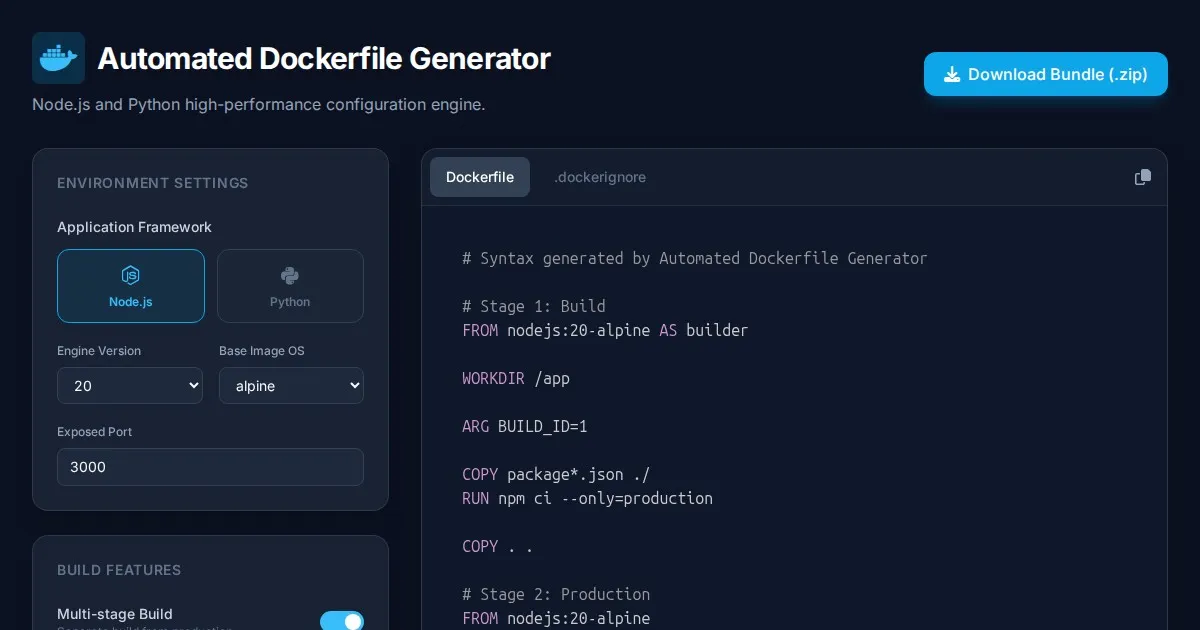
Automated Dockerfile Generator for Node.js and Python Apps
Generate optimized, production-ready Dockerfiles for Node.js and Python applications instantly. Customize base images, port configurations, and dependencies.
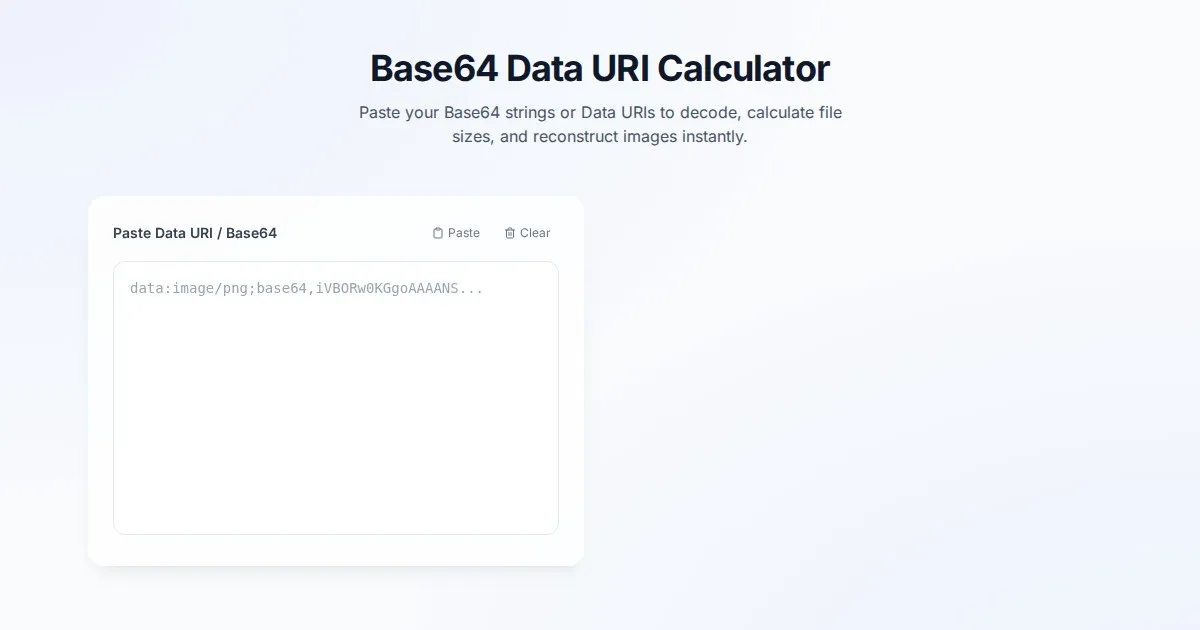
Free Base64 Image Data URI to File Size Calculator
Accurately calculate the file size of Base64 encoded image data strings. This free, web-based tool helps developers estimate binary file sizes for web apps.

Free Online 3D Model Viewer - GLTF & OBJ File Previewer
Instantly preview 3D models online with this free 3D Model Viewer. Support for GLTF, GLB, and OBJ formats. Drag and drop your files for a fast, browser-based render.

Free Online Color Blindness Simulator & Image Filter Tool
Easily simulate color vision deficiencies like protanopia, deuteranopia, and tritanopia. Upload images to test design accessibility for color blindness.
Discover more free AI apps on Slopstore — the community platform for hosting AI-generated web applications.