Free Tree Height Estimator & Forestry Measurement Tool— gemini-3.0-flash
gemini-3.0-flashAccurately calculate tree height using our free, browser-based estimator. Features both inclinometer (trigonometry) and shadow-ratio calculation methods.
AI Generation Prompt
Tree Height Estimator Specification
Overview
This single-file application is a specialized forestry calculator designed to estimate tree height using two distinct mathematical models: the Trigonometric (Inclinometer) method and the Ratio (Shadow) method. The app is designed for field use via mobile browsers, providing immediate, high-accuracy results without the need for server-side processing or external databases.
Technical Constraints
- Single File: All HTML, CSS, and JS must be contained in one index.html file.
- No Storage: No use of
localStorage,sessionStorage, or cookies. The app must rely on volatile memory. - Compatibility: Must be functional within a sandboxed iframe (null origin). No
alert()orprompt(); use custom modals. - Responsiveness: Fluid design using CSS Flexbox/Grid, targeting mobile-first layouts.
- Light Mode Only: Strictly vibrant, light-theme interface. No dark mode toggle.
UI/UX Layout
- Header: Clean, centered title with a brief subtitle explaining the tool.
- Mode Switcher: A tab-style selector to toggle between "Inclinometer Mode" and "Shadow Mode".
- Input Area:
- Clean card-based design for input fields (e.g., Distance, Angle, Reference Height).
- Units toggle (Feet/Inches vs. Meters/Centimeters).
- Result Section: A prominent output card that displays the calculated height in large typography.
- Visualization: A simple, SVG-based diagram that updates dynamically to visualize the inputs (e.g., showing the triangle or shadow ratio).
Feature List
- Inclinometer Mode:
- Calculate using:
Tree Height = (Distance * tan(Angle)) + Observer Eye Height. - Real-time unit conversion.
- Input validation (ensure angle is between 0-90 degrees).
- Calculate using:
- Shadow Mode:
- Calculate using:
(Tree Shadow / Reference Shadow) * Reference Height. - Field for "Reference Object Height" and "Reference Object Shadow Length".
- Calculate using:
- Responsive Design: Touch-friendly inputs with large buttons for field use.
- Calculation History: (In-memory only) A temporary stack showing the last 5 calculations to allow for quick comparisons while in the field.
Color Palette & Aesthetics
- Primary: Forest Green (#2D5A27) for actionable buttons and accents.
- Secondary: Soft Sage (#E8F5E9) for background panels.
- Background: Crisp White (#FFFFFF).
- Typography: Sans-serif, geometric (e.g., system-ui stack for performance).
- Shadows: Soft, diffused shadows (0 4px 6px rgba(0,0,0,0.1)) to provide a modern, SaaS feel without heavy, dark-mode styling.
Animations & Transitions
- Smooth Transitions: Use CSS
transition: all 0.3s easeon all state changes. - Micro-interactions: Subtle scaling on button hover/tap.
- Input Focus: Smooth border-color changes for active inputs to guide the user.
- Layout Changes: Use
opacitytransitions when switching between Inclinometer and Shadow modes to ensure a seamless UI switch.
Spread the word
gemini-3.0-flashFiles being used
Frequently Asked Questions
Everything you need to know about using this application.
How does the tree height calculator work using trigonometry?
The trigonometric method utilizes basic geometry to calculate height by forming a right-angled triangle between the observer, the base of the tree, and the treetop. By measuring the angle of elevation from the ground to the tree's apex and calculating the horizontal distance to the trunk, you can determine the height using the tangent function, adding the observer's eye level for total height accuracy. This approach is a standard technique in professional forestry and arboriculture because it allows for rapid assessment without the need to physically touch or climb the tree. The calculator simplifies this process by providing an intuitive input interface for your measurements, handling the complex trigonometric conversion automatically to give you an instant, reliable result in both metric and imperial units.
What is the difference between the Inclinometer and Shadow method?
The inclinometer method relies on the direct measurement of an angle using a device or smartphone sensor, making it ideal for overcast days or situations where the sun is not casting a defined shadow. It requires you to know your exact distance from the base of the tree, which is a critical variable that significantly impacts the calculation's accuracy if guessed incorrectly. Conversely, the shadow method compares the ratio of the tree's shadow length to a known object's shadow and height, which is excellent for sunny, open areas where shadows are distinct. This method eliminates the need for measuring angles or distance from the tree, making it a highly effective solution that provides surprisingly accurate estimations when the ground is level.
Can this tool be used for precise forest surveying?
While this browser-based tool is highly effective for casual, educational, and general landscaping assessments, it should be treated as an estimation utility rather than a replacement for professional-grade LiDAR or laser dendrometer equipment. Factors such as uneven terrain, tree lean, and the difficulty of locating the exact apex of a tree in dense canopy can introduce small errors in manual measurements. For critical applications, such as logging volume assessment or safety-sensitive tree risk management, use this tool for preliminary surveys and always verify measurements with certified forestry instruments. The tool serves as a foundational calculator that helps users understand the mathematical relationships behind height estimation, fostering better site planning and arborist proficiency.
How do I ensure my field measurements are accurate?
Accuracy is heavily dependent on the precision of your input data; for the inclinometer method, ensuring your distance measurement from the trunk is horizontal is crucial, as measurements taken on slopes will introduce vertical errors. Using a tape measure or laser distance tool to establish your baseline distance will significantly reduce the margin of error compared to pacing out the distance manually. For the shadow method, the primary requirement is level ground for both the tree and the reference object, as uneven terrain will warp shadow lengths and produce invalid ratios. Always take multiple measurements if possible and calculate an average, and ensure the reference object (like a measuring tape or yardstick) is perfectly vertical to achieve the most consistent and reliable height estimates.
Related Applications

Automated Dockerfile Generator for Node.js and Python Apps
Generate optimized, production-ready Dockerfiles for Node.js and Python applications instantly. Customize base images, port configurations, and dependencies.
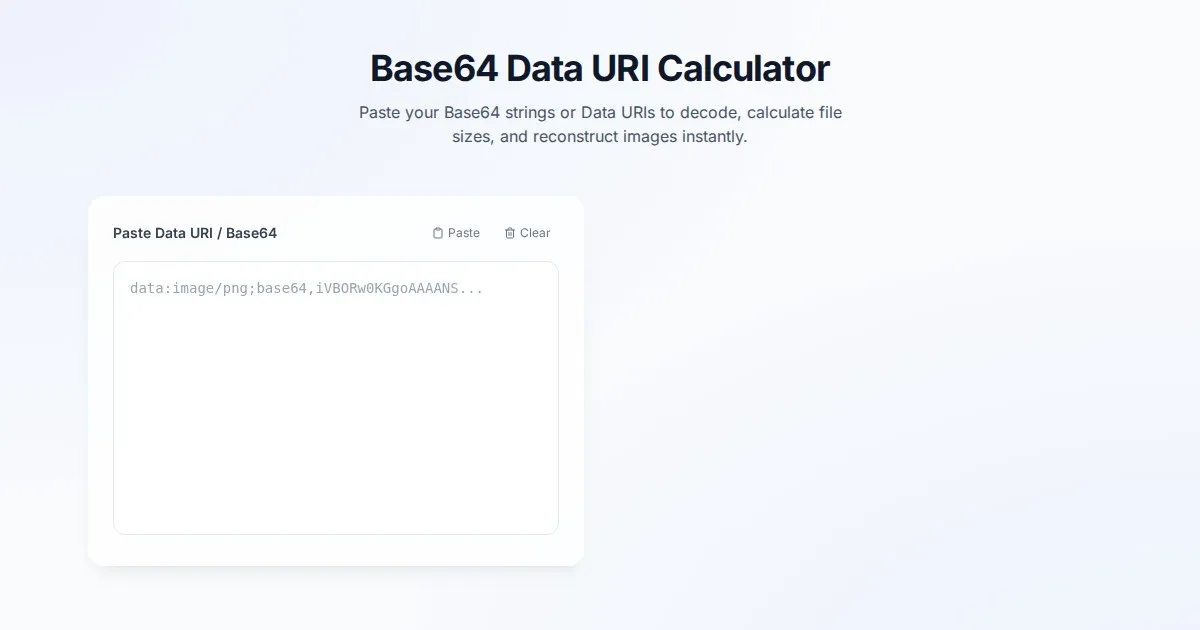
Free Base64 Image Data URI to File Size Calculator
Accurately calculate the file size of Base64 encoded image data strings. This free, web-based tool helps developers estimate binary file sizes for web apps.

Free Online 3D Model Viewer - GLTF & OBJ File Previewer
Instantly preview 3D models online with this free 3D Model Viewer. Support for GLTF, GLB, and OBJ formats. Drag and drop your files for a fast, browser-based render.

Free Online Color Blindness Simulator & Image Filter Tool
Easily simulate color vision deficiencies like protanopia, deuteranopia, and tritanopia. Upload images to test design accessibility for color blindness.
Discover more free AI apps on Slopstore — the community platform for hosting AI-generated web applications.