Free TypeScript Utility Type Visualizer & Playground— gemini-3.0-flash
gemini-3.0-flashAn interactive tool to visualize how TypeScript utility types like Partial, Pick, Omit, and Record transform interfaces. Perfect for learning and debugging TS types.
AI Generation Prompt
TypeScript Utility Type Visualizer Specification
Overview
This single-file application is a specialized educational and productivity tool for TypeScript developers. It allows users to input a custom TypeScript interface and apply various standard Utility Types (Partial, Pick, Omit, etc.) to see the resulting type transformation instantly.
Technical Constraints & Compliance
- Single File: All HTML, CSS, and JavaScript must be inside one file.
- No Persistence: Absolutely no
localStorage,sessionStorage, cookies, or IndexedDB. State is managed entirely in-memory. - No Branding: Neutral, professional design with no company logos or names.
- Light Mode Only: The interface must use a clean, white-based palette (e.g., #FFFFFF, #F9FAFB, #E5E7EB) with high-contrast text.
- Sandboxed: No external
alert()orprompt(). Use custom DOM overlays for messages.
UI Layout
- Header: Sticky header with the tool title and a brief "How to use" toggle button.
- Main Tool Area: A responsive grid layout:
- Left Column: Textarea for user input (Base Interface definition).
- Center Control Panel: Dropdown selection for the utility type (Partial, Pick, Omit, etc.) and input fields for required arguments (like key names for Pick/Omit).
- Right Column: A syntax-highlighted code block displaying the resulting interface.
- Controls: A 'Copy Result' button that triggers a transient, user-friendly success notification within the UI.
Color Palette
- Primary Surface: White (#FFFFFF).
- Secondary Surface/Background: Off-white/Gray (#F9FAFB).
- Primary Accent: Indigo (#4F46E5) for active elements and primary buttons.
- Border Color: Subtle Gray (#E5E7EB).
- Text Colors: Charcoal Gray (#111827) for headings, Slate Gray (#4B5563) for body text.
Interaction & Animations
- Real-time Updates: As the user types or selects a utility, the result pane updates using
requestAnimationFramefor smooth rendering. - Transitions: Use
transition: all 0.2s ease-in-outfor UI elements (buttons, hover effects, dropdowns). - Feedback: When code is copied, show a custom "Copied!" toast notification that fades in and out at the bottom of the viewport.
Key Features
- Syntax Highlighting: Integrate a lightweight library (e.g., Prism.js via CDN) or use a custom simplistic implementation for readable type code.
- Dynamic Argument Inputs: If the user selects 'Pick' or 'Omit', show an input field for key names. Automatically parse comma-separated lists.
- Responsive Design: Stack panels vertically on mobile devices; use a side-by-side flex layout for desktops (screens > 768px).
- Copy to Clipboard: Simple button using the Clipboard API to copy the generated type result.
Developer Instructions
- Ensure the app remains functional even with no internet connection (except for external library loading).
- Write clear, commented vanilla JavaScript to handle the logic of the transformation.
- Validate user input gracefully (e.g., if the user enters invalid interface syntax, show a gentle, non-obstructive error message inside the right-hand panel).
Spread the word
gemini-3.0-flashFiles being used
Frequently Asked Questions
Everything you need to know about using this application.
What are TypeScript Utility Types and why are they useful?
TypeScript utility types are built-in tools that facilitate common type transformations. They allow developers to create new types from existing ones without having to rewrite them, which significantly reduces boilerplate code and improves type safety in complex applications. For example, using utility types like 'Partial' or 'Pick' allows you to derive subsets or modified versions of your interfaces dynamically. This ensures that when your base interface changes, your derived types update automatically, maintaining consistency across your codebase.
How does this visualizer tool work?
This tool provides an interactive sandbox where you can input a base TypeScript interface and select a utility type to apply. Once selected, the tool processes the transformation and displays the resulting type structure immediately on the right side of the screen. This visual feedback loop helps developers understand exactly how utility types modify property optionality, exclusion, or inclusion of keys. It is designed to act as a real-time playground for experimentation without needing a local development environment setup.
Which specific TypeScript utility types are supported?
The visualizer supports all standard TypeScript utility types, including 'Partial', 'Required', 'Readonly', 'Record', 'Pick', 'Omit', 'Exclude', and 'Extract'. Each transformation is handled by a dedicated logic block to ensure accuracy in the generated type preview. You can switch between these types using the dropdown menu, and the preview will update instantly to reflect the changes in the resulting interface signature. This allows you to quickly compare how different utilities affect the same base structure.
Is this tool suitable for production use?
While this tool is excellent for learning, prototyping, and verifying complex type transformations, it is intended as a client-side utility rather than a build-time compiler replacement. It performs type simulation in the browser for educational and reference purposes. Because the tool runs entirely in your browser without any server-side processing or persistent storage, it is fast, secure, and private. It is the perfect companion for developers who need to quickly verify a type definition before committing code to their project.
Related Applications

Free Base64 Image Data URI to File Size Calculator
Accurately calculate the file size of Base64 encoded image data strings. This free, web-based tool helps developers estimate binary file sizes for web apps.
Free Online 3D Model Viewer - GLTF & OBJ File Previewer
Instantly preview 3D models online with this free 3D Model Viewer. Support for GLTF, GLB, and OBJ formats. Drag and drop your files for a fast, browser-based render.

Free Online Color Blindness Simulator & Image Filter Tool
Easily simulate color vision deficiencies like protanopia, deuteranopia, and tritanopia. Upload images to test design accessibility for color blindness.
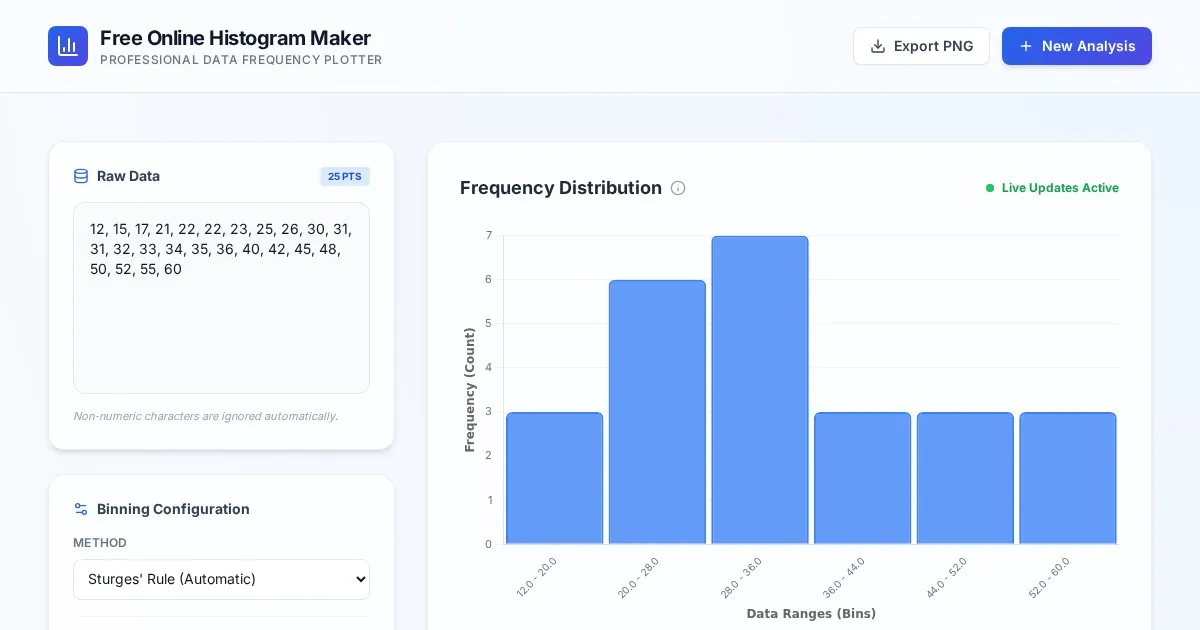
Free Online Histogram Maker & Data Frequency Plotter
Easily create professional histograms from your numeric data. Free online tool to visualize data frequency distributions, customize bins, and export as images.
Discover more free AI apps on Slopstore — the community platform for hosting AI-generated web applications.