Free Woodworking Board Milling Waste Calculator— gemini-3.0-flash
gemini-3.0-flashCalculate lumber waste percentages caused by board bowing, cupping, and twisting. Accurately estimate usable material for your woodworking projects for free.
AI Generation Prompt
Woodworking Board Milling Waste Calculator
Overview
A clean, professional, and responsive browser-based utility that helps woodworkers estimate material loss. Users input initial rough board dimensions and the estimated amount of wood removal required to resolve common lumber defects like cupping, bowing, or twisting.
Features
- Input Parameters: Fields for initial Board Length (L), Width (W), and Thickness (T).
- Defect Removal Estimation: User-defined input fields for removal depth required for each face (Top/Bottom) to achieve flatness.
- Real-Time Calculation Engine: Instant calculation of total original volume vs. final usable volume.
- Waste Analysis: Percentage output showing how much material will be lost as milling waste.
- Visual Summary: A clean output card showing both dimensions and a visual summary of the material efficiency.
- Unit Conversion: Simple toggle between Imperial (inches) and Metric (millimeters).
- Print-Friendly Results: A dedicated button to export or print the calculation sheet for use in the shop.
UI Layout
- Header: Minimalist title bar with a brief descriptive subtitle.
- Main Tool Area: A two-column responsive layout.
- Left Column: Interactive form with clean, labeled input fields and sliders for quick adjustments.
- Right Column: A 'Live Results' summary card that sticks to the top as the user scrolls, displaying the calculated waste percentage and final usable volume.
- Instructions: A discreet section below the form explaining how to measure for defect removal.
Design Specifications
- Aesthetic: Modern, light-mode 'SaaS' feel. Use ample whitespace, soft rounded corners (8px), and subtle box shadows (0 4px 6px rgba(0,0,0,0.1)).
- Palette:
- Primary: Sage Green (#4A7C59) for call-to-action buttons.
- Background: Off-white (#F9FAFB).
- Text: Dark Slate (#1F2937).
- Border/Accents: Light Gray (#E5E7EB).
- Animations: Subtle scale transitions on input focus and smooth fade-in effects for result cards when calculations update.
Technical Constraints & Directives
- Architecture: Single HTML file containing all HTML, CSS, and Vanilla JavaScript.
- Persistence: Absolutely NO
localStorage,sessionStorage, or cookies. The state must be maintained exclusively in JS variables and reset on page reload. - External Assets: Use Google Fonts (e.g., 'Inter') and a Tailwind CSS CDN link for styling.
- Responsiveness: Use Flexbox/Grid for mobile-first layout. The columns must stack elegantly on screens smaller than 768px.
- Security: The app will run in a sandboxed iframe. Ensure no
alert()orprompt()calls are used. Implement all UI-driven inputs/warnings as custom DOM elements. - Performance: High-performance math logic triggered on
inputevents, ensuring zero lag.
Spread the word
gemini-3.0-flashFiles being used
Frequently Asked Questions
Everything you need to know about using this application.
Why is it important to calculate milling waste?
When working with rough-sawn lumber, boards often contain natural defects like bowing, cupping, or twisting that must be milled away to achieve a flat, square surface. Calculating this waste helps ensure you purchase enough lumber for your project, preventing mid-project supply shortages and costly return trips to the lumber yard. Furthermore, accurate waste estimation allows for better project budgeting and material planning. By understanding exactly how much board thickness will be sacrificed to achieve flatness, you can select rough stock that is appropriately oversized for the final dimensions required.
What is the difference between bow, cup, and twist in boards?
Bow is a warp along the face of the board along its length, whereas cup is a concave or convex curve across the width of the board. Twist occurs when the board corners are not in the same plane, creating a spiral warp along the board's length. Each of these defects requires removing a specific amount of material depth from both sides of the board via jointing and planing. This process significantly impacts the final board thickness and usable volume compared to the original rough-sawn dimensions.
Does this tool account for different species of wood?
This tool focuses on the geometric volume loss rather than species-specific properties like density or drying-related shrinkage. The calculations are based on the physical dimensions you input, which reflect the actual volume of wood lost during the surfacing, jointing, and planing process for any species. Regardless of whether you are working with hardwoods like walnut and oak or softwoods like pine, the geometry of removing material to achieve a flat face remains constant. You can simply input the dimensions specific to your board type to receive accurate results.
How do I measure milling waste accurately?
To use this tool, measure the initial rough thickness, width, and length of your board. Then, measure the depth of the deepest defect—such as the depth of a cup or the severity of a twist—to estimate how much material must be removed from both faces to achieve a flat, usable surface. It is always safer to slightly overestimate your removal depth to ensure you don't run out of material mid-process. Inputting these depth values will provide a clear percentage of how much lumber is converted into planer shavings and jointer dust versus usable project material.
Related Applications

Automated Dockerfile Generator for Node.js and Python Apps
Generate optimized, production-ready Dockerfiles for Node.js and Python applications instantly. Customize base images, port configurations, and dependencies.
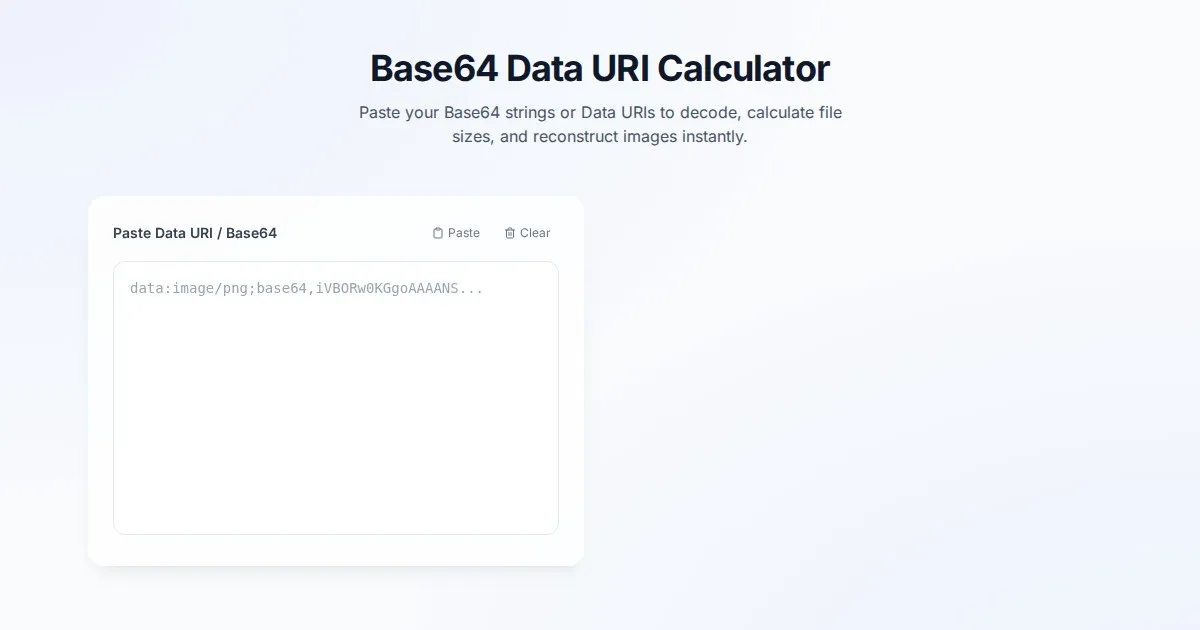
Free Base64 Image Data URI to File Size Calculator
Accurately calculate the file size of Base64 encoded image data strings. This free, web-based tool helps developers estimate binary file sizes for web apps.

Free Online 3D Model Viewer - GLTF & OBJ File Previewer
Instantly preview 3D models online with this free 3D Model Viewer. Support for GLTF, GLB, and OBJ formats. Drag and drop your files for a fast, browser-based render.

Free Online Color Blindness Simulator & Image Filter Tool
Easily simulate color vision deficiencies like protanopia, deuteranopia, and tritanopia. Upload images to test design accessibility for color blindness.
Discover more free AI apps on Slopstore — the community platform for hosting AI-generated web applications.