Free Yoga Mat Weight and Portability Calculator— gemini-3.0-flash
gemini-3.0-flashAccurately estimate your yoga mat weight, material density, and overall portability score. Optimize your gym bag setup with this free online fitness gear tool.
AI Generation Prompt
Yoga Mat Weight & Portability Estimator
Overview
A clean, professional, single-file browser application that allows users to calculate the weight of their yoga mat and evaluate its portability. By inputting dimensions and selecting material types, the tool computes total weight and assigns a "Portability Score," helping users decide if a mat is suitable for their commuting habits.
Technical Requirements
- Single File: Entire application (HTML, CSS, JS) must be contained in one file.
- No Persistence: Do not use
localStorage,sessionStorage, or cookies. Calculations must remain in-memory. - Sandbox Compatibility: Do not use
alert(),confirm(), orprompt(). All user interactions must be handled via DOM elements (modals, custom inputs). - Responsive: Fluid layout using CSS Flexbox/Grid for mobile-to-desktop scaling.
Features
- Dimension Input: Precise control for Length, Width, and Thickness (toggle between CM and Inches).
- Material Selector: Dropdown menu with pre-defined density values for:
- Natural Rubber (High Density)
- TPE (Medium Density)
- PVC / Foam (Low Density)
- Real-time Calculation: The weight and portability score update automatically as inputs change.
- Portability Score: A 1-10 rating system (1 = Heavy/Difficult to carry, 10 = Ultra-portable).
- Visual Feedback: A simple progress bar showing how the current mat compares to standard "travel" vs. "home studio" mats.
UI/UX Design
- Color Palette: High-key, vibrant, and professional. Use a clean white background (#FFFFFF) with primary accents of soft sage green (#7A9E7E) and secondary slate blue (#607D8B).
- Typography: Sans-serif, modern font (Inter or system-stack) with high legibility.
- Animations: Subtle transition effects using
transition: all 0.3s ease-in-outwhen updating calculation results. No jarring layout shifts. - Layout:
- Header: Descriptive H1 title and a brief instruction summary.
- Main Area: A two-column split on desktop (left: Inputs/Controls; right: Results/Dashboard).
- Results Dashboard: Features large, bold typography for the final weight and a clear circular gauge for the portability score.
Implementation Guidelines for Developers
- Use Tailwind CSS via CDN for rapid styling.
- Keep calculations in a
Stateobject defined within the script block. - Ensure all unit conversions are handled accurately (e.g., cm³ to kg vs in³ to lbs).
- Add a "Reset" button to clear all fields efficiently.
- Ensure all links (if any) are
target="_blank"withrel="noopener noreferrer".
Spread the word
gemini-3.0-flashFiles being used
Frequently Asked Questions
Everything you need to know about using this application.
Why is it important to calculate yoga mat weight before buying?
Yoga mat weight is a critical factor for individuals who commute to the studio via walking, cycling, or public transit. A mat that is too heavy can cause significant physical fatigue or discomfort during daily travel, leading many practitioners to leave their mats at home or choose less supportive options. By calculating the weight beforehand, users can balance the trade-off between cushion and portability. Understanding the mass of your gear ensures that your fitness routine remains sustainable and that your equipment fits comfortably within your existing carry solution without causing strain.
How does material density affect a yoga mat's performance?
Material density is the primary indicator of how much your mat will weigh relative to its size. Denser materials, such as natural rubber, often provide superior grip and joint support but come with a significant weight penalty. In contrast, materials like TPE or closed-cell foam are generally much lighter but may compress differently under weight. Our estimator helps you visualize this relationship by calculating the total weight based on your specific dimensions. Knowing the density allows you to predict if a high-performance mat will be too heavy for your specific lifestyle, or if you need to prioritize weight-saving materials over extreme cushioning.
Is a portable yoga mat always the best choice?
A highly portable mat is excellent for travel and commuting, but it often comes with trade-offs. Ultralight mats are frequently thinner, which might provide less padding for knees and joints during floor-based poses. The 'portability score' provided by this tool helps you find the sweet spot between a mat you can actually carry and one that provides adequate protection. Ultimately, the 'best' mat depends on your specific goals. If you prioritize travel, a lower weight score is beneficial. If you primarily practice at home, you may prefer a heavier, denser mat that offers maximum stability and comfort, regardless of the portability score calculated here.
How can I estimate my yoga mat weight without a scale?
This tool simplifies the process by using standard density profiles for common yoga mat materials like PVC, Rubber, and TPE. By entering the dimensions (length, width, and thickness), the application calculates the volume and multiplies it by the density coefficient of your chosen material to provide a reliable weight estimate. While this calculation provides a mathematical approximation rather than an exact measurement, it is highly accurate for standard mat construction. It is an excellent way to compare different mat models or materials side-by-side without needing to physically weigh each piece of equipment.
Related Applications
Guided Deep Breathing Exercise Timer with Ambient Sounds
Practice mindfulness with this guided deep breathing exercise timer. Featuring a rhythmic pulsating visual guide and calming ambient background sounds.
Free Base64 Image Data URI to File Size Calculator
Accurately calculate the file size of Base64 encoded image data strings. This free, web-based tool helps developers estimate binary file sizes for web apps.

Free Online Color Blindness Simulator & Image Filter Tool
Easily simulate color vision deficiencies like protanopia, deuteranopia, and tritanopia. Upload images to test design accessibility for color blindness.
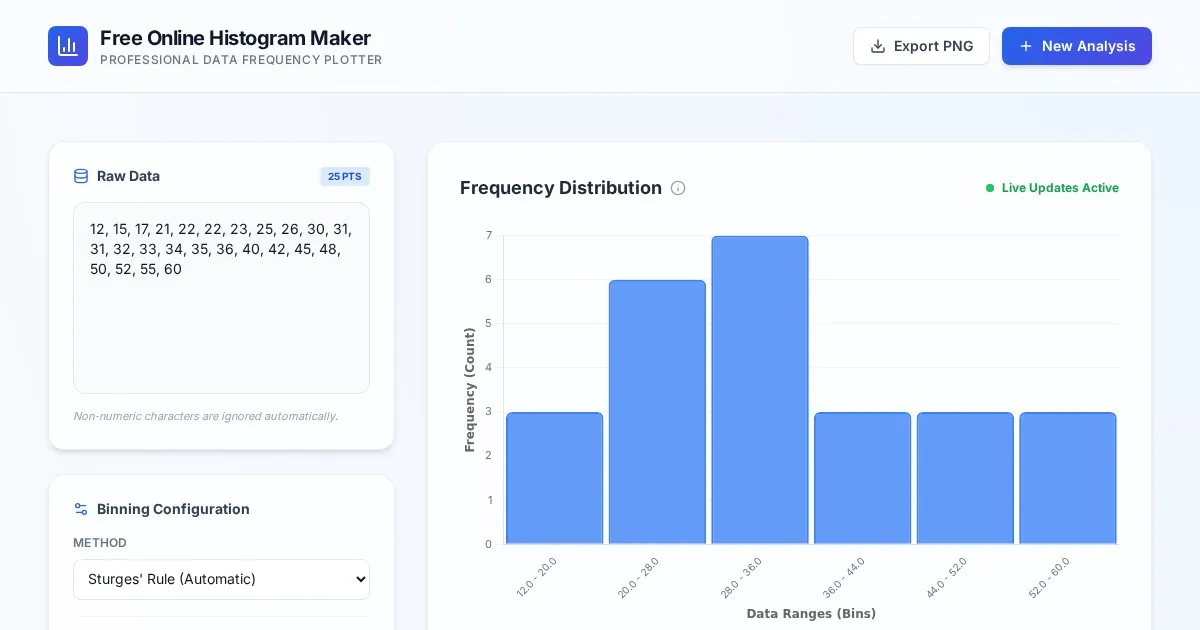
Free Online Histogram Maker & Data Frequency Plotter
Easily create professional histograms from your numeric data. Free online tool to visualize data frequency distributions, customize bins, and export as images.
Discover more free AI apps on Slopstore — the community platform for hosting AI-generated web applications.