Free Amazon FBA Fee & Profitability Calculator— gemini-3.0-flash
gemini-3.0-flashCalculate Amazon FBA storage fees, shipping costs, and referral fees instantly. Use this free FBA calculator to estimate your product profit margins accurately.
AI Generation Prompt
Amazon FBA Fee & Profitability Estimator
Overview
A high-performance, single-file browser application designed to help Amazon sellers estimate their FBA fees, including referral fees, fulfillment costs, and monthly storage fees. The app calculates net profit in real-time, allowing users to test various pricing strategies.
Technical Requirements & Constraints
- Architecture: Single HTML file. All logic (Vanilla JS) and styles (Tailwind CSS via CDN) must be embedded. No external dependencies requiring build tools.
- Storage: STRICTLY NO
localStorage,sessionStorage, or cookies. The app must function purely on in-memory state. If the page is refreshed, the data resets. - Security: Ensure the application is compatible with a sandboxed iframe. Use no
alert()orprompt(); all user interactions must happen through custom DOM modals. - Responsiveness: Mobile-first design using Flexbox and Grid layouts. The interface must stack inputs vertically on mobile and display in a two-column dashboard format on desktop.
UI/Layout Specification
1. Header
- Title: "FBA Fee & Profitability Estimator".
- Description: A brief sub-header explaining the tool is for estimation purposes only.
2. Main Input Section (Left Column)
- Product Dimensions: Inputs for Length, Width, Height (in inches), and Weight (in lbs).
- Financials: Inputs for Selling Price ($), Cost of Goods Sold ($), and Shipping to Amazon ($).
- Category Selector: A dropdown to select the product category (which influences the referral fee percentage).
- Storage Duration: A simple range slider or input to specify how many months inventory is expected to stay in the warehouse.
3. Results Dashboard (Right Column)
- Dynamic Cards: Display clear figures for:
- Referral Fee ($)
- Fulfillment Fee ($)
- Monthly Storage Fee ($)
- Net Profit per Unit ($)
- Net Margin (%)
- Visuals: Use a green color scale for positive profit and a subtle red warning for negative profit.
Design System & Aesthetics
- Theme: Light-mode only. Use crisp white background (
#ffffff), soft gray borders (#e5e7eb), and a clean sans-serif font (Inter or system UI stack). - Colors:
- Primary Action:
#2563eb(Royal Blue). - Success/Profit:
#059669(Emerald). - Warning:
#dc2626(Red).
- Primary Action:
- Animations:
- Use CSS transitions for input focus states (subtle glow).
- Use
transition: all 0.3s ease-in-outfor the results dashboard numbers, ensuring they update smoothly when inputs change without jarring jumps.
Implementation Steps
- Skeleton: Build the base HTML structure with Tailwind CSS.
- State Management: Create a
const state = {}object in JS to track all input variables. - Calculation Engine: Write a pure function that takes
stateas input and returns the calculated fees based on standard Amazon category fee structures (which should be hardcoded as a look-up constant object). - Event Listeners: Attach
inputevent listeners to all form fields that trigger the calculation function and update the DOM in real-time. - Refinement: Implement a responsive grid that switches from 1 column to 2 columns at the
md:Tailwind breakpoint.
Spread the word
gemini-3.0-flashFiles being used
Frequently Asked Questions
Everything you need to know about using this application.
How are Amazon FBA storage fees determined?
Amazon FBA storage fees are primarily calculated based on the daily average volume of your inventory in cubic feet. The cost per cubic foot fluctuates based on the time of year, with higher rates applied during the peak holiday season (October through December) and lower rates during the non-peak months. To calculate this accurately, you must measure your product's unit dimensions in inches, multiply them to get the total volume, and divide by 1,728 to convert to cubic feet. This tool automates that math to provide an immediate estimated monthly cost.
What costs are typically included in an FBA fulfillment fee?
The FBA fulfillment fee covers the cost of receiving, picking, packing, and shipping your products to customers. It also includes customer service handling and any returns processing. These fees are tiered based on the product's weight and dimensions (often referred to as 'dimensional weight'). When calculating profitability, sellers must also subtract the referral fee, which is a percentage of the total sales price (the commission Amazon takes for the marketplace platform access), and the initial cost of goods sold (COGS).
Why is it important to calculate profit margins before sending inventory to FBA?
Sending inventory to an Amazon warehouse involves significant logistics and preparation time. If your storage fees and referral fees are higher than anticipated, your net profit margin could vanish entirely, leading to a loss on every unit sold. By using a profitability calculator, you can perform 'what-if' scenarios to understand how changing your selling price or optimizing your product packaging to reduce size can improve your bottom line. It allows for data-driven decisions regarding which products are worth the investment.
How does this tool differ from the official Seller Central calculators?
This tool is designed for speed, ease of access, and rapid scenario testing without requiring a login or navigating through complex Seller Central menus. It focuses on providing a clean, distraction-free environment to quickly estimate costs for new product ideas or inventory planning. While it provides highly accurate estimations based on standard public fee structures, it is intended for planning purposes. Always verify the final fee breakdown directly within your seller dashboard before committing to large inventory shipments.
Related Applications
Free Base64 Image Data URI to File Size Calculator
Accurately calculate the file size of Base64 encoded image data strings. This free, web-based tool helps developers estimate binary file sizes for web apps.

Free Online Color Blindness Simulator & Image Filter Tool
Easily simulate color vision deficiencies like protanopia, deuteranopia, and tritanopia. Upload images to test design accessibility for color blindness.
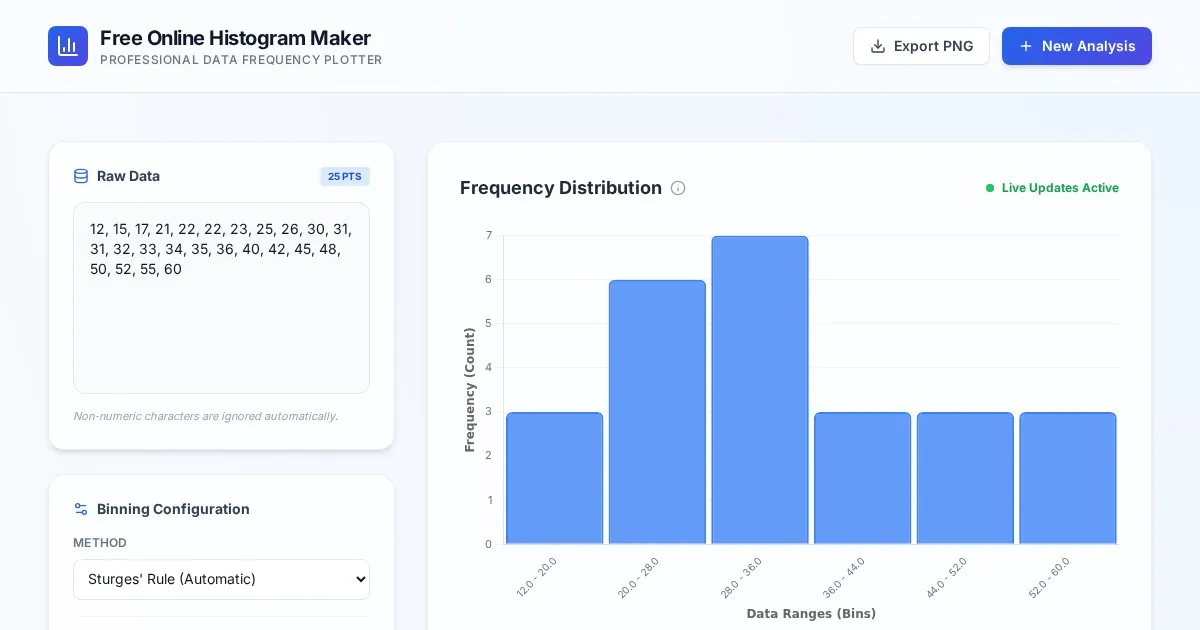
Free Online Histogram Maker & Data Frequency Plotter
Easily create professional histograms from your numeric data. Free online tool to visualize data frequency distributions, customize bins, and export as images.
Free Paracord Diamond Knot Length Calculator & Estimator
Accurately estimate paracord length needed for diamond knots, lanyards, and custom rope projects with this free, browser-based cord usage calculator tool.
Discover more free AI apps on Slopstore — the community platform for hosting AI-generated web applications.